



 Français
 Español
 Deutsch
Content
- 1 Understanding the Double Dual Color Quilt Concept
- 2 Product Specifications at a Glance
- 3 Soft Microfiber Fabric for Everyday Comfort
- 4 250gsm 3D Polyester Filling for Balanced Warmth
- 5 Double-Stitch Edge Construction
- 6 Advantages Over Conventional Single-Color Quilts
- 7 Advantages Over Heavier and More Complicated Bedding
- 8 Advantages for Retailers, Wholesalers, and Hospitality Buyers
- 9 Manufacturing Strengths and Production Experience
- 10 Quality Management and Certification Background
- 11 Production Process for the Double Dual Color Polyester Quilt
- 12 Customization and Sourcing Potential
- 13 Applications in Different Market Segments
- 14 Care, Handling, and Product Information
- 15 Why Manufacturing Reliability Matters
- 16 Comparison with Common Alternative Quilt Designs
- 17 How the Product Creates Value for End Users
- 18 Buyer Considerations Before Ordering
- 19 Q&A About the Double Dual Color Polyester Quilt
- 19.1 What does “dual color” mean in this quilt?
- 19.2 Are the front and back made from different materials?
- 19.3 What is the size of the quilt?
- 19.4 What type of filling does it use?
- 19.5 Is the quilt heavy?
- 19.6 What is the purpose of the double stitching?
- 19.7 Can the quilt be used in different bedroom styles?
- 19.8 Is it suitable for hotels or guest rooms?
- 19.9 Can colors or packaging be customized?
- 19.10 Does the manufacturer produce other home textile products?
- 19.11 What manufacturing resources does the company have?
- 19.12 Which certifications and management programs are associated with the company?
- 19.13 How should the quilt be cared for?
- 20 Conclusion
- 21 References
- 22 Product: Double Dual Color Polyester Quilt
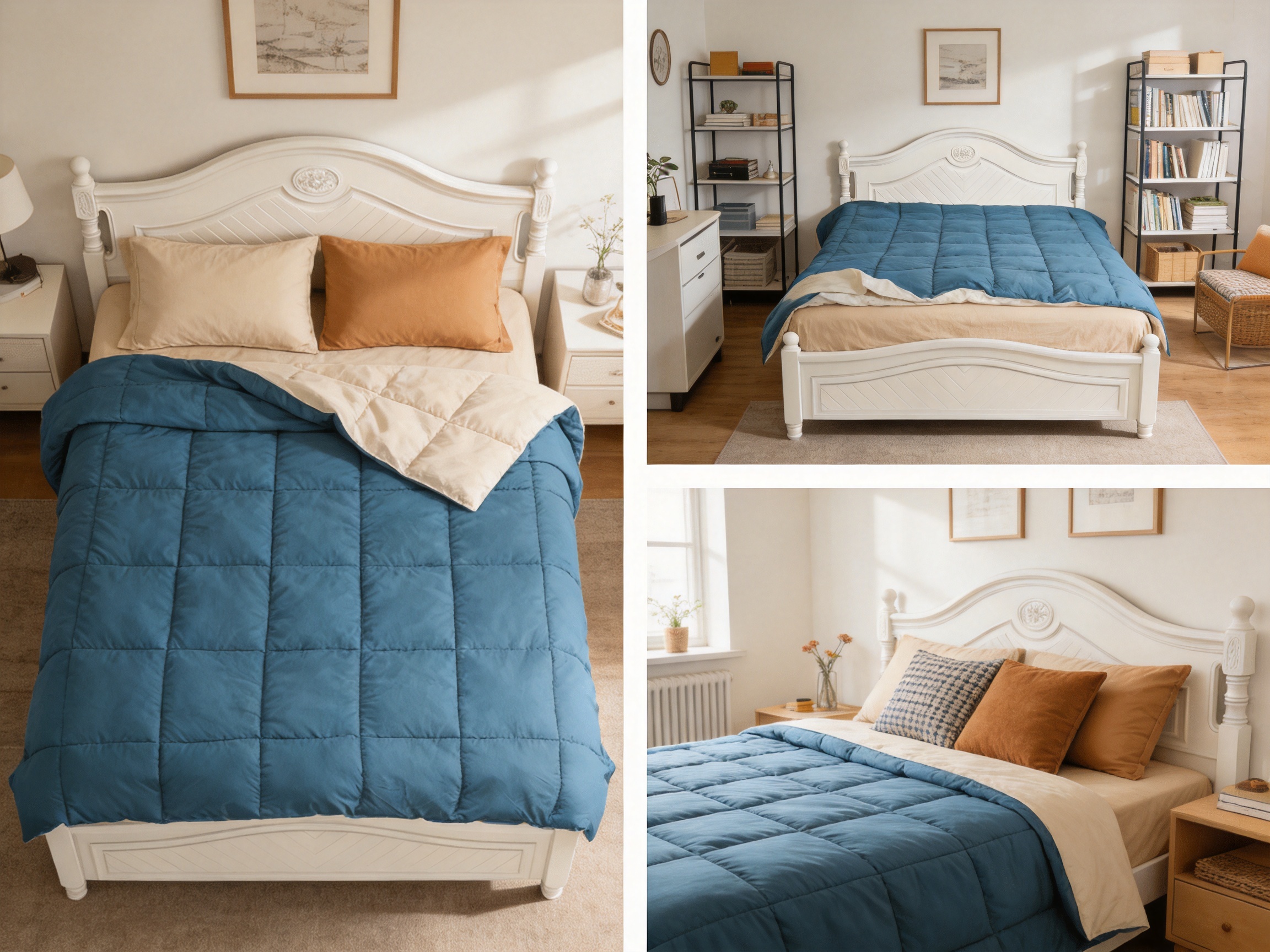
A quilt is more than a decorative layer placed on a bed. It contributes to warmth, sleeping comfort, bedroom appearance, daily convenience, and the overall feeling of a well-prepared home. For retailers, distributors, hospitality buyers, and bedding brands, the right quilt must also offer consistent quality, attractive presentation, practical specifications, and dependable manufacturing support. The Double Dual Color Polyester Quilt is designed to meet these expectations through a simple but effective combination of contrasting colors, soft microfiber fabric, lightweight polyester filling, and reinforced double-stitch construction.
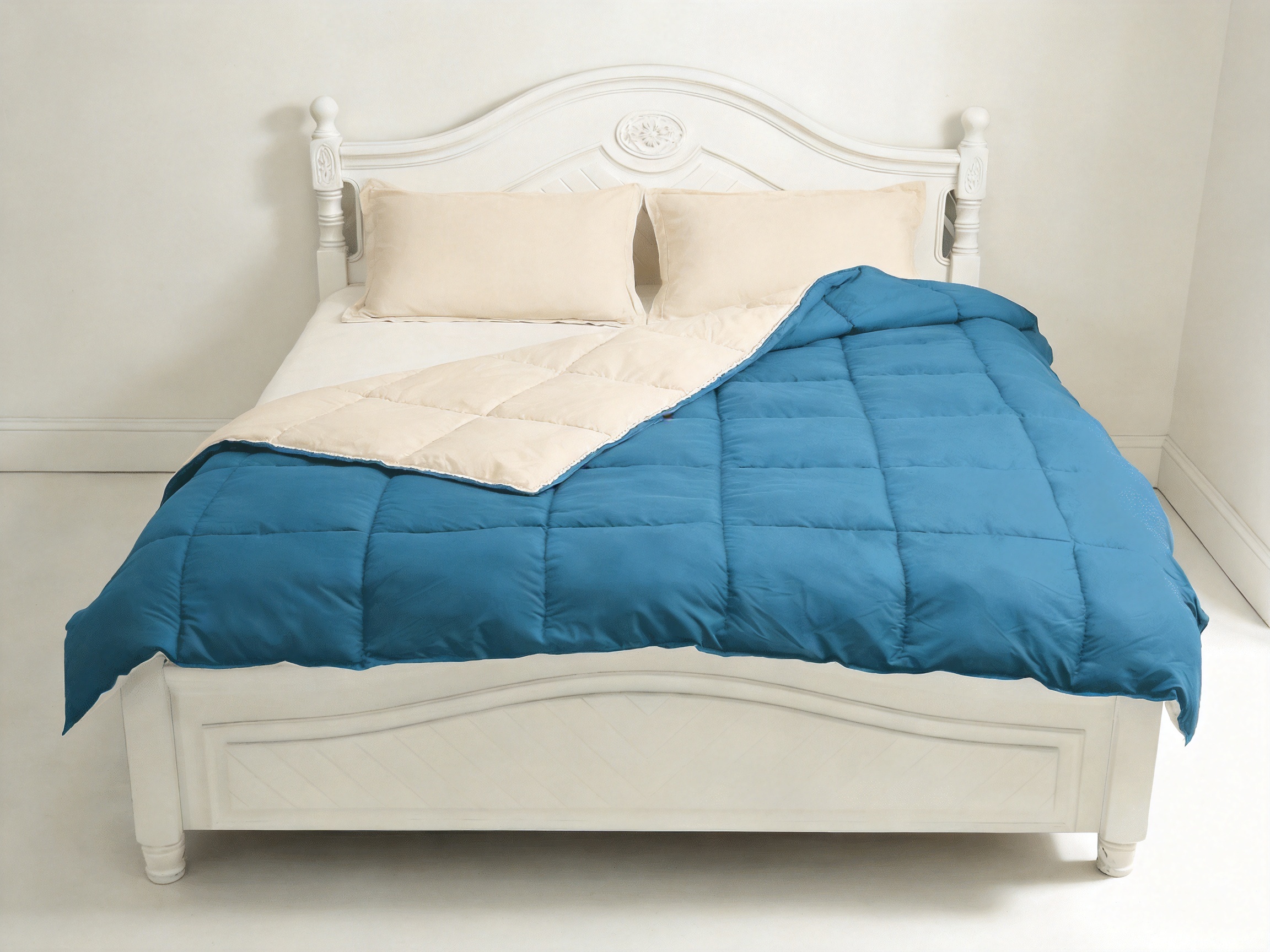
This product belongs to the microfiber quilt category and is especially suitable for customers who appreciate flexible styling. Its front and back surfaces use the same type of fabric while presenting different colors. This dual-color structure allows users to change the appearance of the bed quickly by turning the quilt over. One side may create a calm, understated atmosphere, while the other side can provide stronger contrast or a more distinctive visual effect. The result is a practical product with the appearance of two coordinated bedding options in one quilt.
With a size of 140*200 cm, the quilt is appropriate for a range of single-bed and compact sleeping arrangements. Its shell uses 85gsm microfiber, and its filling consists of 3D polyester at 250gsm. These materials are selected to balance softness, lightness, warmth, resilience, and ease of handling. The surrounding edge is finished with a double-stitch process, helping create a cleaner appearance and supporting the quilt’s structural durability during regular use.
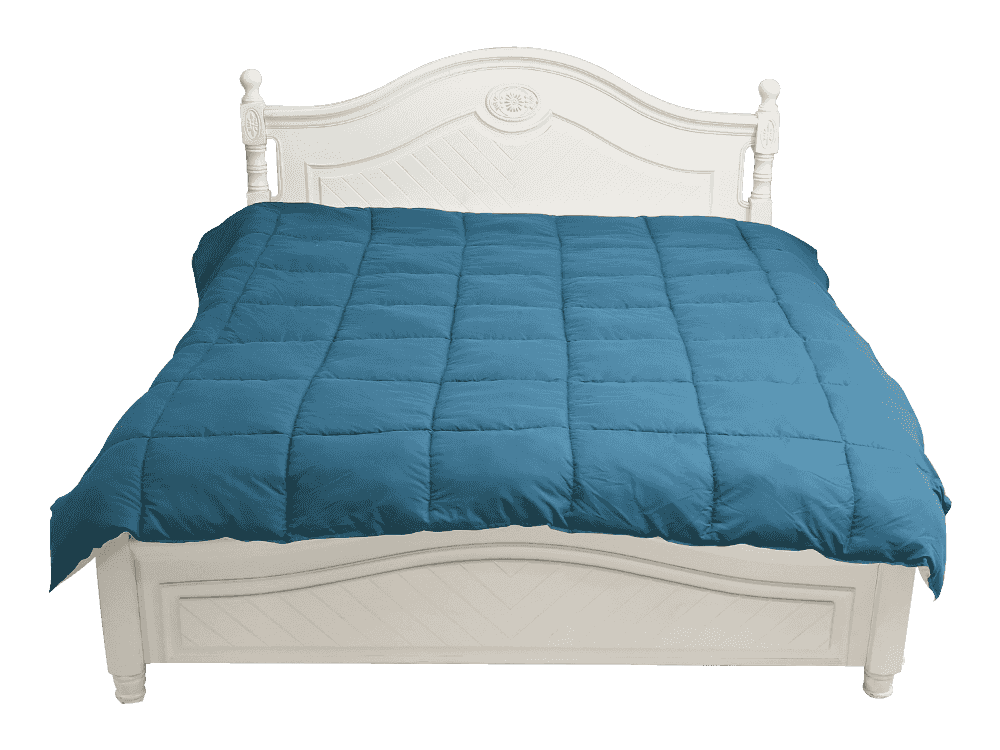
Double Dual Color Polyester Quilt
Understanding the Double Dual Color Quilt Concept
Dual-color bedding has remained popular because it combines visual variety with straightforward functionality. Many conventional quilts present only one visible color, meaning that consumers must purchase another product if they want a different style. A dual-color quilt offers a more flexible alternative. The same quilt can be used with either side facing upward, making it easier to coordinate with sheets, pillowcases, curtains, cushions, carpets, and other bedroom accessories.
The Double Dual Color Polyester Quilt is not designed around complicated decoration. Instead, its appeal comes from a clean and modern visual concept. The front and back use the same fabric quality but different colors. This approach creates contrast without making the bedding appear excessively busy. It is suitable for consumers who prefer simple styling, contemporary bedrooms, guest rooms, student accommodation, rental properties, and hospitality environments where adaptable presentation is valuable.
The product’s reversible design can also support efficient purchasing. A retailer can present one quilt as a versatile styling product rather than selling two separate items for two different color preferences. A hospitality operator can use the same product in rooms with different interior palettes. A household can change the visual mood of a bedroom without replacing the quilt. These advantages make the design useful not only from an aesthetic perspective but also from a practical and inventory-management perspective.
A Balance Between Simplicity and Visual Interest
Some bedding products rely on printed patterns, elaborate quilting lines, embroidery, or large decorative motifs. Although these designs can be attractive, they may not suit every interior style. Patterned products can also be more difficult to coordinate with existing bedroom furnishings. The dual-color concept takes a more adaptable approach. Its color contrast creates visual interest while preserving a clean surface that can fit traditional, modern, minimalist, and casual bedroom settings.
The same-fabric construction on both sides is also important. It provides a consistent touch and appearance when the quilt is reversed. Users do not need to accept a rougher or less comfortable underside simply because they want to display the second color. Both sides are made with the same 85gsm microfiber fabric specification, supporting a uniform product experience.
Product Specifications at a Glance
The following table summarizes the principal specifications of the Double Dual Color Polyester Quilt.
| Specification | Product Detail | Practical Benefit |
|---|---|---|
| Product type | Double dual color polyester quilt | Provides reversible styling and flexible bedroom coordination |
| Category | Microfiber quilt | Offers a soft, lightweight, and practical bedding surface |
| Size | 140*200 cm | Suitable for single beds and compact sleeping arrangements |
| Shell fabric | 85gsm microfiber | Combines a soft hand feel with lightweight handling |
| Color design | Contrasting color on the front and back | Allows the user to reverse the quilt for a different appearance |
| Filling | 3D polyester, 250gsm | Supports loft, warmth, resilience, and everyday comfort |
| Edge construction | Double-stitch surrounding process | Helps reinforce the perimeter and maintain a neat finish |
| Primary application | Home bedding, guest rooms, accommodation, and retail programs | Suitable for multiple customer and distribution channels |
Soft Microfiber Fabric for Everyday Comfort
Fabric selection is one of the most important factors in quilt performance. The Double Dual Color Polyester Quilt uses 85gsm microfiber for both its front and back surfaces. Microfiber is widely used in home textiles because it can provide a smooth, soft, and comfortable hand feel while remaining comparatively lightweight. This makes it suitable for bedding products that must feel pleasant against the skin without becoming unnecessarily heavy.
The fabric’s softness supports a comfortable sleeping environment. A quilt should not feel stiff, abrasive, or overly cumbersome when it is pulled over the body. The microfiber shell helps the product remain flexible and easy to arrange. Users can fold it, turn it over, place it on a bed, or store it in a cabinet with minimal effort.
Lightweight fabric can also be valuable for distribution and household handling. Retailers may benefit from easier packing and product presentation, while consumers may appreciate the convenience of moving and washing their bedding according to the care instructions provided for the final product. For guest rooms and accommodation businesses, a manageable quilt can simplify bed making and routine room preparation.
Comfort on Both Sides
A major advantage of the double dual color structure is that the two visible sides are not treated as completely different products. The front and back use the same fabric specification, which helps create a consistent tactile experience. When the user changes the color orientation, the softness and general surface quality remain familiar.
This consistency can distinguish the quilt from reversible products that use visibly different fabrics on each side. In some competing constructions, one side may be smooth while the other side is textured, or one side may feel more comfortable than the other. The same-fabric approach provides a more balanced product concept and helps ensure that color choice does not require a compromise in comfort.
250gsm 3D Polyester Filling for Balanced Warmth
The quilt contains 250gsm 3D polyester filling. The filling is designed to provide loft and insulation while preserving a practical weight. Polyester filling is widely used in bedding because it can offer consistent thickness, resilience, and easy-care potential when properly manufactured and finished.
The three-dimensional structure of the filling is relevant to the quilt’s comfort and appearance. A quilt needs sufficient volume to create a soft layer between the sleeper and the surrounding air. At the same time, excessive thickness can make a product too warm, difficult to manage, or unsuitable for users who prefer lightweight bedding. The 250gsm specification represents a balanced construction for customers seeking everyday warmth without the bulk associated with very heavy quilts.
Polyester filling can also support product consistency in commercial manufacturing. Natural filling materials may vary in texture, density, or distribution depending on their source and processing. A standardized polyester filling allows the manufacturer to work toward repeatable specifications across production batches. This is valuable for wholesalers and retailers that need dependable product dimensions and a consistent customer experience.
Resilience and Loft Retention
A quilt’s visual appeal depends partly on its ability to maintain a reasonably even and attractive shape. The 3D polyester filling is intended to create a soft, lofty structure that supports the quilt’s overall appearance. When the quilt is laid flat, its filling contributes to a fuller presentation. When it is folded or stored, the lightweight construction makes it easier to handle.
Proper manufacturing remains essential. Filling distribution, quilting control, edge finishing, and inspection all influence how the final product performs. A good filling material cannot compensate for poor construction. For this reason, the product’s filling specification works together with the surrounding double-stitch process and the company’s established production capabilities.
Double-Stitch Edge Construction
The perimeter of a quilt is exposed to repeated movement. It may be pulled, folded, placed into storage, removed from a bed, or handled during laundering and room preparation. The surrounding edge therefore requires careful finishing. The Double Dual Color Polyester Quilt uses a double-stitch process around the perimeter, creating a reinforced and orderly border.
Double stitching can provide several practical benefits. It helps stabilize the edge, supports a cleaner outline, and reduces the risk that the surrounding seam will appear weak or unfinished. It also adds a visual detail that complements the product’s simple design. Rather than relying on excessive ornamentation, the quilt uses construction quality to communicate reliability.
For buyers comparing similar microfiber quilts, edge finishing is an important consideration. Two products may appear similar when viewed from a distance, yet their long-term handling experience can differ because of the quality of their seams and perimeter construction. A carefully completed double-stitch process indicates attention to the parts of the product that receive frequent use.
Construction That Supports Retail Confidence
Retailers and distributors need products that can be presented with confidence. A quilt with a clean edge, balanced filling, consistent color contrast, and soft fabric is easier to position as a dependable value product. The double-stitch detail can also be highlighted in product specifications because it demonstrates that the manufacturer has considered durability and finishing rather than focusing only on the visible color design.
For private-label and custom bedding programs, the construction provides a dependable foundation. Buyers may be able to discuss colors, packaging, labeling, size ranges, or other commercial requirements with the factory while maintaining the essential design features that make the product attractive to end users.
Advantages Over Conventional Single-Color Quilts
The most direct advantage of the product is its reversible color function. A conventional single-color quilt generally offers one styling option. The Double Dual Color Polyester Quilt offers two coordinated appearances without requiring two separate quilts. This provides more flexibility for consumers and can improve the product’s perceived value.
A dual-color quilt may be particularly useful in bedrooms where the décor changes seasonally or where users like to refresh the room without purchasing new bedding. One side can be selected to harmonize with lighter sheets, while the contrasting side can be used with darker or more expressive accessories. The quilt therefore becomes an active part of bedroom styling rather than a fixed background layer.
The design can also reduce visual monotony. A bedroom that uses the same bedding arrangement for a long period may appear repetitive. Reversing the quilt creates an immediate change while preserving the same level of warmth and comfort. This simple feature can make the product more appealing to consumers who value variety but prefer uncomplicated designs.
Advantages Over Heavier and More Complicated Bedding
Some quilts are designed with substantial filling and thick outer fabrics. These products may be appropriate for very cold environments, but they can be too warm or difficult to manage in moderate conditions. The 85gsm microfiber shell and 250gsm 3D polyester filling provide a more practical profile for everyday use where users want warmth and softness without excessive bulk.
The product is also visually less demanding than heavily patterned or highly embellished alternatives. Its contrasting color surfaces can coordinate with a wide range of bedroom furnishings. This gives retailers a product that can be marketed across several décor preferences rather than being limited to one narrow style category.
In addition, the same-fabric front and back provide a more unified design than products that combine unrelated materials. The result is a quilt that appears intentional from every orientation. It can be folded at the foot of the bed, displayed on open shelving, or used with either color facing upward without looking unfinished.
Advantages for Retailers, Wholesalers, and Hospitality Buyers
The product’s commercial value extends beyond its physical construction. Retailers often need bedding that is easy to explain to customers. The dual-color benefit is immediately understandable: one quilt offers two color options. This simple selling point can support product demonstrations in stores, online listings, catalogs, and wholesale presentations.
For wholesalers, the product can fit into broader home textile collections that include pillows, mattress protectors, blankets, mattress covers, cushions, bedspreads, and other complementary items. Its neutral microfiber construction and reversible color approach make it suitable for coordinated bedding programs.
Hospitality buyers may also find the design useful. Guest rooms do not always share exactly the same wall colors, curtains, carpets, or furniture. A reversible quilt gives housekeeping teams greater flexibility when arranging rooms. The 140*200 cm size is suitable for selected single-bed applications, compact accommodation, student housing, and other environments where that dimension is appropriate.
For rental properties and furnished apartments, versatility can be a practical advantage. A single product can accommodate different interior schemes or tenant preferences. This reduces the need to maintain multiple visually unrelated quilt designs while still allowing the room to appear fresh and coordinated.
Manufacturing Strengths and Production Experience
The product is manufactured by Tongxiang Xinlong Bedding Co., Ltd., a home textile enterprise established in January 2002. The company is located in Longxiang Industrial Park, Wuzhen Town, Tongxiang City, Zhejiang Province, China. Its long operating history provides experience in producing different categories of home textile goods, including quilts, pillows, cushions, bedspreads, travel quilts, mattress protectors, blankets, quilt and pillowcases, shower curtains, and curtains.
The company covers approximately 21,000 square meters, with a construction area of about 18,000 square meters. Its production organization includes more than 320 employees and various advanced production equipment. These resources support the manufacturing of different home textile products and provide a foundation for handling product development, material preparation, sewing, filling, finishing, inspection, and order coordination.
A manufacturer’s ability to produce multiple home textile categories can be beneficial for buyers seeking a broader sourcing relationship. Instead of working with a factory that specializes in only one narrow product, customers can discuss related bedding and household textile requirements within an experienced production environment. This may help simplify supplier management and encourage better coordination between complementary products.
Equipment and Technical Personnel
The company continues to develop and innovate in response to changes in the home textile industry. It is equipped with professional and technical personnel who contribute to the design and production of fashionable and warm household products. For a quilt such as this one, technical knowledge is relevant at several stages, including fabric handling, color matching, filling distribution, seam control, edge finishing, and final appearance inspection.
Modern equipment can support repeatability in production. A consistent quilt requires the shell to be cut accurately, the filling to be distributed properly, and the perimeter to be sewn with stable tension. Equipment and skilled operators work together to reduce variation and maintain the intended product specification.
Technical personnel also help the factory respond to customer requirements. Depending on the order program, buyers may need assistance with color selection, product combinations, packaging formats, labeling, or other details. A factory with established technical resources is better positioned to evaluate these requirements in relation to the product’s construction and production process.
Quality Management and Certification Background
Quality is especially important in bedding because consumers use these products for extended periods and place them close to the body. The company states that it has passed international certifications and standards-related programs including ISO9001, ISO14001, OEKO-TEX Standard 100, OEKO-TEX STeP, GRS, and BSCI. These certifications and programs relate to areas such as quality management, environmental management, textile safety, sustainable production, and social responsibility.
ISO9001 is associated with quality management systems and process control. For a bedding manufacturer, this type of framework can support more organized procedures for production planning, inspection, corrective action, and continual improvement. ISO14001 is associated with environmental management, encouraging companies to identify and manage environmental aspects within their operations.
OEKO-TEX Standard 100 is widely recognized in the textile sector for testing harmful substances in finished textile products and components. OEKO-TEX STeP relates to sustainable textile and leather production facilities. The Global Recycled Standard, commonly known as GRS, addresses recycled materials and chain-of-custody requirements within applicable product programs. BSCI is associated with social compliance and responsible working conditions within supply chains.
Certifications do not replace product-specific evaluation, but they can provide useful information when buyers assess a supplier. They indicate that the company has developed systems and practices relevant to international home textile production. Buyers should still confirm the applicable certificates, scope, validity, testing requirements, and product-specific documentation for each order.
Quality as an Operating Principle
The company describes quality as the life of the enterprise and emphasizes standardized operating procedures, employee technical improvement, and continuous product-quality enhancement. This philosophy is relevant to the Double Dual Color Polyester Quilt because its success depends on many details working together. The fabric must feel soft, the two colors must be presented consistently, the filling must be distributed appropriately, and the edge must be completed neatly.
Quality control can also help protect the buyer’s reputation. Bedding sold under a retailer’s or brand’s name must deliver a consistent experience from one unit to the next. Variation in size, color, filling, or stitching can result in customer complaints and additional handling costs. A disciplined production process helps reduce these risks and supports more dependable commercial supply.
Production Process for the Double Dual Color Polyester Quilt
Material Selection and Preparation
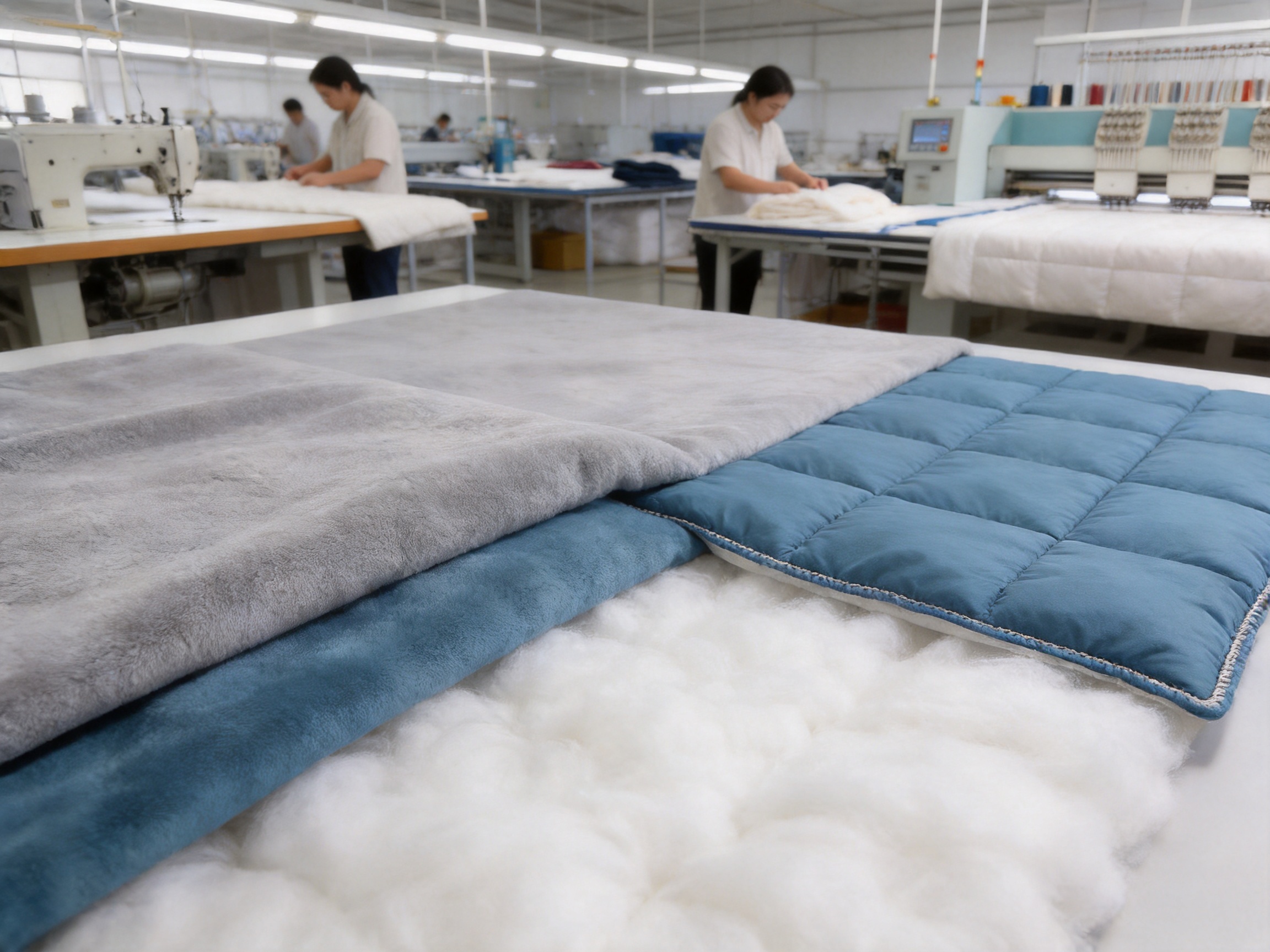
The production process begins with the selection and preparation of the shell fabric and filling materials. The 85gsm microfiber must be checked for appearance, hand feel, color consistency, and suitability for the intended construction. Because the product uses contrasting colors on the front and back, color coordination is an important part of the preparation stage.
The 3D polyester filling must also be prepared according to the specified 250gsm construction. Proper handling helps support even distribution and a consistent finished appearance. Material preparation is an important foundation because defects or inconsistencies at this stage may become more difficult to correct after sewing and finishing.
Cutting and Layer Assembly
After the materials are prepared, the shell components are cut according to the required 140*200 cm product size, with appropriate allowances for sewing and finishing. The two microfiber layers are positioned so that the contrasting colors remain correctly oriented. The filling is placed between the fabric layers, creating the basic quilt sandwich.
Careful alignment is essential. If the layers shift during assembly, the finished quilt may show uneven edges, inconsistent dimensions, or an unbalanced appearance. Experienced operators and suitable production equipment can help maintain alignment and improve repeatability across the order.
Filling Distribution and Quilting Control
The polyester filling must be distributed as evenly as possible across the quilt surface. Even distribution contributes to a more consistent level of warmth and helps prevent thin or overly thick areas. It also supports a neat visual presentation when the quilt is placed flat on a bed.
Quilting and securing methods may be selected according to the product’s design and production requirements. The purpose is to help maintain the relationship between the shell and filling during handling and use. Production control at this stage is important because a quilt that looks attractive when new should also remain functional after repeated folding and routine care.
Perimeter Sewing and Double Stitching
The surrounding edge is then completed using the double-stitch process. This stage requires control of seam alignment, thread tension, corner formation, and overall edge appearance. The double stitch should follow the perimeter consistently and create a stable, clean outline.
Corner finishing deserves particular attention because corners can receive additional stress during folding, bed making, and handling. A carefully completed edge gives the quilt a more polished appearance and supports the product’s practical durability.
Inspection, Finishing, and Packing
After sewing, the quilt can be inspected for dimensions, color presentation, surface cleanliness, seam quality, filling distribution, and general appearance. Any loose threads or visible production irregularities should be addressed before packing. The quilt is then folded or arranged according to the selected packaging requirements.
Good packing protects the product during storage and transportation while allowing buyers to present it attractively. Packaging may be developed for retail shelves, online fulfillment, wholesale cartons, hospitality supply, or private-label programs. The final format should be confirmed between the buyer and factory according to the intended market.
Customization and Sourcing Potential
The standard product specification provides a clear starting point for purchasing: 140*200 cm size, 85gsm microfiber fabric, contrasting front and back colors, 250gsm 3D polyester filling, and a double-stitched surrounding edge. At the same time, the manufacturer’s experience with different home textile products may support discussions about customized programs.
Potential areas for discussion can include alternative color combinations, coordinated bedding collections, packaging presentation, labeling, carton configuration, and product assortment planning. Any adjustment should be evaluated carefully because changes in fabric weight, filling weight, size, stitching, or packaging may affect cost, lead time, care instructions, and final performance.
Color customization may be especially relevant to retailers and bedding brands. A buyer can select contrasting shades that align with a seasonal collection, a private-label palette, a hospitality interior scheme, or a broader home textile range. The dual-color construction makes color planning central to the product’s identity and creates opportunities for differentiated market positioning.
Building a Coordinated Home Textile Collection
The quilt can be combined with other products in a complete bedding program. Matching or complementary pillows, cushions, blankets, mattress protectors, mattress covers, bedspreads, and pillowcases can help retailers create a more organized collection. A coordinated assortment can encourage customers to purchase several products and can help hospitality buyers standardize the appearance of multiple rooms.
Because the quilt uses a simple solid-color concept, it can serve as a foundation for more decorative products. Patterned cushions or printed pillowcases can be added without creating excessive visual competition. Alternatively, the quilt can be paired with similarly understated accessories for a minimalist presentation.
Applications in Different Market Segments
Residential Bedrooms
For household use, the quilt provides a practical combination of comfort and visual flexibility. Its reversible construction enables users to select the side that best suits their room at a particular time. The soft microfiber shell helps create a comfortable sleeping layer, while the 250gsm polyester filling provides everyday warmth and loft.
Guest Rooms and Hospitality
Hotels, inns, serviced apartments, and other accommodation providers often require bedding that looks neat, feels comfortable, and can be incorporated into different room designs. The contrasting front and back colors provide an easy way to vary presentation. The double-stitched edge also supports a tidy appearance during repeated room preparation.
Student Housing and Furnished Rentals
Student residences, furnished apartments, and rental properties may benefit from products that are practical, uncomplicated, and easy to coordinate. The 140*200 cm size can be considered for single-bed applications where the dimension is suitable. The dual-color function gives users some freedom to personalize their space without requiring a large bedding collection.
Retail and E-Commerce
For retail and online sales, the product has several straightforward features that can be communicated clearly: reversible dual-color design, soft microfiber fabric, 250gsm 3D polyester filling, and double-stitch edge construction. These points can be used in product descriptions, packaging copy, visual merchandising, and comparison charts.
Online retailers may also benefit from showing both color orientations in product photography. The product can be presented as a versatile quilt that offers two looks, helping customers understand its value before purchase. Clear specification information should accompany the images so that customers can select the correct size and understand the material construction.
Care, Handling, and Product Information
Care instructions should be confirmed according to the final fabric, filling, finishing, and packaging specifications supplied for each order. Buyers should communicate washing, drying, storage, and temperature guidance clearly to end users. Proper care can help preserve the microfiber surface, filling loft, color appearance, and edge construction.
Users should avoid storing the quilt in a damp environment. When the product is not in use, it should be folded or stored in a clean, dry location with adequate ventilation. After washing, it should be dried thoroughly before storage to help maintain freshness and reduce the risk of moisture-related problems.
Routine handling should also be gentle. Pulling sharply on a corner or dragging the quilt across rough surfaces may place unnecessary stress on the seams. Although the double-stitch perimeter supports durability, correct use remains important for preserving any textile product.
Why Manufacturing Reliability Matters
A visually attractive quilt is only one part of a successful supply program. Buyers also need confidence in production capacity, communication, quality management, and delivery coordination. The manufacturer’s established history, large production site, workforce, equipment, technical personnel, and range of certifications provide a foundation for international sourcing discussions.
The company’s experience since 2002 is significant because home textile manufacturing involves accumulated knowledge. Over time, a factory develops practical understanding of material behavior, sewing performance, filling control, finishing requirements, inspection methods, and customer expectations. This experience can be valuable when producing a straightforward product that still depends on precise execution.
Its broad product portfolio is another strength. Manufacturing quilts alongside pillows, cushions, mattress protectors, blankets, curtains, and related goods can support a more complete approach to customer programs. Buyers seeking multiple home textile categories may be able to reduce the number of separate suppliers involved in a collection, subject to product specifications and commercial evaluation.
The company also emphasizes continuous improvement and innovation. This is important in a competitive bedding market where consumers expect comfort, attractive design, responsible production, and reasonable value. A factory that continues to improve its technical level is better positioned to respond to changes in materials, construction methods, packaging expectations, and market preferences.
Comparison with Common Alternative Quilt Designs
| Quilt Type | Typical Strength | Possible Limitation | Position of the Double Dual Color Polyester Quilt |
|---|---|---|---|
| Single-color polyester quilt | Simple appearance and easy assortment planning | Offers only one visible styling option | Adds reversible color flexibility while retaining a simple design |
| Heavily patterned quilt | Strong decorative impact | May be harder to coordinate with existing décor | Provides contrast through color rather than complex patterns |
| Very thick winter quilt | High level of warmth in cold conditions | Can be heavy, bulky, or less versatile | Uses a moderate 250gsm filling for balanced everyday use |
| Different-fabric reversible quilt | Offers two tactile surfaces | One side may feel less comfortable or less durable than the other | Uses the same microfiber fabric specification on both sides |
| Lightweight decorative cover | Easy to handle and visually attractive | May provide limited warmth | Combines manageable weight with 3D polyester filling for added comfort |
This comparison should be understood as a general product-positioning guide rather than a replacement for sample evaluation. Final performance depends on material quality, construction accuracy, care, and intended use. Nevertheless, the table illustrates how the product combines several desirable features: reversible styling, soft microfiber, moderate filling weight, consistent fabric on both sides, and reinforced edge construction.
How the Product Creates Value for End Users
End-user value comes from the relationship between appearance, comfort, flexibility, and practicality. The Double Dual Color Polyester Quilt allows the bedroom to be refreshed without buying a second quilt. It offers a soft surface on both sides, provides a moderate layer of warmth, and remains manageable for everyday use.
Its clean style may appeal to consumers who want bedding that looks modern without being overly decorative. The color contrast adds a distinctive element, while the absence of complicated patterns makes the quilt easier to coordinate with different sheets and bedroom accessories. This balance can broaden the product’s appeal across age groups and interior preferences.
For families, guest rooms, or seasonal use, the product can be stored and retrieved conveniently. Its practical size and polyester construction make it a sensible choice for situations where bedding may need to be moved, arranged, or replaced efficiently. For commercial users, the same characteristics can support standardized room preparation and consistent presentation.
Buyer Considerations Before Ordering
Buyers should confirm whether the 140*200 cm size matches the target bed dimensions and regional market preferences. They should also identify the intended season and climate, since a 250gsm filling may be positioned differently in various markets. Color combinations should be reviewed through physical samples whenever possible because screen displays may not reproduce textile colors accurately.
Sample evaluation should include the microfiber hand feel, color contrast, overall weight, filling distribution, edge appearance, stitching consistency, dimensions, folding behavior, and packaging. Buyers may also request relevant material documentation, test reports, certification information, and care-label details appropriate to the destination market.
For larger programs, it is helpful to establish acceptable tolerances for size, color, weight, seam appearance, and packaging. Written specifications can reduce misunderstanding and make production inspection more objective. The final order should clearly identify all agreed details, including whether colors, labels, packaging, or other components differ from the standard product.
Q&A About the Double Dual Color Polyester Quilt
What does “dual color” mean in this quilt?
It means that the front and back sides present different colors. The quilt can be turned over so that either color is displayed on the bed.
Are the front and back made from different materials?
No. The product uses the same 85gsm microfiber fabric specification on the front and back. The main difference is the contrasting color.
What is the size of the quilt?
The listed size is 140*200 cm. Buyers should confirm the suitability of this dimension for their intended beds and market.
What type of filling does it use?
The filling is 3D polyester with a specified weight of 250gsm. It is intended to provide a soft, lofty, and moderately warm bedding layer.
Is the quilt heavy?
The product is designed as a practical microfiber quilt with a 250gsm filling. Its final total weight depends on the shell, filling, stitching, and production tolerances, but the construction is intended to provide warmth without the bulk of a very heavy quilt.
What is the purpose of the double stitching?
The surrounding double-stitch process helps reinforce the quilt’s perimeter, maintain a neat edge, and support durability during regular handling.
Can the quilt be used in different bedroom styles?
Yes. Its simple color-block design can coordinate with modern, minimalist, casual, traditional, and hospitality interiors. The reversible sides provide additional styling flexibility.
Is it suitable for hotels or guest rooms?
It may be suitable for selected hospitality applications, particularly single-bed or compact-room settings where the 140*200 cm size is appropriate. Buyers should evaluate care requirements, performance expectations, and local regulations before placing a commercial order.
Can colors or packaging be customized?
Customization should be discussed with the manufacturer. Potential subjects may include color combinations, packaging, labeling, and coordinated product assortments. Any customization must be confirmed in the final technical and commercial documents.
Does the manufacturer produce other home textile products?
Yes. The company produces products including quilts, pillows, cushions, bedspreads, travel quilts, mattress protectors, blankets, quilt and pillowcases, shower curtains, and curtains.
What manufacturing resources does the company have?
The company was established in 2002, covers approximately 21,000 square meters, has a construction area of about 18,000 square meters, employs more than 320 people, and is equipped with various advanced production machines and professional technical personnel.
Which certifications and management programs are associated with the company?
The company states that it has passed ISO9001, ISO14001, OEKO-TEX Standard 100, OEKO-TEX STeP, GRS, and BSCI-related certifications or programs. Buyers should request current documentation and confirm the scope applicable to their order.
How should the quilt be cared for?
Care instructions should follow the final product label and confirmed supplier recommendations. In general, the quilt should be cleaned, dried, and stored according to the approved instructions, and it should be kept in a clean, dry environment when not in use.
Conclusion
The Double Dual Color Polyester Quilt combines a clear visual advantage with a practical bedding construction. Its contrasting front and back colors provide two styling options in one product, while the same 85gsm microfiber fabric on both sides supports a consistent soft touch. The 250gsm 3D polyester filling adds balanced loft and everyday warmth, and the surrounding double-stitch process contributes to a neat and reinforced finish.
Compared with conventional single-color quilts, the product offers greater flexibility. Compared with heavily patterned bedding, it provides easier coordination. Compared with very thick quilts, it offers a more manageable construction for everyday use. Compared with reversible products made from unrelated fabrics, it delivers a more consistent tactile experience on both sides.
Its commercial potential is supported by the manufacturer’s experience, production area, workforce, technical resources, broad home textile portfolio, and stated international certifications and management programs. These strengths make the product relevant to retailers, wholesalers, hospitality buyers, furnished accommodation providers, and bedding brands seeking a simple yet versatile quilt for their collections.
For buyers looking for a practical microfiber quilt with reversible styling, soft construction, moderate filling, and reinforced edge finishing, this product provides a well-balanced option. Its design is uncomplicated, but its value comes from the way comfort, appearance, manufacturing discipline, and sourcing flexibility work together.
References
1. Product specification sheet for the Double Dual Color Polyester Quilt, including size, shell fabric, filling, color construction, and stitching process.
2. General textile manufacturing principles concerning microfiber fabrics, polyester fiberfill, quilting construction, seam finishing, and bedding inspection.
3. ISO 9001 quality management system principles and process-control guidance.
4. ISO 14001 environmental management system principles for manufacturing organizations.
5. OEKO-TEX Standard 100 textile safety framework and harmful-substance testing concepts.
6. OEKO-TEX STeP sustainable textile and leather production guidance.
7. Global Recycled Standard principles for recycled materials and supply-chain verification.
8. Business Social Compliance Initiative principles concerning responsible supply-chain practices.
9. Company-provided manufacturing profile and home textile product information for Tongxiang Xinlong Bedding Co., Ltd.



 +86-573-88798028