



 Français
 Español
 Deutsch
Content
- 1 Understanding the Decorative Polyester Printed Cushion
- 2 Key Product Specifications
- 3 Why the 45x45cm Format Is So Versatile
- 4 The Visual Advantages of Printed Polyester Fabric
- 5 High-Support Polyester Filling and Everyday Comfort
- 6 Advantages Over Ordinary Decorative Cushions
- 7 Applications in the Living Room
- 8 Applications in the Bedroom
- 9 Manufacturing Strengths Behind the Product
- 10 How a Professional Production Process Supports Cushion Quality
- 11 Quality Management and International Certifications
- 12 Innovation and Response to Market Demand
- 13 Commercial Benefits for Retailers and Distributors
- 14 Interior Design Benefits
- 15 Care, Handling, and Product Longevity
- 16 Responsible Sourcing Considerations
- 17 What Buyers Should Confirm Before Ordering
- 18 Frequently Asked Questions
- 18.1 What is the size of the Decorative Polyester Printed Cushion?
- 18.2 What fabric is used on the cushion?
- 18.3 What type of filling does the cushion contain?
- 18.4 Can the cushion be used in both the living room and bedroom?
- 18.5 Is the cushion intended only for decoration?
- 18.6 What makes this cushion different from a plain cushion?
- 18.7 Can it be combined with other home textile products?
- 18.8 Is customization possible?
- 18.9 What should buyers request when evaluating a sample?
- 18.10 What manufacturing capabilities support this product?
- 18.11 Which certifications are associated with the manufacturer?
- 18.12 How should the cushion be cared for?
- 19 Conclusion
- 20 References
- 21 Product: Decorative Polyester Printed Cushion
A decorative cushion is one of the simplest ways to refresh an interior without replacing major furniture or making extensive changes to a room. The right cushion can introduce color, pattern, softness, and visual balance to a sofa, armchair, bed, bench, reading corner, or hospitality setting. The Decorative Polyester Printed Cushion combines these qualities in a practical 45x45cm format, using fashionable printed polyester fabric and high-support polyester filling to create an attractive and comfortable home accessory.
Although cushions are often considered small furnishings, they have an important influence on the atmosphere of a room. A carefully selected printed cushion can connect different colors, soften strong furniture lines, add seasonal character, and make a space feel more welcoming. At the same time, the cushion must be easy to handle, comfortable to use, and suitable for regular interior styling. These requirements make fabric selection, filling performance, construction quality, and manufacturing consistency especially important.
This article examines the Decorative Polyester Printed Cushion in detail. It discusses the product’s design, materials, comfort, styling value, potential applications, quality considerations, and advantages over ordinary decorative cushions. It also explains how professional manufacturing capabilities, production equipment, technical personnel, quality systems, and recognized certifications support dependable home textile production.
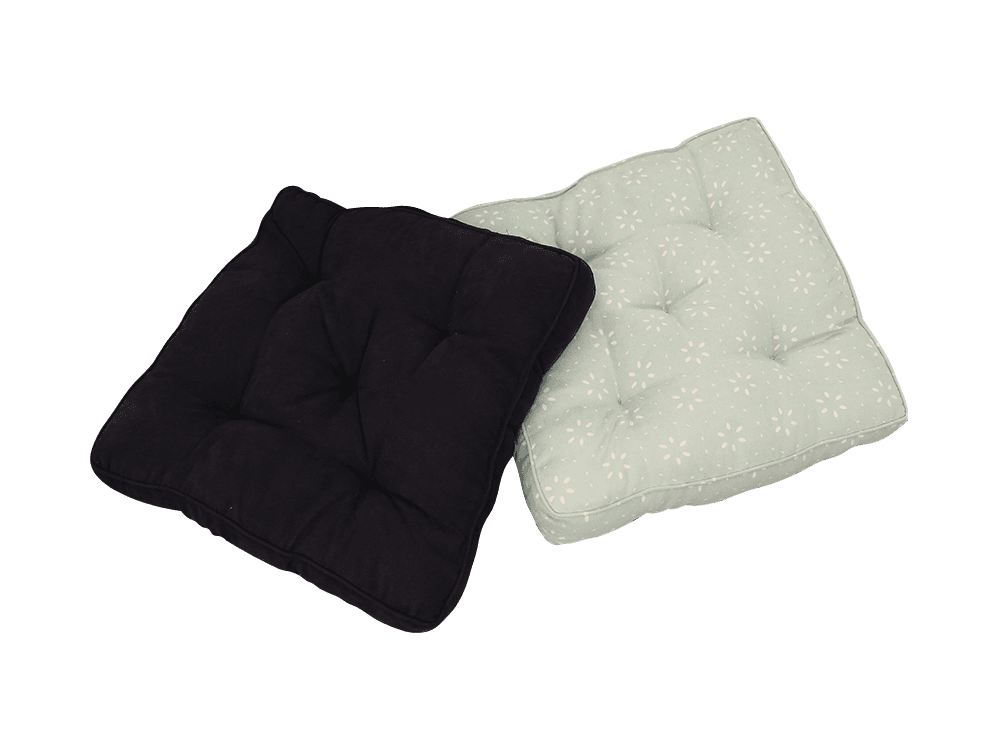
Decorative Polyester Printed Cushion
Understanding the Decorative Polyester Printed Cushion
The Decorative Polyester Printed Cushion is designed primarily as a decorative and supportive home textile accessory. Its 45x45cm square shape gives it a versatile profile that works well with many furniture sizes and interior styles. It is large enough to make a visible design statement while remaining easy to move, arrange, store, and combine with other cushions.
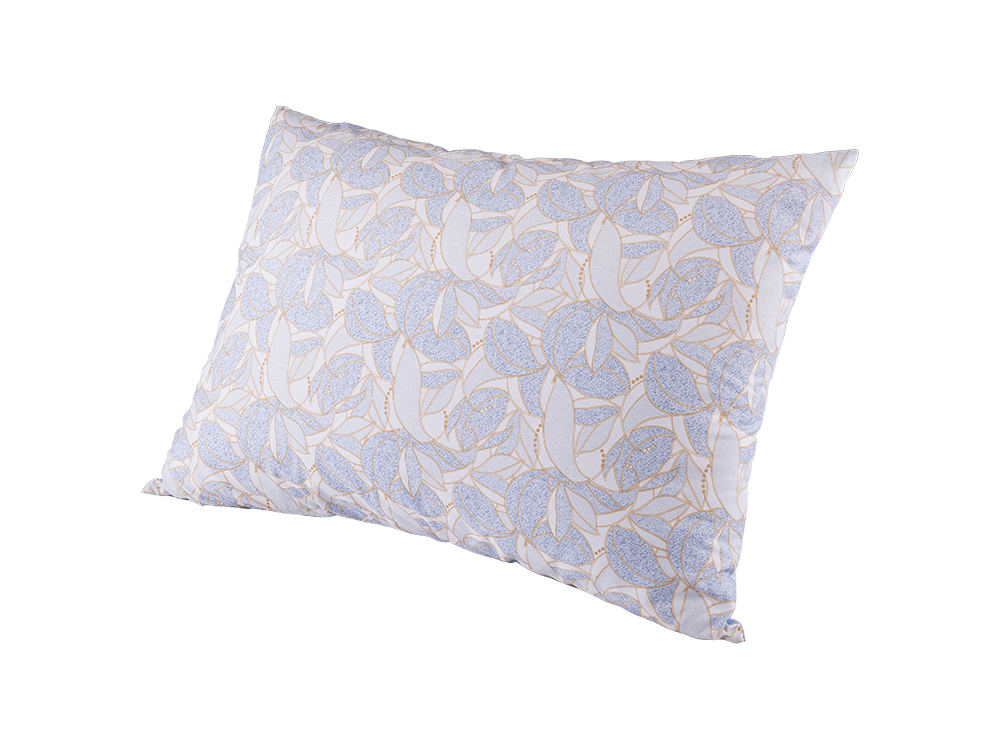
The outer fabric is fashionable printed polyester. Polyester is widely used in home textiles because it can provide a practical balance between visual appeal, strength, shape retention, and production flexibility. A printed surface allows designers to create patterns that range from subtle and elegant to lively and contemporary. This makes the cushion suitable for customers who want more than a plain textile accessory.
The cushion uses high-support polyester filling. This filling is intended to provide a fuller and more supportive feel than a flat decorative insert. It can help the cushion maintain a pleasing appearance when arranged on a sofa or bed, while also providing comfortable support when used behind the back or under the arm. The exact degree of softness or firmness can depend on the final construction and filling quantity, but the high-support specification indicates that the product is designed to offer useful body and shape support in addition to decoration.
The product is suitable for living rooms and bedrooms, where it can bring additional warmth and visual comfort to the home. Its application is not limited to one furniture type. It may be styled on a main sofa, placed in a bedroom arrangement, positioned on a lounge chair, or used as part of a coordinated collection of cushions and other home textile products.
Key Product Specifications
Product type |
Decorative cushion |
Shape |
Square |
Size |
45x45cm |
Outer fabric |
Fashionable printed polyester fabric |
Filling |
High-support polyester filling |
Primary uses |
Living room and bedroom decoration, comfort, and support |
Product character |
Decorative, practical, versatile, and suitable for coordinated interior styling |
Why the 45x45cm Format Is So Versatile
Size is one of the most important factors in cushion selection. A cushion that is too small may disappear among large furniture pieces, while one that is too large may dominate a compact seating area. The 45x45cm format offers a balanced middle dimension that is suitable for many common residential and commercial interiors.
On a sofa, a 45x45cm cushion can be used individually as a focal accent or combined with other square and rectangular cushions. Several cushions can be arranged in a symmetrical composition, while a more relaxed arrangement can use different patterns and positions to create an informal appearance. On a bed, the cushion can be placed in front of sleeping pillows or used as part of a layered decorative display.
The square shape is also straightforward for retailers, interior designers, and home textile buyers. It is easy to display, package, stack, and organize. Standardized sizing can simplify assortment planning, especially when a customer is building a collection of multiple colors or prints. It also makes the cushion easier to coordinate with common furniture proportions.
For hospitality environments, the format can provide a manageable way to introduce decorative detail into guest rooms, lounges, waiting areas, and boutique accommodation. The cushion is large enough to contribute to the overall design but compact enough for housekeeping teams to arrange efficiently.
The Visual Advantages of Printed Polyester Fabric
Fabric is the most visible part of a decorative cushion. The surface determines how the product looks, feels, and interacts with surrounding furniture. Printed polyester fabric gives the product a design-oriented appearance, allowing the cushion to become an active part of the room rather than merely a neutral support item.
A printed pattern can perform several design functions. It can introduce a new accent color, repeat a color already present in curtains or upholstery, provide contrast against plain furniture, or soften a room dominated by hard surfaces. Depending on the pattern, it may also contribute to a modern, traditional, geometric, botanical, seasonal, or relaxed atmosphere.
Polyester is also a practical choice for decorative home textiles. It is commonly selected for its ability to support consistent textile production and detailed surface design. When properly manufactured, printed polyester can offer a clean visual presentation and a stable fabric platform for repeated patterns. This is particularly valuable for buyers who require multiple units with a consistent appearance.
Compared with a basic unprinted cushion, a fashionable printed cushion offers greater immediate visual impact. A plain cushion may depend heavily on its color or texture, while a printed cushion can communicate a more complete design concept. This can help retailers create stronger product displays and help consumers achieve a noticeable interior update without purchasing an entirely new furniture set.
The printed design also supports collection building. A cushion can be paired with plain bedding, a patterned throw, a bedspread, curtains, or other home accessories. It does not need to match every item exactly. In many interiors, a coordinated relationship between colors, scale, and mood is more attractive than identical patterns throughout the room.
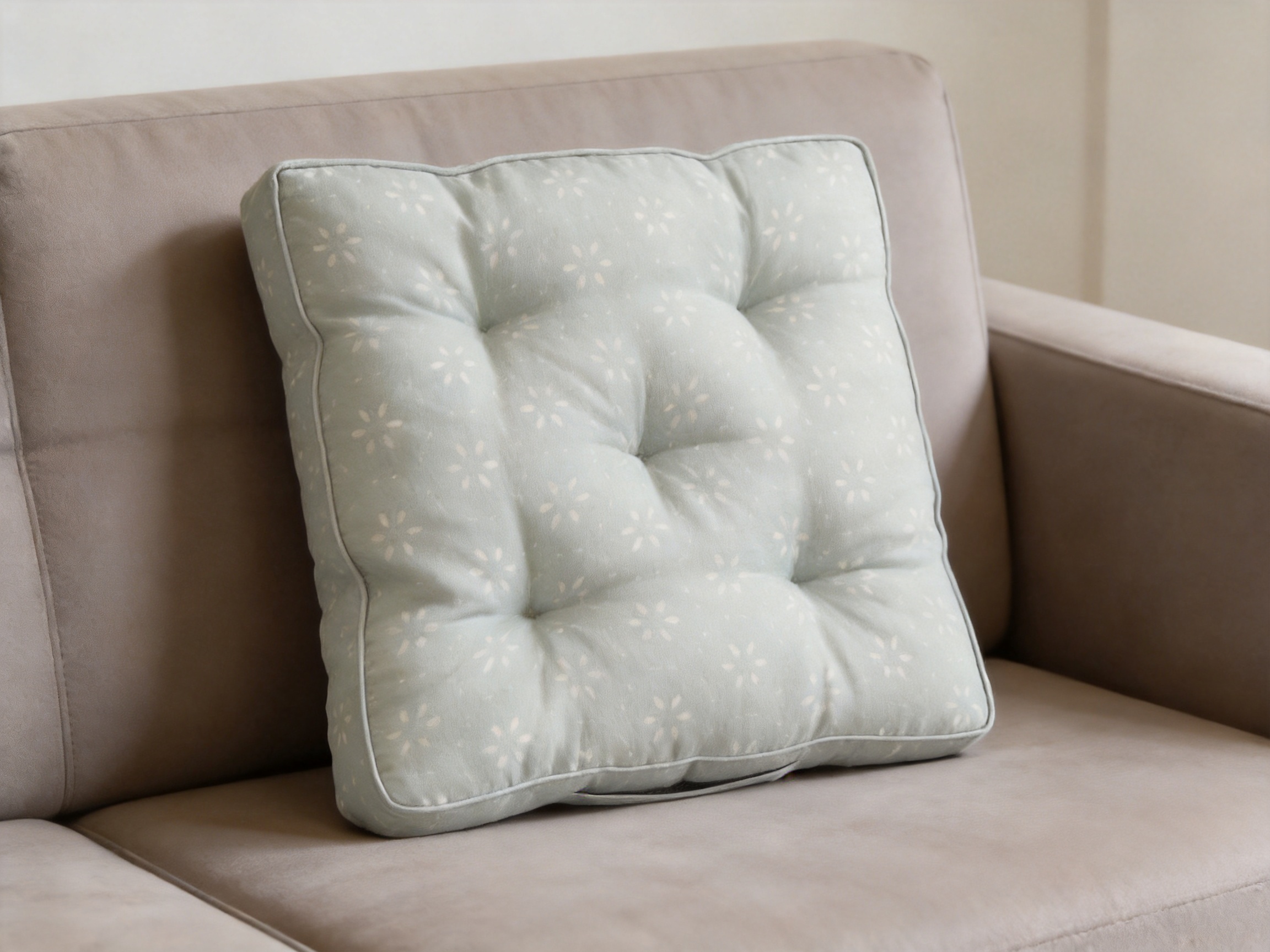
High-Support Polyester Filling and Everyday Comfort
The filling plays a major role in how a cushion performs after it has been placed in the home. A decorative cushion should not look attractive only when it is new. It should also provide a useful level of body and shape support during normal arrangement and use. High-support polyester filling is selected for this purpose.
Compared with a very loose or insufficiently filled insert, a high-support filling can create a fuller profile. This helps the cushion look substantial when placed against a sofa back or arranged on a bed. A fuller cushion can also provide more effective support behind the lower back, shoulders, or arms when the user is seated.
The filling contributes to the cushion’s resilience and visual structure. When the cushion is moved, leaned against, or rearranged, the filling should help it return to an attractive form after suitable care. Its performance is influenced by the filling quantity, internal distribution, outer fabric, stitching, and overall production process. For this reason, filling quality cannot be considered separately from manufacturing consistency.
High-support polyester filling is also appropriate for buyers seeking a practical synthetic alternative for decorative home textiles. Polyester filling is widely used in bedding and cushion applications because it can be incorporated into standardized manufacturing systems. It enables manufacturers to produce cushions in consistent volumes while maintaining a defined support specification.
The product should be understood as a decorative cushion rather than a medical or orthopedic support product. Its purpose is to provide general comfort, visual warmth, and everyday support in living and bedroom environments. Nevertheless, the use of a high-support filling gives it a functional advantage over purely ornamental cushions that may have limited structure or collapse easily.
Advantages Over Ordinary Decorative Cushions
More Than a Decorative Surface
Some decorative cushions are designed mainly for appearance and may offer limited support. The Decorative Polyester Printed Cushion combines a fashionable exterior with high-support filling, giving it both design value and practical usefulness. This combination allows the product to serve as part of an interior arrangement while remaining comfortable to handle and use.
Balanced Size for Multiple Environments
The 45x45cm format is suitable for many room types and furniture arrangements. Instead of being restricted to one particular sofa or bed design, it can be used in compact apartments, family homes, guest rooms, lounges, and other interiors. This versatility is valuable for retailers and project buyers who need products with broad market appeal.
Strong Styling Potential
The printed polyester surface creates more visual character than a basic solid-color cushion. Patterns can be used to create a focal point, establish a seasonal theme, or add depth to a neutral room. This gives the product a clear merchandising advantage, especially when displayed in groups or coordinated with other home textile products.
Practical Synthetic Construction
Polyester fabric and polyester filling provide a consistent synthetic construction that is familiar to the home textile market. This supports predictable product planning and allows manufacturers to develop repeatable production methods. For customers seeking a decorative cushion for larger-volume sourcing, material consistency is an important consideration.
Suitable for Residential and Commercial Styling
The cushion’s combination of neutral square proportions, printed design, and supportive filling allows it to serve both household and commercial decoration needs. It may be used in homes, furnished apartments, showrooms, hotels, guesthouses, lounges, offices, and other settings where a comfortable decorative accent is required.
Easy Coordination With Other Home Textiles
A cushion is often purchased as part of a broader interior concept. This product can be paired with quilts, blankets, mattress covers, mattress protectors, pillows, bedspreads, and other soft furnishings. The printed design can provide a connecting accent between otherwise different products, helping create a complete room presentation.
Applications in the Living Room
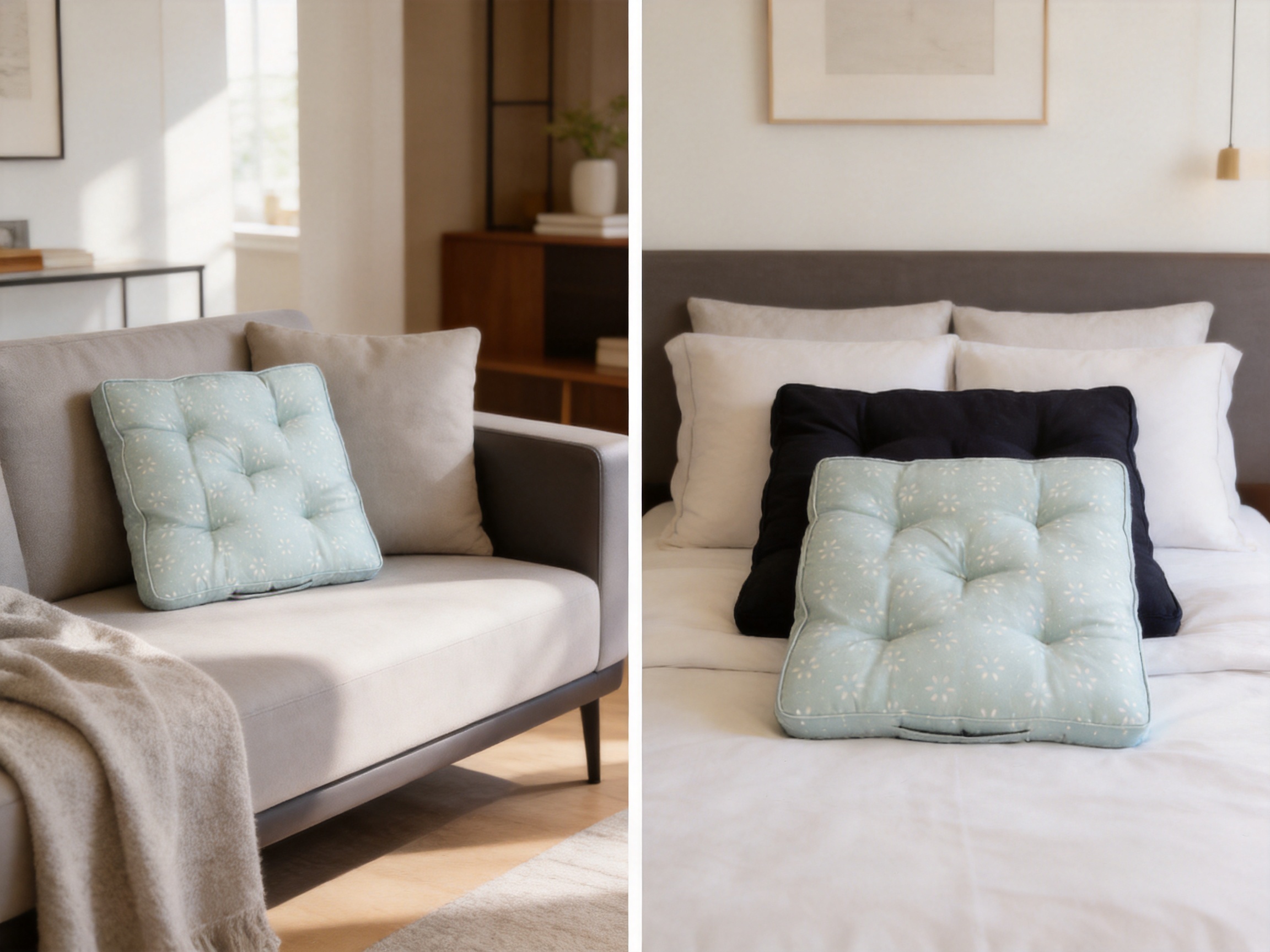
In the living room, the cushion can be used to make a sofa appear more inviting and visually complete. A neutral sofa may benefit from a printed accent that introduces color or pattern. Conversely, a cushion with a controlled print can help balance a strongly colored sofa by adding a related tone or a contrasting detail.
One cushion can be placed on a single chair or at the corner of a sofa. Two or more cushions can be arranged symmetrically at opposite ends of a large sofa. For a more relaxed style, cushions can be grouped in different positions, with the printed cushion placed in front of or beside plain cushions.
The cushion may also be useful in reading corners and lounge areas. When positioned against a chair back, it can provide additional support while adding personality to the space. On a window seat or bench, it can make the area feel softer and more comfortable.
For retailers, the product can be displayed with other living room textiles to demonstrate how a small accessory can influence a complete interior. A printed cushion placed beside a throw blanket or a plain quilt can communicate a practical styling solution to customers who want an affordable room refresh.
Applications in the Bedroom
In the bedroom, a decorative cushion can be arranged in front of standard sleeping pillows to create a layered appearance. The square shape provides a visual break between rectangular pillows and the larger surface of the bed. This arrangement can make the bed appear more finished and carefully styled.
The cushion can also be positioned on a bedroom chair, bench, storage seat, or upholstered headboard area. Its printed fabric may be selected to complement bedding colors, curtains, or wall decoration. Because the cushion is not limited to sleeping use, it can remain part of the room’s visual design during the day.
For guest rooms, decorative cushions can contribute to a welcoming presentation. They add a sense of warmth without requiring major changes to the bed, furniture, or wall colors. In furnished apartments and hospitality settings, this type of accessory can help create a more coordinated interior concept across multiple rooms.
The cushion can also support seasonal merchandising. A fashionable print may be used to introduce a spring, autumn, festive, natural, or contemporary theme. Changing a few cushions can refresh the appearance of a bedroom more easily than replacing larger textile products.
Manufacturing Strengths Behind the Product
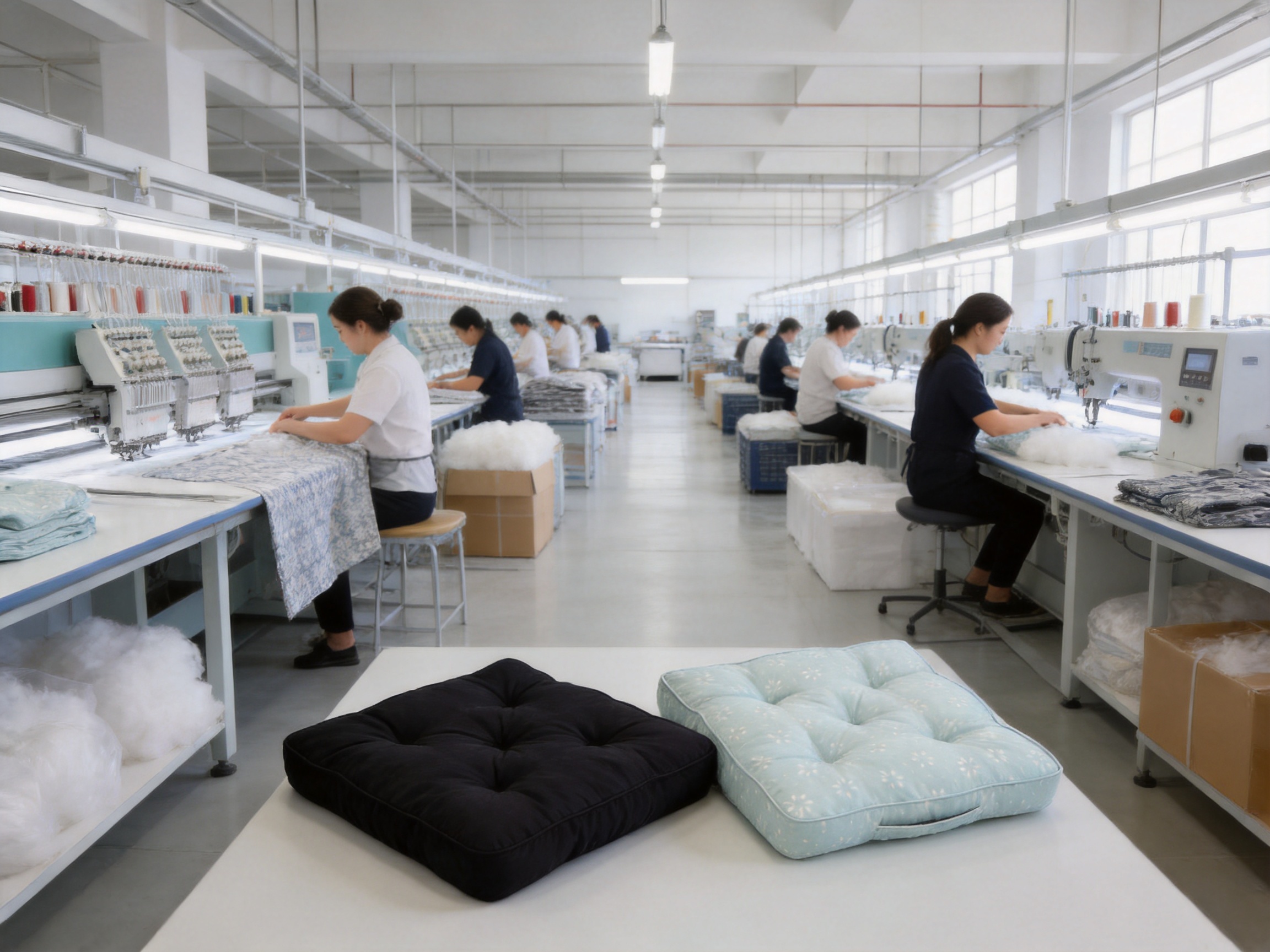
The quality of a cushion depends not only on its listed materials but also on the production environment in which it is made. Tongxiang Xinlong Bedding Co., Ltd. was established in January 2002 and has developed extensive experience in the home textile field. Its product range includes quilts, pillows, cushions, bedspreads, travel quilts, mattress protectors, blankets, quilt and pillowcases, shower curtains, curtains, and other household textile products.
The company operates in Longxiang Industrial Park, Wuzhen Town, Zhejiang Province, and covers approximately 21,000 square meters, including a construction area of approximately 18,000 square meters. A production base of this scale can support organized manufacturing, material management, production planning, quality inspection, and coordination across multiple home textile categories.
The company has more than 320 employees and is equipped with various advanced production machines. This combination of personnel and equipment supports the manufacture of products that require different fabrics, fillings, dimensions, constructions, and finishing requirements. For a decorative cushion, such resources are relevant to fabric handling, filling control, sewing, shaping, inspection, and packaging.
Professional technical personnel contribute to the development and refinement of household products. Their role can include selecting suitable materials, adjusting production methods, developing new designs, improving construction details, and responding to changing market preferences. This technical capability is important for printed cushions because appearance and performance must be considered together.
How a Professional Production Process Supports Cushion Quality
Material Planning and Fabric Selection
The process begins with the selection and preparation of suitable printed polyester fabric. The fabric must support the intended visual appearance and be appropriate for cushion construction. Manufacturers consider pattern presentation, fabric handling, cutting requirements, sewing behavior, and compatibility with the selected filling.
Consistent material planning helps reduce variation among finished units. For buyers, this is important because cushions are frequently sold in pairs, sets, collections, or coordinated room presentations. Differences in fabric appearance or construction can affect the quality of the final display.
Pattern Alignment and Cutting
Printed fabrics require careful cutting because the pattern must be presented attractively on the finished cushion. A professional production process pays attention to the relationship between the print and the 45x45cm finished dimensions. Accurate cutting can improve visual balance and reduce unnecessary material waste.
Pattern alignment is particularly important when a design contains lines, repeated geometric shapes, borders, or directional elements. Even when the print is intentionally informal, consistent production helps ensure that the cushion looks carefully made rather than randomly assembled.
Sewing and Edge Construction
Sewing creates the basic structure that holds the fabric and filling together. Consistent seams help maintain the cushion’s shape and contribute to its durability during handling and normal use. The edge construction must also support a neat appearance so that the printed fabric remains the main visual focus.
Production controls can include checking seam continuity, corner formation, thread performance, and overall dimensions. These details may appear small, but they have a direct influence on whether the cushion looks full, square, and professionally finished.
Filling and Shape Formation
High-support polyester filling must be distributed in a way that supports the intended cushion profile. Uneven filling can create thin areas, irregular corners, or an unstable appearance. A controlled production process helps ensure that the insert is adequately filled and that the cushion maintains a balanced shape.
After filling, the cushion may require shaping and inspection. The objective is to create a consistent relationship between the outer fabric and internal filling. This is especially important for decorative products, because an uneven profile can be easily noticed when the cushion is displayed on a sofa or bed.
Final Inspection and Packing
Final inspection provides an opportunity to review the finished product before shipment. Typical inspection considerations may include dimensions, surface appearance, print presentation, seam quality, filling distribution, cleanliness, and packaging condition. The exact inspection procedure depends on the buyer’s requirements and the production order.
Appropriate packing helps protect the product during handling and transportation. Since cushions are soft goods, packaging should help maintain cleanliness and reduce the risk of unnecessary compression, moisture exposure, or surface damage. Organized packing also supports efficient warehouse management and delivery.
Quality Management and International Certifications
The company reports that it has passed international certifications and standards including ISO9001, ISO14001, OEKO-TEX, OEKO-STEP, GRS, and BSCI. These certifications and systems reflect attention to quality management, environmental management, textile-related requirements, recycled material standards where applicable, and social compliance.
ISO9001 is associated with quality management systems. In a home textile manufacturing environment, a structured quality system can support documented procedures, process control, corrective actions, and ongoing improvement. These elements are valuable when producing cushions in repeat quantities or for customers with defined quality expectations.
ISO14001 relates to environmental management systems. Responsible environmental management can help a manufacturer identify and control relevant environmental impacts associated with production. For buyers increasingly concerned with responsible sourcing, this type of system provides useful information about the supplier’s management approach.
OEKO-TEX-related certifications are associated with textile safety and the assessment of harmful substances under applicable certification requirements. Buyers should confirm the specific certificate scope and validity for the product or material being purchased. Nevertheless, the company’s stated certification framework demonstrates an effort to meet recognized international expectations.
GRS is associated with recycled content and chain-of-custody requirements for eligible products. Not every product automatically carries a recycled claim simply because a manufacturer holds a related certification. Buyers should verify whether a specific cushion, fabric, or filling is covered by the relevant documentation before making a product claim.
BSCI is associated with social compliance evaluation in supply chains. Its presence in a company’s certification and assessment profile can be relevant to international customers that require responsible workplace and sourcing practices.
Certifications do not replace product-specific testing or buyer inspection. Instead, they provide a foundation for supplier evaluation and process confidence. Responsible buyers should review the relevant documentation, product specifications, testing needs, packaging requirements, and quality standards for each order.
Innovation and Response to Market Demand
Home textile preferences change continuously. Consumers may seek new prints, seasonal colors, softer interiors, more practical materials, or coordinated products for complete rooms. A manufacturer that can respond to these changes is better positioned to support retailers, distributors, hospitality buyers, and private-label customers.
The company states that it continues to develop and innovate in response to changes in the home textile industry. This approach is relevant to decorative cushions because the product category depends strongly on design freshness. A cushion with an attractive construction may still perform poorly in the market if its appearance does not suit current consumer preferences.
Innovation can include the development of new printed patterns, improvements in filling, adjustments to size, changes in construction, more efficient production methods, and coordinated product ranges. For buyers, the ability to discuss these areas with an experienced manufacturer can make it easier to build a distinctive home textile collection.
Customization is another important consideration. The available product concept can serve as a basis for discussions about colors, prints, dimensions, labels, packaging, and collection coordination, subject to technical feasibility and order requirements. Customers seeking customized home bedding can benefit from working with a manufacturer that already produces multiple categories of household textiles.
Commercial Benefits for Retailers and Distributors
Decorative cushions can be useful products for retailers because they combine visual appeal with relatively simple merchandising. They can be displayed on furniture, in bedding departments, in seasonal collections, or beside related home accessories. A printed cushion can attract attention and encourage customers to consider complementary products.
The 45x45cm size also supports straightforward inventory planning. Retailers can organize several prints in the same display area and create a collection without managing numerous dimensions. A consistent size makes it easier to compare patterns, group products, and build coordinated color stories.
The product can support different price and style segments depending on the selected print, packaging, collection concept, and order requirements. It may appeal to customers seeking a small decorative update, an affordable gift, a seasonal accessory, or an addition to a larger bedding purchase.
For distributors, sourcing from a manufacturer with a broad home textile product range may simplify supplier management. Instead of purchasing cushions from one source and quilts, pillows, blankets, and mattress protectors from several unrelated suppliers, a buyer may explore a broader product portfolio with one experienced manufacturing partner.
For private-label programs, the cushion can serve as a flexible product platform. Buyers may request a particular print direction, branding approach, packing format, or coordinated range. All customization should be confirmed in advance, including minimum order quantities, lead times, material availability, artwork requirements, testing, and packaging specifications.
Interior Design Benefits
The Decorative Polyester Printed Cushion offers a simple way to create contrast and rhythm in a room. A printed cushion can repeat one color from a rug or curtain, introduce a complementary color, or create a pattern bridge between plain and textured surfaces.
It can also contribute to visual layering. Interior arrangements often look more complete when they combine different scales, shapes, and surfaces. The square cushion provides a stable geometric form, while its printed surface adds detail. When combined with plain cushions or rectangular pillows, it can help create depth without making the arrangement overly complicated.
The cushion’s decorative role is especially valuable in neutral interiors. Beige, gray, white, and natural furniture can provide a calm foundation, but they may also appear visually plain. A fashionable print adds character while allowing the furniture to remain unchanged. This makes the cushion a practical choice for renters, homeowners, and businesses that want flexible decoration.
In more colorful rooms, the cushion can be used to reinforce the existing palette. A thoughtful print can connect several colors within the room and prevent individual furniture pieces from appearing disconnected. The goal does not always need to be exact matching; coordinated contrast can create a more sophisticated result.
Care, Handling, and Product Longevity
Proper care helps decorative cushions maintain their appearance and shape. Buyers should always follow the care instructions supplied with the specific product because cleaning methods may depend on the fabric, construction, filling, and finishing details. The general principles of gentle handling, appropriate cleaning, and thorough drying are important for many textile products.
The cushion should be kept in a clean, dry environment when not in use. Prolonged exposure to excessive moisture, direct sunlight, sharp objects, or rough surfaces may affect the fabric or printed appearance. Regular light adjustment and reshaping can help maintain an even presentation.
When the cushion is used on furniture, it should be arranged so that the seams and corners are not subjected to unnecessary strain. If the cushion becomes compressed during storage or transportation, it may require gentle reshaping before display. Because the product uses high-support polyester filling, suitable handling can help it recover its intended form.
For commercial users, a care and replacement schedule can support consistent room presentation. Hotels, guesthouses, showrooms, and furnished apartments may choose to rotate decorative cushions according to season, occupancy, or interior design updates. This can help preserve the appearance of the products and maintain a fresh environment.
Responsible Sourcing Considerations
When sourcing decorative cushions, buyers should evaluate more than appearance and price. Material information, production capability, quality management, environmental practices, social compliance, packaging, and documentation all contribute to the suitability of a supplier.
The company’s stated certifications and long operating history provide useful points for supplier evaluation. Its experience in quilts, pillows, cushions, mattress protectors, blankets, and related products indicates familiarity with the technical requirements of home textile manufacturing. Its production scale and workforce also suggest the ability to manage structured orders and multiple product categories.
However, responsible sourcing remains a shared process between the supplier and buyer. Customers should specify their requirements clearly, including product dimensions, fabric composition, print standards, filling specification, testing, labeling, carton packing, inspection procedures, and delivery expectations. Product-specific documents should be reviewed before commercial claims are made.
Buyers may also ask for samples before confirming an order. Sampling can help evaluate print clarity, color balance, hand feel, filling support, corner shape, seam quality, dimensions, and packaging. A production sample approved by the buyer can provide a useful reference for later bulk inspection.
What Buyers Should Confirm Before Ordering
Before placing an order, customers should confirm whether the standard product specification meets their market requirements. The basic product is a 45x45cm decorative cushion with printed polyester fabric and high-support polyester filling. If the buyer requires a different size, fabric, filling weight, print, label, or package, these details should be discussed during the quotation and sample stages.
Artwork should be reviewed carefully when custom printing is requested. Buyers should provide clear information about color expectations, pattern scale, repeat direction, placement, and acceptable variation. Printed textiles can be influenced by production conditions, so approval procedures should be established before bulk manufacturing.
Packaging is another important area. A retail-ready package may require branding, barcodes, inserts, care labels, or specific folding and compression instructions. A hospitality buyer may require bulk packing instead. These requirements affect cost, handling, storage, and presentation.
Order planning should also consider production schedules and material availability. Printed fabrics and special packaging may require additional preparation time. Confirming all technical details early can reduce delays and minimize the risk of differences between the approved sample and the final order.
Frequently Asked Questions
What is the size of the Decorative Polyester Printed Cushion?
The specified size is 45x45cm. This square format is suitable for sofas, beds, chairs, benches, guest rooms, and other decorative arrangements.
What fabric is used on the cushion?
The cushion uses fashionable printed polyester fabric. The printed surface provides visual character and supports coordination with different interior styles.
What type of filling does the cushion contain?
The listed filling is high-support polyester filling. It is intended to provide a fuller profile and useful everyday support while maintaining the cushion’s decorative appearance.
Can the cushion be used in both the living room and bedroom?
Yes. The product is suitable for decorating living rooms and bedrooms. It can be placed on sofas, chairs, beds, benches, or other appropriate furniture.
Is the cushion intended only for decoration?
No. Although its primary role is decorative, the high-support filling gives it practical comfort and general support value. It is not intended to replace a medical or orthopedic support product.
What makes this cushion different from a plain cushion?
The printed polyester surface gives it a stronger visual identity than a basic solid-color cushion. Its design can introduce pattern, accent color, and decorative detail into a room.
Can it be combined with other home textile products?
Yes. It can be coordinated with quilts, blankets, pillows, bedspreads, mattress covers, mattress protectors, curtains, and other home furnishings. Buyers can use it as part of a broader room collection.
Is customization possible?
Customization should be discussed with the manufacturer. Possible subjects may include print, color, size, labels, packaging, and coordinated product development, depending on technical feasibility and order requirements.
What should buyers request when evaluating a sample?
Buyers should review the dimensions, print appearance, fabric feel, filling support, corner formation, seam quality, cleanliness, labeling, and packaging. They should also compare the sample with the agreed product specification.
What manufacturing capabilities support this product?
The manufacturer has operated since 2002, covers approximately 21,000 square meters, employs more than 320 people, and uses various advanced production machines. It also has technical personnel and experience across multiple home textile categories.
Which certifications are associated with the manufacturer?
The company states that it has passed ISO9001, ISO14001, OEKO-TEX, OEKO-STEP, GRS, and BSCI-related international certifications or assessments. Buyers should confirm the current certificate scope and whether it applies to the specific product and order.
How should the cushion be cared for?
Care should follow the instructions provided for the specific product. In general, the cushion should be protected from excessive moisture, harsh handling, sharp surfaces, and prolonged direct sunlight. Gentle reshaping and suitable storage can help maintain its appearance.
Conclusion
The Decorative Polyester Printed Cushion offers a practical combination of fashionable design, versatile sizing, and supportive comfort. Its 45x45cm square format allows it to work effectively in living rooms, bedrooms, hospitality spaces, furnished apartments, showrooms, and other interiors. The printed polyester fabric gives the cushion a distinctive visual presence, while the high-support polyester filling adds useful structure and everyday comfort.
Compared with an ordinary decorative cushion that may provide only surface decoration, this product is designed to contribute to both appearance and function. It can refresh a room, support a layered bed arrangement, enhance a sofa, create color connections, and form part of a coordinated home textile collection.
The product is supported by a manufacturer with more than two decades of home textile experience, a substantial production facility, more than 320 employees, advanced production equipment, technical personnel, and a broad product portfolio. The company’s stated quality, environmental, textile, recycled-material, and social-compliance certifications provide additional points for international buyers to consider during supplier evaluation.
For retailers, distributors, interior designers, hospitality buyers, and private-label customers, the cushion represents a flexible product platform. Its value can be further developed through carefully selected prints, coordinated collections, suitable packaging, and clear quality requirements. When product design and manufacturing discipline work together, a small cushion can make a meaningful contribution to comfort, style, and the overall character of a room.
References
1. Product specification supplied for the Decorative Polyester Printed Cushion, including size, fabric, filling, and intended applications.
2. Company information supplied for Tongxiang Xinlong Bedding Co., Ltd., including establishment date, facility size, workforce, equipment, product range, and manufacturing capabilities.
3. ISO 9001, Quality Management Systems: General principles and application considerations.
4. ISO 14001, Environmental Management Systems: Principles and implementation guidance.
5. OEKO-TEX textile safety and harmful-substance assessment principles.
6. Global Recycled Standard principles for recycled content and supply-chain verification.
7. Business Social Compliance Initiative principles for responsible supply-chain assessment.
8. General home textile product development and quality-control practices for cushions, pillows, quilts, and related soft furnishings.



 +86-573-88798028