



 Français
 Español
 Deutsch
Content
- 1 Product Overview
- 2 Ergonomic Support for the Head and Neck
- 3 Pressure Distribution and Sleep Comfort
- 4 Advantages Over Conventional Pillow Designs
- 5 Fabric and Material Construction
- 6 Advanced Manufacturing Capabilities
- 7 Quality Management and Production Standards
- 8 Research, Development, and Custom Bedding Support
- 9 Applications in Residential and Commercial Bedding
- 10 Why Manufacturing Experience Matters
- 11 Environmental and Social Responsibility Considerations
- 12 Product Selection and Procurement Guidance
- 13 Care, Handling, and User Expectations
- 14 Positioning the Pillow Against Competitors
- 15 Q&A
- 15.1 What type of pillow is this product?
- 15.2 What is the pillow’s size?
- 15.3 What material is used for the outer fabric?
- 15.4 What is the lining or inner material?
- 15.5 How does memory foam support the neck?
- 15.6 Is the pillow suitable for all sleeping positions?
- 15.7 Is this pillow a medical product?
- 15.8 What makes it different from a conventional fiber-filled pillow?
- 15.9 Can the product be customized?
- 15.10 What other bedding products does the manufacturer produce?
- 15.11 What production advantages does the company offer?
- 15.12 Which certifications are associated with the manufacturer?
- 15.13 What should buyers check before placing a bulk order?
- 16 Conclusion
- 17 References
- 18 Product: Memory Foam Pillow
A pillow is one of the most important elements in a healthy sleep environment. Although it occupies less space than a mattress or quilt, its influence on sleeping posture, neck alignment, pressure distribution, and overall comfort is substantial. A well-designed pillow can help the head and neck remain in a more natural position, while an unsuitable pillow may contribute to stiffness, uneven support, discomfort, and restless sleep.
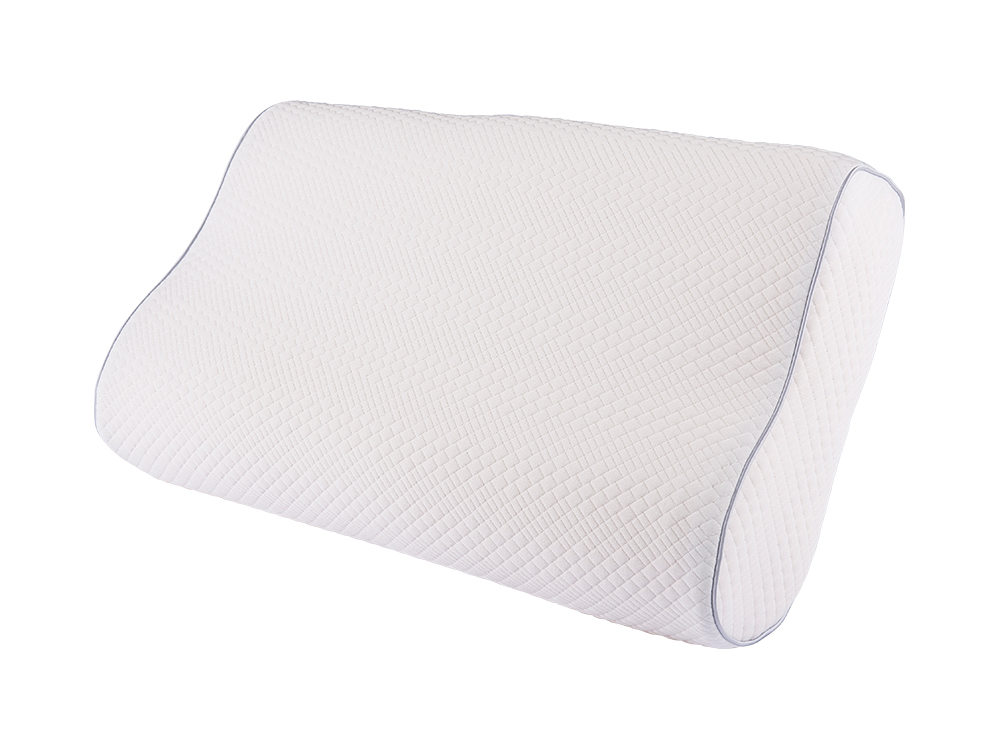
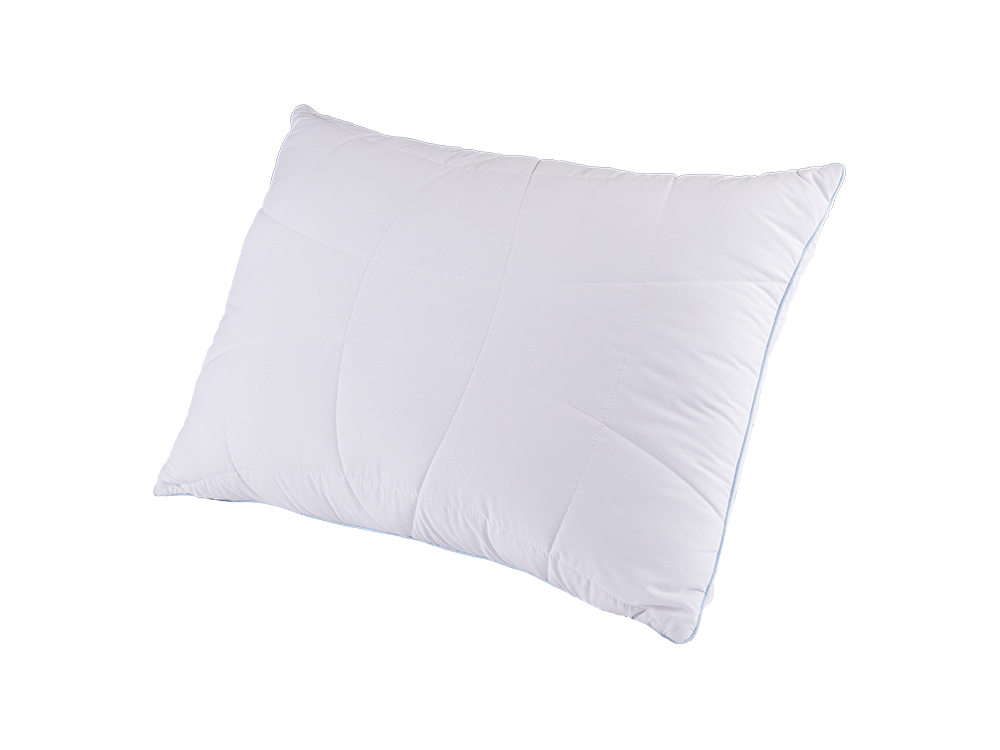
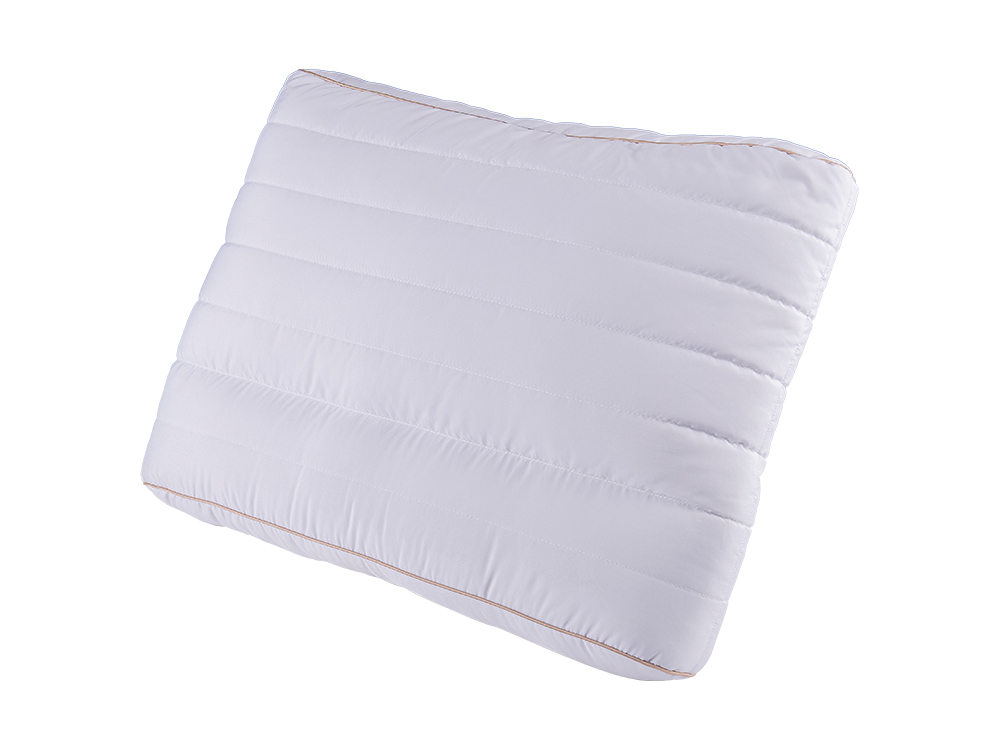
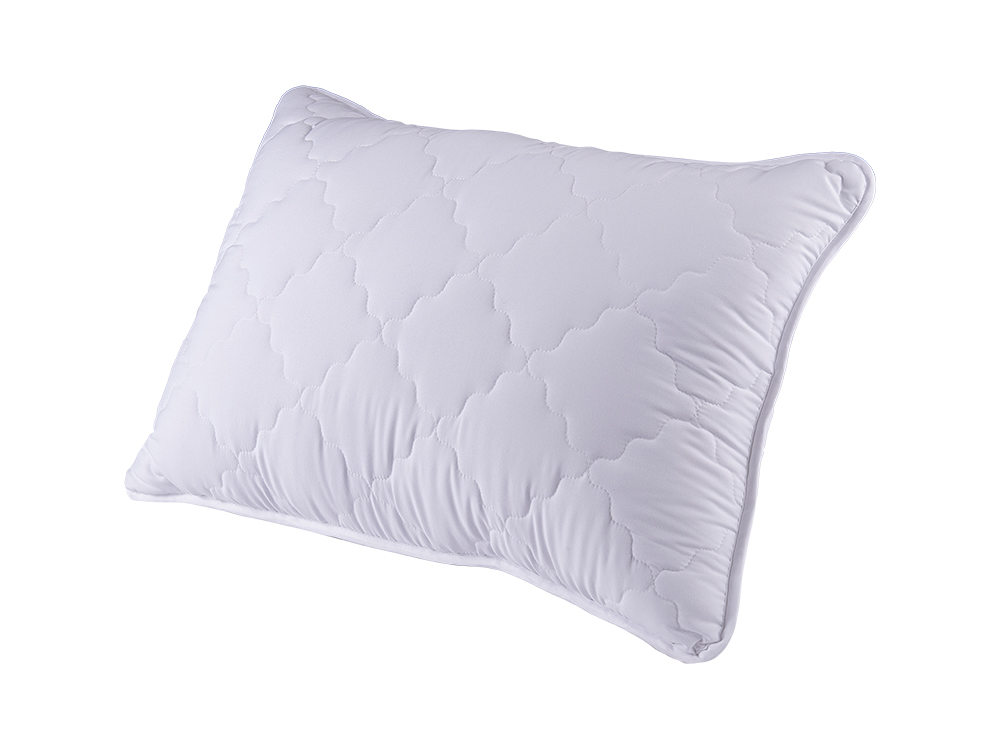
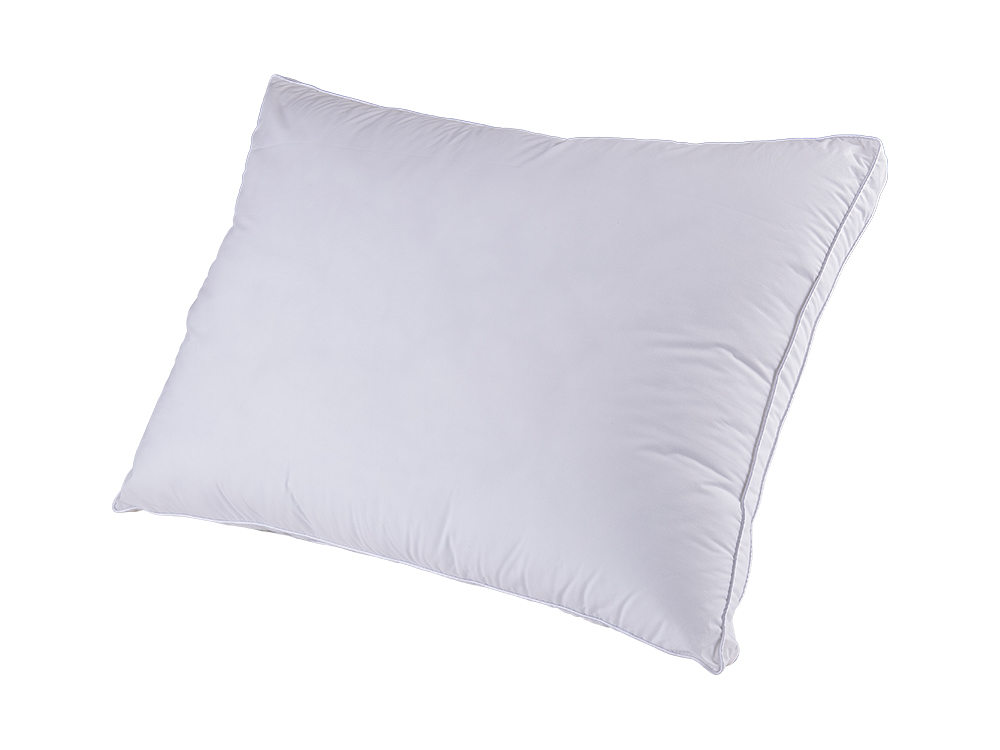
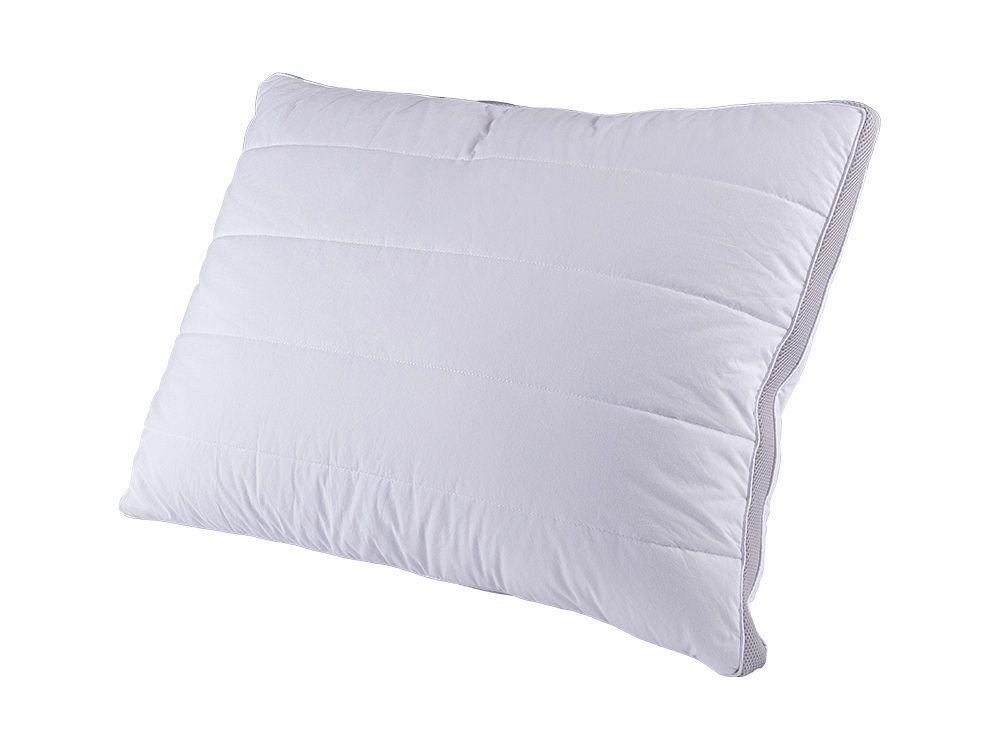
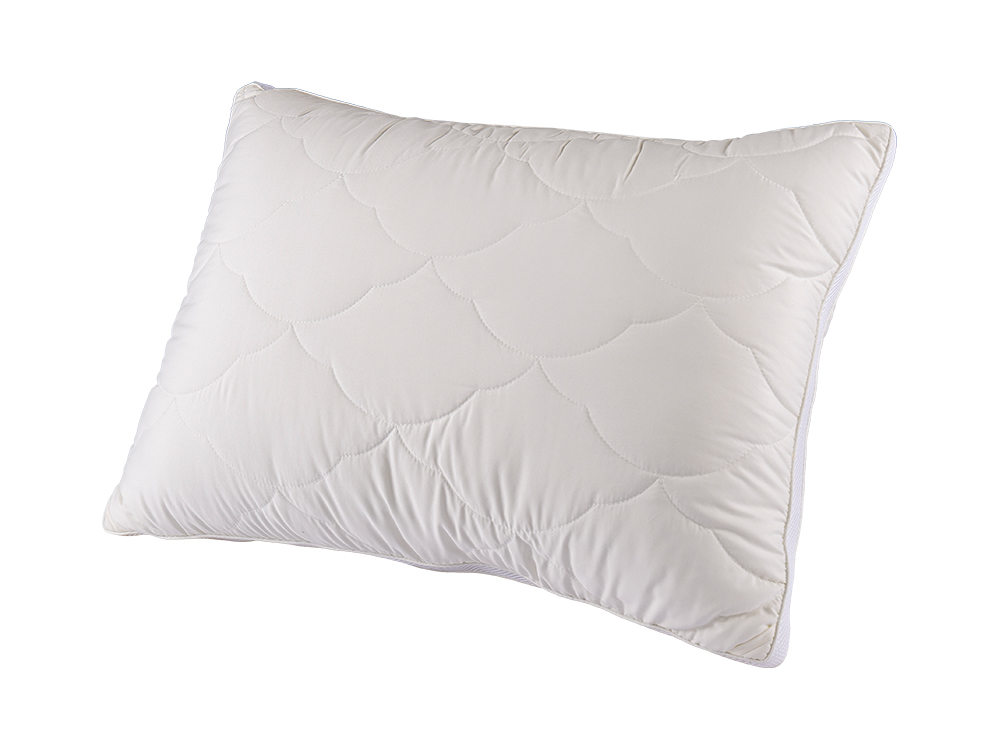
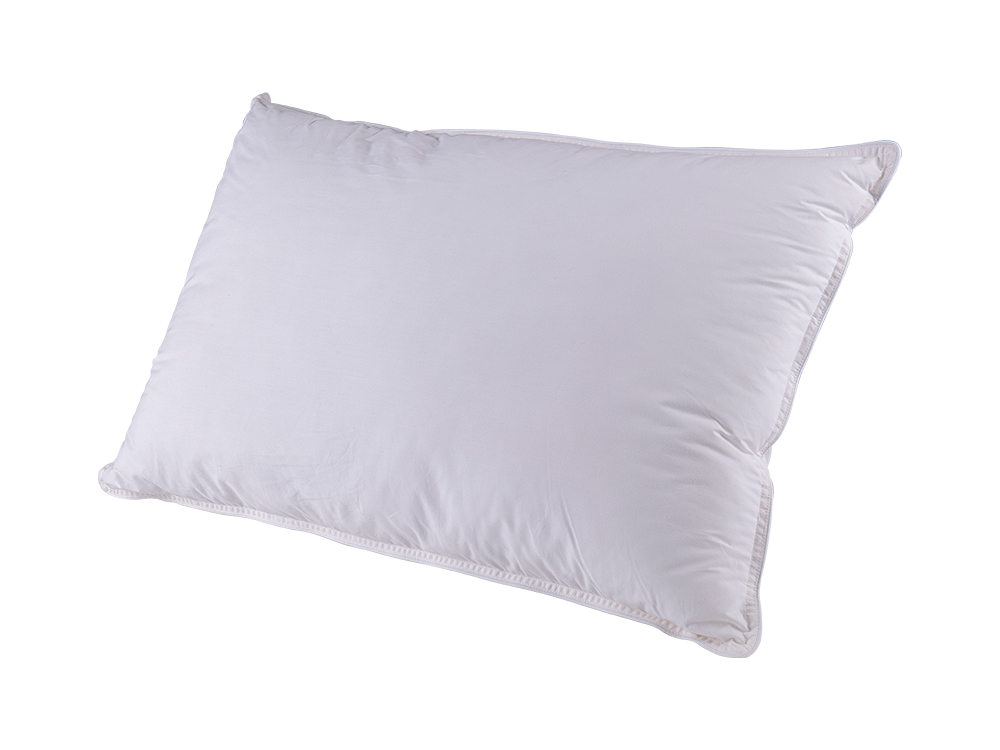
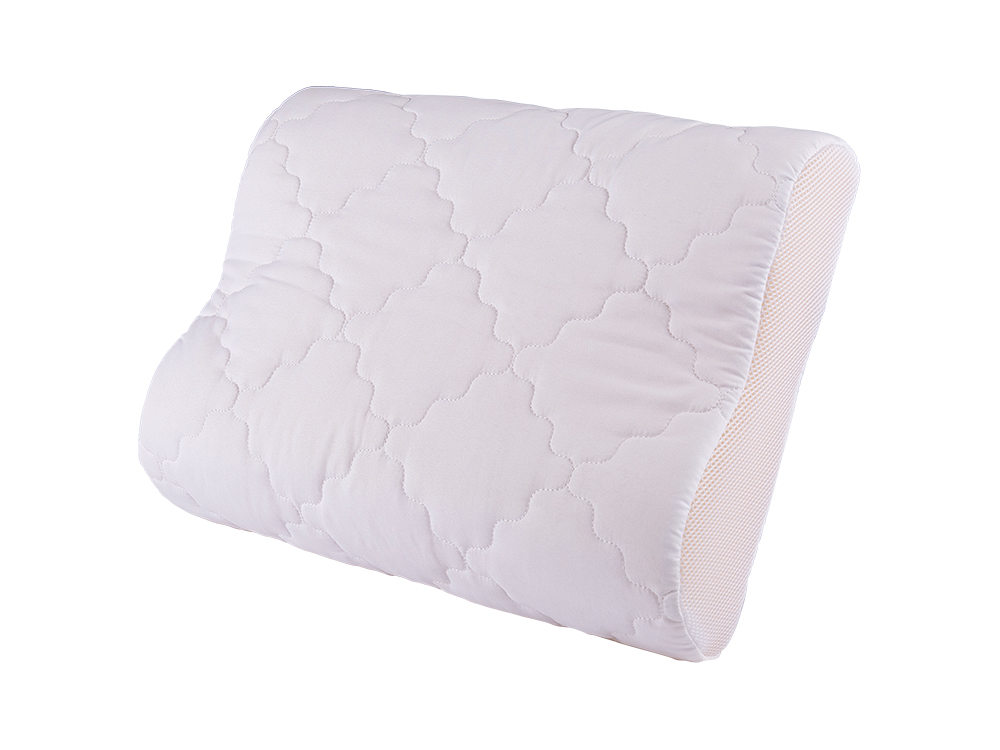
The Memory Foam Pillow is designed to provide a supportive and comfortable sleeping surface through the use of a memory foam core and a carefully selected knitted fabric cover. Measuring 50x70 centimeters, it offers a practical size for a wide range of sleeping arrangements. Its slow-rebound structure responds gradually to pressure, allowing the pillow to conform to the contours of the head and neck. This design gives the product a balance between softness and support, making it suitable for everyday use in homes, guest rooms, hotels, and other accommodation environments.
Behind the product is Tongxiang Xinlong Bedding Co., Ltd., an established home textile manufacturer with experience in pillows, quilts, mattress protectors, blankets, mattress covers, cushions, bedspreads, pillowcases, curtains, and related household textile products. Since its establishment in January 2002, the company has developed production capabilities intended to serve different customer requirements, including product development, manufacturing, quality management, and customized home bedding programs.
The product combines functional design with an industrial manufacturing foundation. Its memory foam lining provides the primary support function, while the 280gsm knitted fabric contributes to a soft hand feel and a finished appearance suitable for retail and hospitality applications. Together, these features make the pillow a practical option for buyers seeking a supportive bedding product with consistent construction and broad market usability.
Memory Foam Pillow
Product Overview
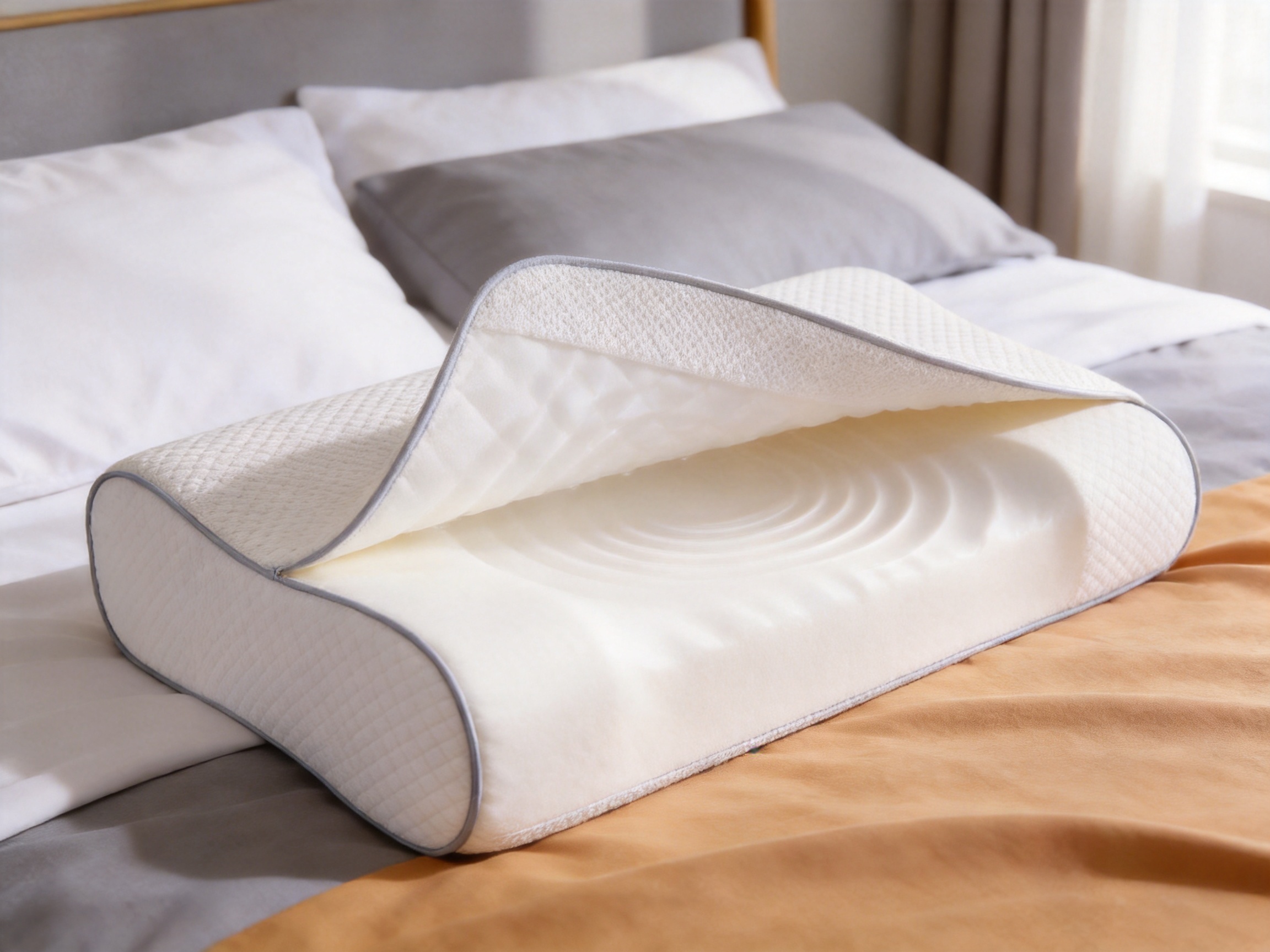
The Memory Foam Pillow is a slow-rebound pillow constructed with a memory foam core and a knitted fabric outer layer. The core is engineered to react to body pressure gradually rather than immediately collapsing or springing back. When the head rests on the pillow, the foam can adapt to the pressure points created by the head and neck. When the pressure is removed, the material slowly returns toward its original form.
This slow-rebound behavior is central to the product’s comfort profile. Traditional fiber-filled pillows often depend on loose filling to create softness and loft. Although they can feel flexible, their support may change as the filling moves during use. Conventional foam pillows may offer firmer resistance but may not always provide the same contouring effect. Memory foam provides an alternative by combining shape adaptability with a stable internal structure.
The pillow has a listed size of 50x70 centimeters. This format offers sufficient surface area for the head while remaining compatible with many standard bedding arrangements. It can be used as a primary sleeping pillow or as part of a coordinated bedding collection. For distributors, importers, hotel suppliers, and private-label customers, the practical dimensions also make it easier to plan packaging, storage, shipping, and product presentation.
The outer fabric is specified as 280gsm knitted fabric. Fabric weight is an important consideration in a pillow cover because it can influence durability, tactile quality, appearance, and the perceived value of the finished product. A knitted construction can provide a flexible surface that feels comfortable against the skin. The 280gsm specification indicates a substantial fabric structure suitable for a product intended for regular household use.
The inner lining is memory foam. This core material forms the principal functional layer of the product. It is responsible for the pillow’s slow rebound, pressure response, and contouring characteristics. The cover and core are designed to work together: the fabric creates a comfortable outer contact surface, while the foam provides internal support.
Product Feature |
Specification or Function |
Product Type |
Memory foam pillow |
Product Category |
Memory Foam Pillow |
Size |
50x70 centimeters |
Outer Fabric |
280gsm knitted fabric |
Core Material |
Memory foam |
Primary Design Purpose |
Head and neck support with pressure distribution |
Product Alias |
Slow-rebound pillow |
Ergonomic Support for the Head and Neck
The central advantage of the Memory Foam Pillow is its ability to conform to the user’s shape. During sleep, the head and neck require support that is stable without being excessively rigid. If a pillow is too low, the neck may tilt downward. If it is too high, the head may be pushed forward or upward. A pillow that is too soft may lose its supportive structure, while one that is too firm may create pressure points.
Memory foam addresses these concerns through gradual compression. Instead of providing the same resistance at every point, the material responds according to the pressure applied. Areas carrying greater pressure can compress more deeply, while areas with less pressure retain more height. This behavior allows the pillow to create a more personalized contact surface for different users.
The product description emphasizes that the shape fits the neck and helps disperse pressure on the head and neck. In practical use, this means the pillow is intended to support a more relaxed sleeping posture. It is not a medical device and should not be presented as a treatment for a specific health condition. However, its functional design can contribute to general comfort by reducing the sensation of uneven support during rest.
The design may be useful for back sleepers, side sleepers, and individuals who change position during the night. A back sleeper generally needs support that fills the space between the head and the mattress without forcing the neck forward. A side sleeper often needs enough height and resilience to help maintain a more level relationship between the head and shoulders. A contouring foam core can adapt to these different pressure patterns more effectively than a completely flat or loosely filled structure.
Individual comfort depends on body shape, sleeping position, mattress firmness, room temperature, personal preference, and adjustment time. For this reason, the product should be introduced as a versatile supportive pillow rather than a one-size-fits-all medical solution. Its broad suitability is one of its commercial strengths, especially for bedding suppliers that serve a diverse customer base.
Pressure Distribution and Sleep Comfort
Pressure distribution is an important part of sleep comfort. When body weight concentrates on a small area, the user may become aware of pressure, shift position, or wake during the night. A pillow with a responsive foam core can distribute some of the load across a wider contact area. This may create a smoother transition between the head, neck, and pillow surface.
The Memory Foam Pillow is designed to disperse pressure rather than simply resist it. This distinction separates it from many basic pillows that provide bulk but may not closely follow the shape of the user. The slow-rebound structure can create a feeling of gentle cradling while retaining a supportive base. For customers who prefer a pillow that feels stable and adaptive, this combination can be more attractive than a loose-fill product.
Comfort is also influenced by the outer cover. The 280gsm knitted fabric provides a textile surface between the user and the foam core. Its knitted construction can offer flexibility and a soft touch, helping the pillow feel less rigid. The cover also provides a finished appearance that can support product presentation in retail packaging, hospitality supply catalogs, and online product listings.
A comfortable pillow may help users settle into sleep more easily by reducing the need for repeated adjustments. The product is therefore positioned as a way to reduce sleep pressure and support more effective rest. As with all bedding products, comfort outcomes vary from person to person, but the combination of responsive foam and a substantial fabric cover gives the pillow a clear functional identity.
Advantages Over Conventional Pillow Designs
More Stable Than Loose-Fill Alternatives
Fiber-filled and feather-filled pillows can provide softness, but their internal materials may shift, flatten, or gather in different areas over time. Users may need to reshape or fluff these products frequently. A solid memory foam core has a more consistent internal structure. It is not dependent on loose filling to maintain its basic form, which can help create a more stable support experience.
More Adaptive Than Basic Foam
Some basic foam pillows provide a fixed level of firmness and may not adjust effectively to different pressure points. Memory foam is designed to respond progressively. This allows it to accommodate the shape of the head and neck rather than offering identical resistance throughout the entire surface. The result is a more adaptive support profile.
More Supportive Than Extremely Soft Pillows
Very soft pillows can feel pleasant at first contact but may compress substantially under the weight of the head. When this occurs, the pillow may not provide enough support for the neck. The Memory Foam Pillow is intended to retain a supportive structure while still offering pressure-responsive comfort. This balance can appeal to users who want softness without sacrificing stability.
A Practical Choice for Multiple Market Segments
The design is suitable for a wide range of customers. Household consumers may use it as an everyday sleeping pillow. Hotels and guesthouses may select it for rooms that require consistent bedding specifications. Furniture and home textile retailers may include it in bedroom collections. Distributors and private-label brands may also use the product as a foundation for customized packaging or coordinated bedding programs.
Suitable for Coordinated Bedding Collections
Because the manufacturer produces quilts, blankets, mattress protectors, mattress covers, cushions, and other home textile products, the pillow can be considered as part of a broader product assortment. Buyers that prefer to source several bedding categories from one manufacturing partner may benefit from a more integrated supply relationship. Coordinated sourcing can simplify communication, sampling, quality expectations, and production planning.
Fabric and Material Construction
The material selection of a pillow affects comfort, performance, appearance, and manufacturing consistency. The Memory Foam Pillow uses two primary material groups: a memory foam core and a knitted fabric cover. Each layer has a separate role, and the overall product depends on the successful combination of both.
The memory foam core provides the main support function. It is expected to compress under pressure and gradually recover after use. This behavior creates the slow-rebound effect associated with the product. The core also gives the pillow its basic shape and helps maintain a defined support zone beneath the head and neck.
The knitted fabric cover contributes to the tactile experience. Unlike a rigid woven surface, knitted fabric can offer a degree of elasticity and flexibility. This may help the cover accommodate the movement of the foam beneath it. The 280gsm fabric specification suggests a material with a noticeable body and structure, rather than an extremely lightweight textile.
In a finished pillow, the relationship between the cover and core must be carefully managed. If the cover is too tight, it may restrict the foam’s ability to adapt. If it is too loose, the product may appear uneven or lose its finished shape. Professional cutting, sewing, filling, closing, inspection, and packaging processes are therefore important to achieving a consistent result.
The final product should also be evaluated according to the requirements of the target market. Different buyers may have different expectations regarding cover construction, closure methods, labeling, packaging, wash-care instructions, dimensions, and carton standards. A manufacturer with experience across multiple bedding categories is better positioned to discuss these requirements and develop an appropriate production plan.
Advanced Manufacturing Capabilities
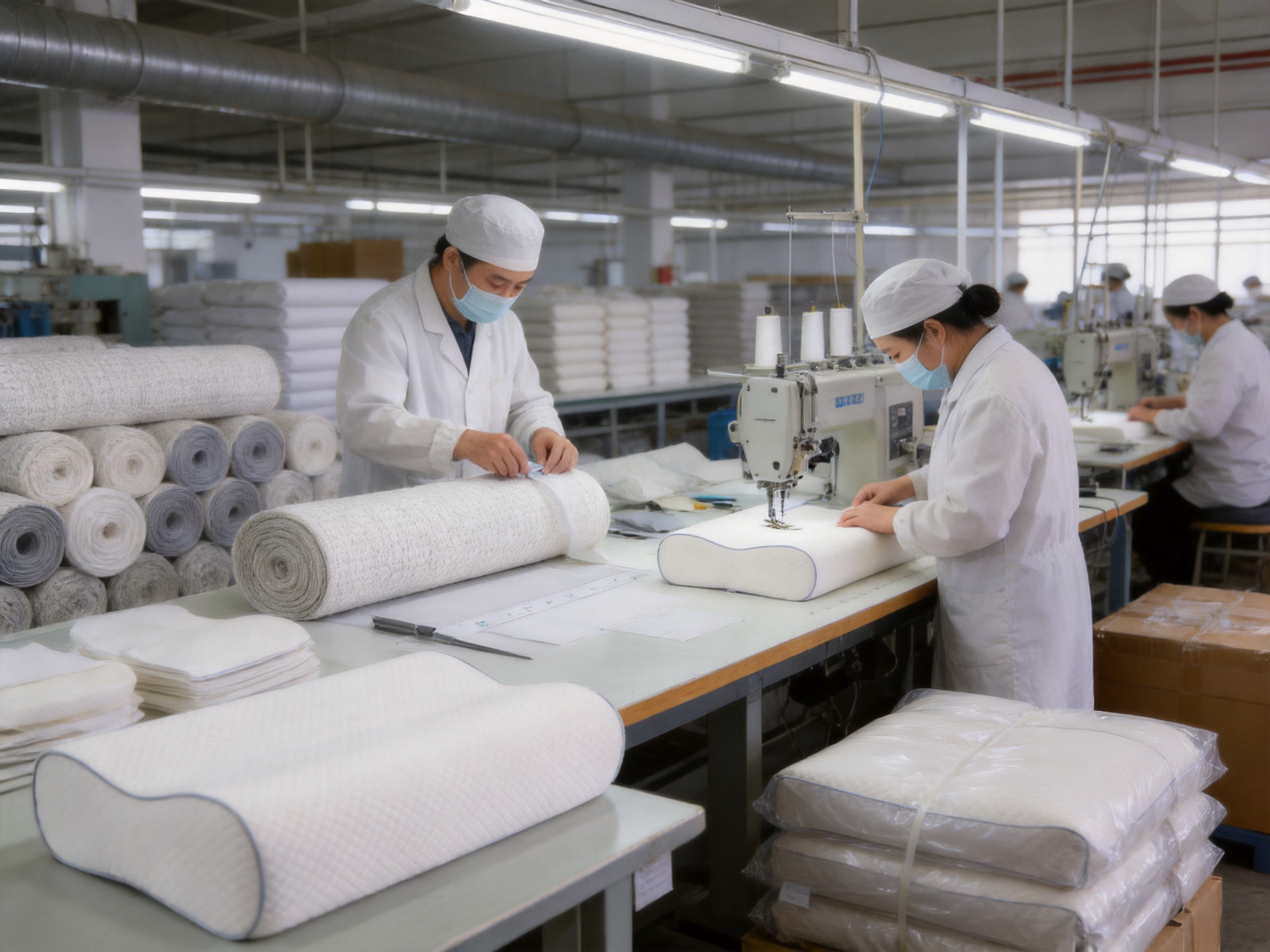
The manufacturer operates from a production base in Wuzhen, Tongxiang, Zhejiang Province, with an area of approximately 21,000 square meters and a construction area of approximately 18,000 square meters. The company has more than 320 employees and is equipped with various production machines and manufacturing resources for home textile products.
A manufacturing facility of this scale can support the organization of specialized production stages. For a memory foam pillow, these stages may include material receiving, fabric inspection, cutting, sewing, foam preparation, assembly, shape checking, finishing, quality inspection, packing, and shipment preparation. The exact process may vary according to order requirements, but systematic production management is essential for maintaining product consistency.
Advanced equipment is especially valuable when a company manufactures several categories of home textile products. Different products require different processes: quilts may involve filling and quilting operations; mattress protectors may require layered fabric construction; blankets may involve specialized textile handling; cushions and pillows may require shaping, filling, sewing, and finishing. Experience across these product groups can strengthen a factory’s understanding of materials, dimensions, and quality control.
For the Memory Foam Pillow, manufacturing precision begins with material preparation. Fabric should be checked for defects, shade consistency, weight, and usable width. Foam components should be assessed for dimensions, shape, resilience, and surface condition. Correct material preparation reduces the risk of uneven assembly and helps the finished pillow meet the intended specification.
Cutting and sewing accuracy are also important. The outer cover must be produced to dimensions that match the foam core. Seams should be secure and appropriately finished. Any closure, label, piping, or decorative feature must be positioned consistently. Even when a product has a simple visual appearance, small deviations can affect the fit, presentation, and user experience.
Assembly is the stage where the textile cover and memory foam core become a finished product. The foam should be inserted without excessive deformation or damage. The cover should be evenly distributed around the core, with no obvious bunching or empty areas. After assembly, the pillow should be checked for shape, size, surface appearance, and overall construction.
Packaging is another important production stage. Memory foam products may need suitable handling and packaging to protect their shape and surface during storage and transportation. Packaging plans should consider compression, recovery time, carton dimensions, labeling, moisture protection, and customer requirements. A well-organized manufacturer can discuss these variables with buyers before mass production begins.
Quality Management and Production Standards
Quality is not limited to final inspection. It begins with product planning and continues through material sourcing, production scheduling, process control, inspection, packaging, and customer feedback. The manufacturer’s stated certifications and management systems demonstrate an emphasis on structured quality and environmental practices.
The company has passed international certifications and related standards, including ISO 9001, ISO 14001, OEKO-TEX standards, OEKO-TEX STeP, GRS, and BSCI. These certifications cover different areas of business and production. ISO 9001 is associated with quality management systems. ISO 14001 relates to environmental management. OEKO-TEX programs address textile safety and responsible production considerations. GRS is related to recycled materials and chain-of-custody requirements, while BSCI is associated with social compliance and responsible working conditions.
Certification does not replace product-specific testing or customer requirements, but it can provide a useful foundation for supplier evaluation. Buyers can request relevant documentation, confirm the scope and validity of certifications, and define additional inspection requirements for each order. This approach helps ensure that the finished product meets the intended market’s technical, safety, labeling, and packaging expectations.
Quality control for a memory foam pillow may include checking the fabric specification, dimensions, sewing quality, foam integrity, cover fit, appearance, odor, packaging, and carton quantity. Depending on the destination market and customer application, additional checks may be appropriate. Examples can include material composition verification, colorfastness testing, flammability requirements, packaging drop testing, and inspection of care labels.
A professional factory should also maintain traceability between production orders, raw materials, work-in-process goods, and finished products. Traceability supports problem investigation and makes it easier to manage repeat orders. For buyers developing a long-term product line, repeatability is as important as the performance of the initial sample.
Research, Development, and Custom Bedding Support
Home textile markets change continuously. Consumers may seek new comfort technologies, updated colors, improved packaging, more sustainable materials, or bedding products tailored to specific climates and lifestyles. The manufacturer states that it continues to develop and innovate in response to the changing home textile industry.
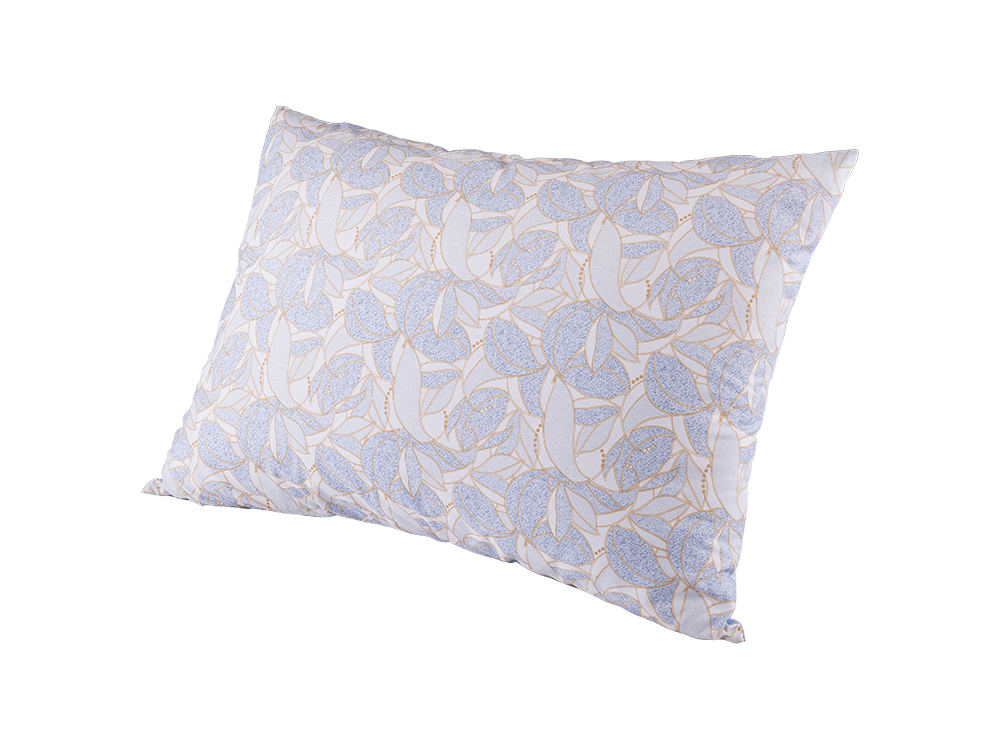
Research and development in bedding does not always require a completely new product. It can also involve refining dimensions, adjusting fabric weights, changing cover construction, improving packaging, developing coordinated collections, or selecting alternative materials. For the Memory Foam Pillow, possible development discussions may include different cover fabrics, surface patterns, product heights, sizes, labels, packaging formats, or complementary bedding items.
Professional and technical personnel are important in this process. Product development requires communication between design, materials, production, quality control, and sales teams. A change to fabric weight can influence the fit of the cover. A change to pillow dimensions can affect packaging. A change to foam density or structure can affect comfort, shipping, and recovery behavior. Cross-functional coordination helps ensure that the final product is practical to manufacture and suitable for the target market.
Customization may be especially valuable for importers, retailers, hotel groups, and online brands. Buyers may request private labels, custom packaging, specific color palettes, coordinated collections, or market-specific documentation. The manufacturer’s broader product range creates opportunities to develop a complete bedroom offering rather than purchasing isolated products from unrelated suppliers.
When evaluating a customized pillow program, buyers should define the intended use, target price, product dimensions, materials, packaging, order quantity, delivery schedule, inspection standards, and required certifications. Clear specifications reduce misunderstandings and help the factory prepare accurate samples and quotations.
Applications in Residential and Commercial Bedding
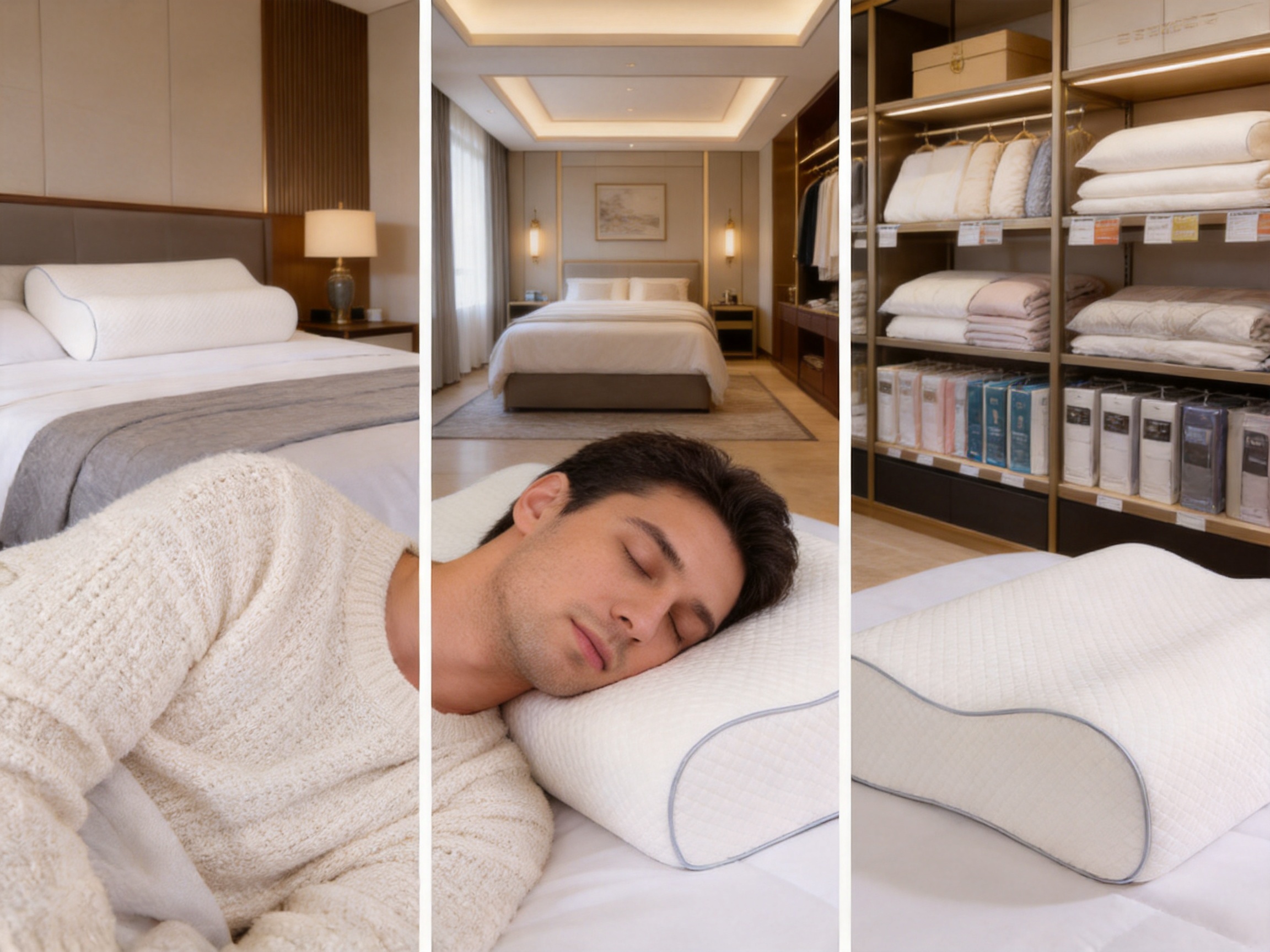
The Memory Foam Pillow can serve several types of bedding applications. In residential settings, it can be used in master bedrooms, guest rooms, children’s rooms, vacation homes, and rental properties. Its neutral functional design allows it to fit different interior styles and bedding collections.
In hotels and guesthouses, pillow consistency is an important part of room quality. A standardized pillow specification can simplify purchasing and replacement. The 50x70 centimeter format provides a practical basis for room planning, while the memory foam construction offers a distinctive comfort feature that can be included in accommodation descriptions and product selection programs.
Serviced apartments, dormitories, healthcare accommodation, and employee housing may also require dependable bedding products. In these environments, buyers often consider durability, repeat availability, packaging efficiency, and supplier responsiveness in addition to comfort. A manufacturer with a broad production base can be a useful partner for such programs.
Retailers may present the pillow as a functional sleep accessory or as part of a larger bedding collection. Its slow-rebound structure creates a clear selling point that consumers can understand. The product can be positioned for shoppers looking for pressure-responsive comfort, improved neck support, or an alternative to traditional loose-fill pillows.
For e-commerce sellers, product communication should be accurate and informative. Descriptions can explain the memory foam core, slow-rebound response, knitted fabric cover, size, and intended comfort benefits. Marketing materials should avoid unsupported medical claims and should clearly communicate that individual sleep experiences can vary.
Why Manufacturing Experience Matters
A pillow may appear simple, but consistent production requires control over several variables. A small change in foam dimensions, cover tension, stitching, fabric weight, or packaging can affect the final product. Manufacturing experience helps a supplier anticipate these issues before they become costly production problems.
The company’s history since 2002 provides a long operating background in the home textile sector. During this period, it has developed experience in multiple bedding categories and has built a workforce of more than 320 employees. This scale can support production planning, technical coordination, quality management, and communication with customers who require repeat orders.
The company’s location in Wuzhen, Tongxiang, Zhejiang Province, places it within a region known for textile production and related manufacturing activity. Access to a developed textile supply network can support material sourcing, production coordination, and product development. For international buyers, supplier location may also be relevant to logistics planning and export arrangements.
Another strength is the ability to manufacture a broad range of home textile products. A buyer seeking pillows, quilts, mattress protectors, blankets, mattress covers, and cushions may prefer a supplier capable of handling multiple categories. This can reduce the number of separate vendor relationships and help create greater consistency across product lines.
Long-term manufacturing relationships also allow suppliers and customers to improve products over time. Feedback from samples, trial orders, inspections, and market performance can be used to refine future production. A pillow program may begin with a standard specification and later develop into a broader collection with different sizes, fabrics, packaging designs, and levels of support.
Environmental and Social Responsibility Considerations
Modern bedding buyers increasingly evaluate more than appearance and price. They may also consider environmental management, material traceability, worker welfare, responsible production, and documentation. The manufacturer reports certifications and management systems covering environmental management, textile-related standards, recycled materials, and social compliance.
ISO 14001 certification is relevant to an organization’s environmental management framework. In manufacturing, environmental management may include resource use, waste control, energy management, chemical handling, and compliance procedures. The specific environmental performance of an individual product should still be evaluated through product-level information and buyer requirements.
OEKO-TEX-related certifications are relevant to textile safety and responsible production. For bedding products that come into direct contact with the skin for extended periods, buyers may place particular importance on material safety documentation. Verification should be completed according to the product, fabric, components, and destination-market requirements.
The Global Recycled Standard may be relevant when recycled materials are included in a product program. If a buyer requests recycled content, the exact material composition and certification scope should be agreed before production. Not every version of a product automatically carries the same recycled-material status, so product-specific confirmation remains important.
BSCI-related social compliance practices can support responsible sourcing assessments. Buyers should review current audit or certification documentation and confirm applicable facilities, dates, and scopes. Responsible sourcing is most effective when it is treated as an ongoing management process rather than a one-time marketing statement.
Product Selection and Procurement Guidance
When selecting the Memory Foam Pillow for a commercial program, buyers should begin by identifying the intended user and sales channel. A retail customer may prioritize touch, appearance, packaging, and consumer communication. A hotel buyer may focus on consistent supply, room standards, durability, and replacement planning. A private-label brand may require custom labels, packaging, and product photography.
The next step is to confirm the technical specification. Important details include the 50x70 centimeter size, memory foam core, 280gsm knitted fabric, cover construction, closure method, care instructions, packaging dimensions, and carton quantity. Buyers should also request a sample before placing a bulk order so that they can evaluate the actual hand feel, support level, shape, finish, and packaging suitability.
It is useful to test the pillow in the context of the intended bedding system. The same pillow can feel different on a soft mattress compared with a firm mattress. The height and support can also be perceived differently by back sleepers and side sleepers. Commercial buyers may therefore wish to collect feedback from several testers rather than relying on a single opinion.
Inspection standards should be agreed in writing. These may include acceptable size tolerance, fabric defects, seam appearance, foam deformation, odor, surface cleanliness, label accuracy, packaging condition, and carton markings. Defining these criteria in advance makes final inspection more objective and helps both parties understand the quality target.
Shipping and storage should also be considered. Foam products may require specific packaging and handling instructions. Buyers should discuss whether the pillow will be shipped in a full shape, compressed format, or another configuration. Any compression method should be evaluated for its effect on product recovery, appearance, and customer instructions.
Care, Handling, and User Expectations
Users should follow the care instructions supplied with the product. The outer cover and memory foam core may require different handling, and the care method should be determined by the actual construction. If the cover is removable, instructions should explain whether it can be machine washed, hand washed, or professionally cleaned. The foam core should not be treated in the same way as a conventional washable fiber filling unless the manufacturer specifically confirms that method.
New memory foam products may have a temporary manufacturing or packaging odor. Appropriate ventilation and careful handling may help reduce this sensation. Buyers should establish their own acceptance criteria and confirm any relevant testing requirements for the target market.
Memory foam responds to environmental conditions. Temperature can influence how the material feels, and the pillow may seem firmer or softer depending on the room environment and the user’s expectations. Allowing the product to recover fully after unpacking can also be important, especially if it has been compressed for transportation.
Consumers should understand that comfort is personal. The product is designed to support the head and neck and to provide pressure-responsive comfort, but it cannot guarantee a particular health outcome. Clear, responsible product communication helps build customer trust and reduces unrealistic expectations.
Positioning the Pillow Against Competitors
In a competitive bedding market, a product needs a clear reason for selection. The Memory Foam Pillow can be positioned around its combination of slow-rebound support, pressure distribution, practical dimensions, knitted fabric comfort, and manufacturing reliability.
Compared with inexpensive loose-fill pillows, it offers a more defined internal structure and a stronger technical story. Compared with very firm conventional foam pillows, it provides a more adaptive response. Compared with premium products that focus only on specialty materials, it offers a practical specification suitable for a range of market channels and purchasing budgets.
The product’s competitive value also comes from the manufacturer rather than the pillow alone. Customers can access a supplier with a broad bedding portfolio, established production experience, multiple management certifications, technical personnel, and capacity for customized home textile programs. For businesses seeking a long-term supply partner, these factors can be as important as the product’s material composition.
A strong product presentation should explain the benefit in simple terms: the pillow adapts gradually to pressure, supports the head and neck, and offers a comfortable knitted fabric surface. Technical details such as size, fabric weight, and core material should then reinforce the main message. This combination of understandable benefits and specific specifications can help buyers compare the pillow with competing products.
Q&A
What type of pillow is this product?
It is a memory foam pillow, also described as a slow-rebound pillow. It uses a memory foam core designed to respond gradually to pressure and conform to the head and neck.
What is the pillow’s size?
The listed size is 50x70 centimeters. Buyers should confirm dimensional tolerances and packaging dimensions when preparing a commercial order.
What material is used for the outer fabric?
The outer fabric is specified as 280gsm knitted fabric. This construction is intended to provide a comfortable textile surface with a substantial feel.
What is the lining or inner material?
The lining or inner core is memory foam. It provides the pillow’s slow-rebound response and primary support function.
How does memory foam support the neck?
Memory foam gradually compresses under pressure and adapts to the contours of the head and neck. This can help distribute pressure and create a more even support surface. Individual comfort depends on sleeping position, body shape, mattress firmness, and personal preference.
Is the pillow suitable for all sleeping positions?
The product is designed for broad usability and may suit back sleepers, side sleepers, and combination sleepers. However, the ideal pillow height and firmness vary between individuals, so sampling and user testing are recommended for commercial selection.
Is this pillow a medical product?
No. It is a functional bedding product rather than a medical device. It may support general sleeping comfort, but it should not be marketed as a treatment or cure for a medical condition.
What makes it different from a conventional fiber-filled pillow?
The memory foam core has a more stable internal structure and does not depend on loose filling to maintain its shape. It can also respond to pressure more progressively, helping create a contoured support surface.
Can the product be customized?
Customization should be discussed with the manufacturer according to the buyer’s requirements. Possible areas for discussion may include dimensions, cover materials, packaging, labeling, coordinated bedding products, and private-label arrangements.
What other bedding products does the manufacturer produce?
The manufacturer produces a range of home textile products, including quilts, pillows, cushions, bedspreads, travel quilts, mattress protectors, blankets, mattress covers, quilt and pillowcases, shower curtains, and curtains.
What production advantages does the company offer?
The company has operated since January 2002, has more than 320 employees, occupies approximately 21,000 square meters, and maintains a construction area of approximately 18,000 square meters. It also has production equipment, technical personnel, quality management practices, and experience across multiple home textile categories.
Which certifications are associated with the manufacturer?
The company reports certifications and standards including ISO 9001, ISO 14001, OEKO-TEX-related certifications, OEKO-TEX STeP, GRS, and BSCI. Buyers should request current documentation and verify the applicable scope for a specific product and order.
What should buyers check before placing a bulk order?
Buyers should confirm the material specification, dimensions, sample quality, foam performance, cover construction, packaging, labeling, inspection standards, order quantity, delivery schedule, and any destination-market requirements.
Conclusion
The Memory Foam Pillow is a practical bedding product built around a clear functional concept: slow-rebound memory foam support combined with a 280gsm knitted fabric cover. Its 50x70 centimeter size provides a useful format for household, retail, hospitality, and private-label applications. By adapting to pressure on the head and neck, the pillow is designed to offer a stable and comfortable sleeping experience with a more personalized feel than many conventional pillow structures.
Its advantages extend beyond the material itself. The manufacturer offers long-standing home textile experience, a broad product range, an established production base, technical personnel, advanced equipment, and reported international management and compliance certifications. These capabilities can support product consistency, custom development, coordinated bedding programs, and long-term supply relationships.
For buyers comparing bedding suppliers, the product represents a combination of ergonomic design and manufacturing support. It can be evaluated as a standalone memory foam pillow or developed as part of a wider bedding collection that includes quilts, blankets, mattress protectors, mattress covers, cushions, and related products. With clear specifications, appropriate sampling, responsible product claims, and defined quality standards, it can serve as a reliable option for businesses seeking functional and customizable home bedding.
References
1. Product specification provided for the Memory Foam Pillow, including size, fabric, lining, product description, and product category.
2. Company information provided for Tongxiang Xinlong Bedding Co., Ltd., including production history, facility scale, workforce, product categories, and manufacturing capabilities.
3. International Organization for Standardization. ISO 9001: Quality Management Systems — Requirements.
4. International Organization for Standardization. ISO 14001: Environmental Management Systems — Requirements with Guidance for Use.
5. OEKO-TEX Association. Textile safety and responsible production standards.
6. Textile Exchange. Global Recycled Standard principles and chain-of-custody considerations.
7. amfori. Business Social Compliance Initiative principles and responsible supply-chain guidance.
8. General bedding design and sleep-comfort principles concerning support, pressure distribution, material selection, and product evaluation.



 +86-573-88798028