



 Français
 Español
 Deutsch
Content
- 1 Understanding the Product Construction
- 2 Advantages Compared with Conventional Blankets
- 3 Comfort and Everyday Usability
- 4 Manufacturing Strengths and Quality Management
- 5 Design and Customization Opportunities
- 6 Applications Across Residential and Commercial Markets
- 7 Care, Maintenance, and Product Longevity
- 8 Why the Supplier Is Suitable for Custom Home Bedding
- 9 Recommended Purchasing and Development Process
- 10 Frequently Asked Questions
- 10.1 What is an ultrasonic blanket?
- 10.2 What materials are used in this blanket?
- 10.3 Is the blanket suitable for all seasons?
- 10.4 Can the embossed pattern be customized?
- 10.5 Can the blanket be produced in custom sizes?
- 10.6 Can it be used as a bed sheet?
- 10.7 Is short plush difficult to maintain?
- 10.8 Is the blanket appropriate for hotels?
- 10.9 Can private-label packaging be supplied?
- 10.10 What quality systems does the manufacturer report?
- 10.11 What should buyers check before mass production?
- 11 Conclusion
- 12 References
- 13 Product: Short Plush Ultrasonic Blanket
In the modern home-textile market, consumers and professional buyers increasingly expect bedding products to deliver more than basic warmth. A successful blanket must combine comfort, visual appeal, practical versatility, dependable construction, and efficient manufacturing. It should feel pleasant against the skin, remain attractive after repeated use, fit a variety of interior styles, and offer reliable performance across different seasons. The Short Plush Ultrasonic Blanket responds to these expectations with a carefully balanced combination of soft fabric, bonded polyester filling, embossed surface design, and flexible sizing.
This product is designed as a lightweight yet comfortable textile layer that can function as a thin blanket, a bed sheet, or a decorative bedding accent. Its front side uses 160gsm polyester short pile fabric, while the reverse side uses 80gsm polyester fabric. Between these layers is 100gsm bonded polyester filling. The result is a practical construction that offers tactile softness, moderate warmth, manageable weight, and a polished appearance suitable for bedrooms, guest rooms, hotels, dormitories, and other residential or commercial environments.
The key feature is the ultrasonic embossed finish. Instead of relying only on printed decoration, ultrasonic technology creates patterns through controlled heat and pressure. This process can join or shape textile layers without requiring conventional stitching across every decorative area. It enables manufacturers to produce refined geometric, floral, wave, quilted, or customized patterns while preserving a clean and contemporary appearance. For buyers seeking a product that combines manufacturing flexibility with a premium visual effect, this construction presents a strong alternative to ordinary plain blankets and basic printed bedding.
Manufactured by Tongxiang Xinlong Bedding Co., Ltd., the blanket reflects the experience of a specialized home-textile producer with a broad product range and established production capabilities. The company operates from Wuzhen, Tongxiang, Zhejiang Province, an area recognized for its long association with textile manufacturing. Its facilities cover approximately 21,000 square meters, including around 18,000 square meters of construction area, and the company employs more than 320 people. Its production system is supported by advanced equipment, professional technical personnel, and quality-management practices developed for large-scale home-textile manufacturing.
For international wholesalers, hospitality suppliers, retailers, and private-label brands, these characteristics make the Short Plush Ultrasonic Blanket more than a simple seasonal article. It is a customizable textile platform that can be adapted to different sizes, patterns, colors, packaging requirements, and market positions while retaining a recognizable foundation of softness, structure, and production consistency.
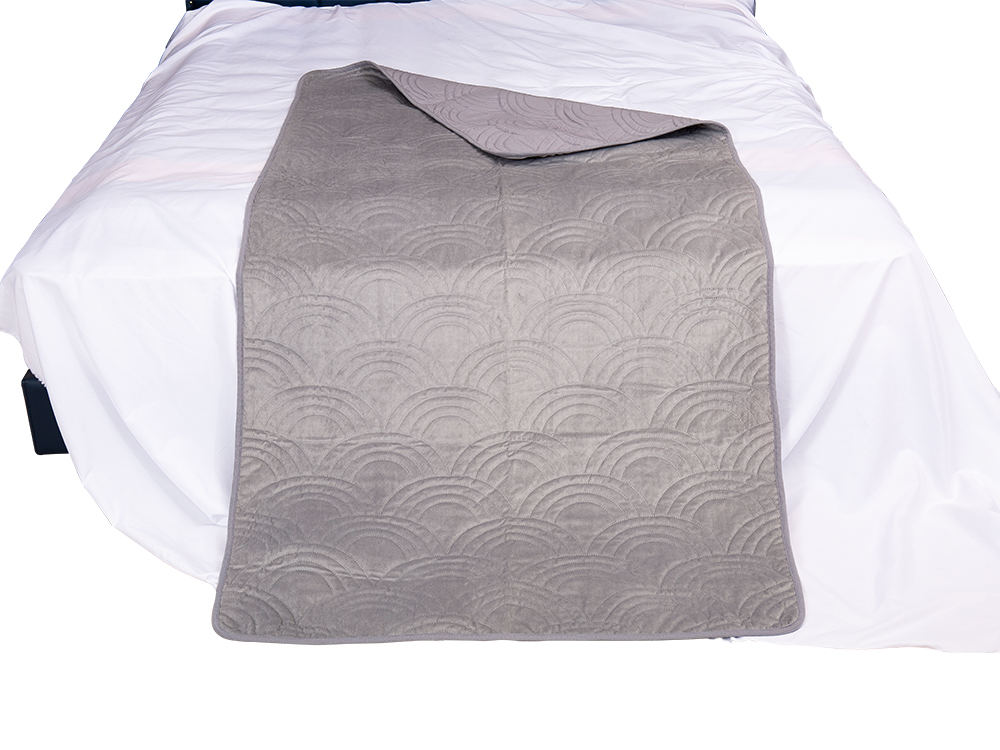
Short Plush Ultrasonic Blanket
Understanding the Product Construction
The performance of any blanket begins with its material structure. The Short Plush Ultrasonic Blanket uses a three-part construction: a short plush polyester front, a polyester reverse side, and a bonded polyester filling layer. Each component contributes a specific function, and the combination is designed to balance comfort, appearance, durability, and cost efficiency.
160gsm Polyester Short Pile Front
The front fabric is made from 160gsm polyester short pile material. Short pile fabrics are valued for their soft hand feel and smooth, even surface. Compared with long-pile materials, short plush is generally easier to maintain because it is less likely to trap debris, mat heavily, or develop an untidy appearance after regular handling. Its compact pile also allows embossed patterns to remain visually clear, giving the blanket a more structured and refined face.
The 160gsm weight provides enough substance to create a comfortable tactile experience without making the blanket unnecessarily heavy. It is suitable for products intended to be folded, transported, displayed, and used in different environments. The surface can be developed in various colors and may be coordinated with ultrasonic patterns to create different visual effects, from understated solid tones to decorative designs suited to fashion-oriented bedding collections.
Short plush is also suitable for products positioned between a lightweight sheet and a traditional warm blanket. It gives the user a soft surface to touch while maintaining a relatively streamlined profile. This makes the product especially appropriate for transitional seasons, air-conditioned rooms, layered bedding arrangements, and climates where a heavy winter quilt is not always necessary.
80gsm Polyester Reverse Fabric
The reverse side uses 80gsm polyester fabric. This lighter backing supports the front plush layer and filling while helping the finished product remain flexible and easy to handle. A suitable backing is important because it contributes to dimensional stability, helps protect the filling, and supports the overall shape of the blanket during use and laundering.
The reverse side can also provide a visual contrast to the plush front. Depending on the chosen color combination and design, the blanket may be reversible in appearance or may present a neutral underside that complements a wide range of bedroom settings. For private-label customers, this offers an opportunity to develop coordinated collections in which the front pattern and reverse color are selected to match a particular brand identity or seasonal theme.
100gsm Bonded Polyester Filling
The blanket contains 100gsm bonded polyester filling. This filling provides an additional layer of loft and comfort while maintaining a lightweight profile. Bonded polyester is commonly used in bedding because it can deliver even coverage, stable structure, and practical resilience. Its consistent distribution helps reduce thin areas and supports a uniform feel across the blanket surface.
Because the filling is moderate rather than excessive, the product is not limited to cold-weather use. It can be positioned as a light comfort layer, a decorative bed covering, a travel blanket, or a practical household textile for guest accommodation. This versatility can help buyers reduce the need to maintain separate product lines for every mild-weather application.
Ultrasonic Bonding and Embossing
Ultrasonic processing is the defining technical feature of the product. High-frequency vibration, heat, and controlled pressure are used to create bonding points and embossed formations in the textile layers. The process can produce patterns with a clean, modern appearance while reducing reliance on conventional decorative stitching.
One advantage of ultrasonic production is design flexibility. The manufacturer can develop different embossed patterns according to customer requirements. Pattern options may include repeating geometric shapes, flowing lines, floral arrangements, diamond structures, wave effects, or other custom concepts. The final selection can be tailored to a particular market, collection, retail season, or hospitality project.
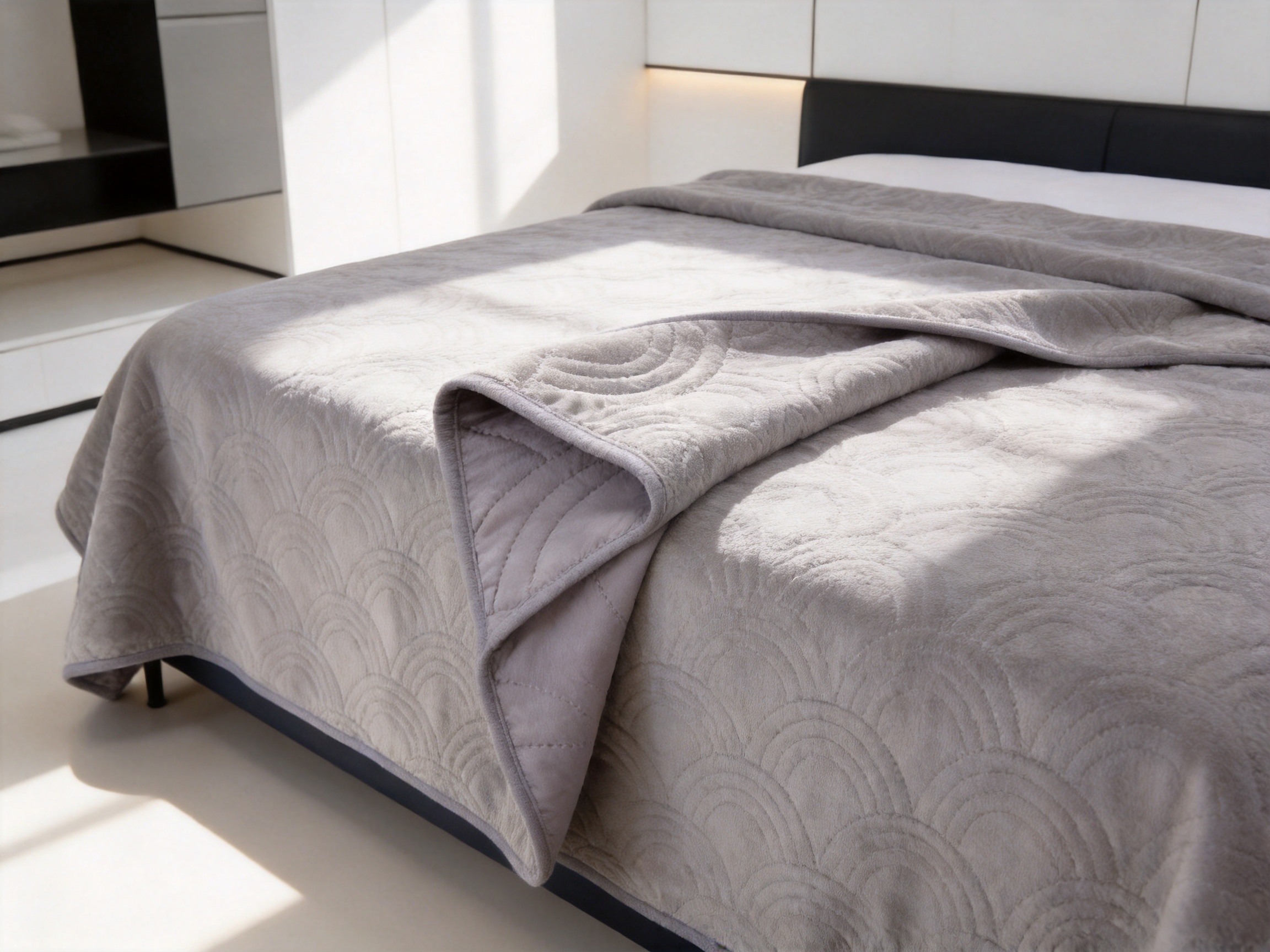
Ultrasonic embossing also contributes to product differentiation. Many ordinary blankets depend on a plain surface or surface printing to create visual interest. A dimensional embossed pattern offers a more tactile and sophisticated appearance. It can catch light differently across the surface and create a subtle sense of depth without adding complex trims or accessories.
| Component | Specification | Primary Function | Customer Value |
|---|---|---|---|
| Front fabric | 160gsm polyester short pile fabric | Provides softness, comfort, and a premium surface appearance | Improves tactile appeal and supports attractive embossed designs |
| Reverse fabric | 80gsm polyester fabric | Supports the construction and protects the filling | Keeps the blanket flexible, practical, and easier to handle |
| Filling | 100gsm bonded polyester | Adds light loft and moderate warmth | Creates a versatile blanket suitable for layering and daily use |
| Surface treatment | Ultrasonic embossing and bonding | Forms decorative patterns and joins textile layers | Enables customized designs and a more distinctive product identity |
| Size | Customizable to any required size | Adapts the product to different beds and applications | Supports retail, hospitality, promotional, and project-based orders |
Advantages Compared with Conventional Blankets
The Short Plush Ultrasonic Blanket competes in a market containing fleece blankets, printed polyester blankets, quilted bedspreads, woven throws, and heavier filled quilts. Its advantage is not that it replaces every other type of blanket, but that it occupies a useful position between several categories. It combines a soft plush touch with a structured decorative surface, moderate warmth with manageable weight, and standardized material efficiency with customization potential.
Greater Surface Appeal
A plain blanket can be functional but visually limited. A printed blanket may offer color and imagery, yet its appearance can depend heavily on ink quality, print sharpness, and long-term color retention. The embossed surface of an ultrasonic blanket creates a physical pattern that can be experienced both visually and by touch. This gives the product a more dimensional appearance and can help it stand out on retail shelves, online product pages, or hotel bedding displays.
Embossed patterns can also be more understated than large printed images. This makes the product suitable for buyers who prefer elegant, neutral, or contemporary bedding. A subtle geometric pattern may appeal to minimalist consumers, while a more decorative design can support traditional or fashion-led collections. The same basic construction can therefore serve multiple style directions.
Softness Without Excessive Bulk
Heavy quilts may provide substantial warmth but can be inconvenient to fold, store, wash, or transport. Very thin sheets are easy to handle but may not deliver sufficient comfort or insulation. The Short Plush Ultrasonic Blanket offers a middle ground. Its short pile front creates a soft contact surface, while the 100gsm bonded polyester filling adds a light cushioning effect and moderate warmth.
This balance is valuable for homes with changing indoor temperatures. The blanket can be used alone during mild weather or combined with other bedding layers when additional warmth is required. It can also be folded at the end of a bed as a decorative layer without creating the bulky appearance associated with thick winter bedding.
Flexible Use as a Blanket or Bed Sheet
The product description identifies two primary uses: a thin blanket and a bed sheet. This dual-purpose function increases its commercial flexibility. Consumers may place it directly over the body, use it as an additional layer above a duvet, or spread it over the mattress as a soft decorative cover. In guest rooms and hospitality settings, the product can serve as a practical textile layer that supports both comfort and presentation.
Its flexible role also benefits retailers. Instead of presenting the product under only one narrow category, sellers may position it within lightweight blankets, decorative bedding, seasonal home textiles, or multipurpose comfort products. This can help increase the number of search terms and merchandising environments through which potential buyers discover the article.
Efficient Decorative Manufacturing
Traditional quilting and decorative stitching can require multiple sewing steps, additional thread, more complex pattern alignment, and greater labor input. Ultrasonic processing offers an alternative method for joining and decorating suitable textile layers. When carefully controlled, it can create repeated patterns efficiently and maintain consistent spacing across larger production runs.
This does not mean that ultrasonic processing eliminates all quality-control requirements. Fabric density, pressure, vibration frequency, temperature, speed, and pattern tooling must be coordinated. However, a manufacturer with dedicated ultrasonic equipment and technical experience can use the process to develop repeatable designs and support more efficient production than would be possible with highly manual decorative methods.
Customization Potential
Customization is increasingly important in the global home-textile industry. Retail chains may need exclusive patterns, hospitality buyers may require project-specific sizes, and private-label brands may want a recognizable surface treatment. The product can be customized to any size, allowing it to serve single beds, double beds, larger beds, sofa applications, guest bedding, and special commercial requirements.
Pattern customization creates another level of flexibility. Customers can discuss an existing design direction, provide a reference concept, or request a new embossed pattern developed for a particular collection. Customization may involve pattern scale, repetition, surface coverage, color coordination, border treatment, and overall product dimensions. Final feasibility should always be confirmed through sampling and technical review, but the manufacturing platform is suitable for a broad range of design requirements.
Comfort and Everyday Usability
Comfort is a combination of touch, weight, warmth, breathability, flexibility, and ease of use. No single specification determines the entire user experience. The Short Plush Ultrasonic Blanket is designed to address these factors through a balanced layered structure.
Soft Hand Feel
The short plush front gives the blanket a smooth and gentle hand feel. This is especially important when the product is used close to the skin or as a top layer over other bedding. The surface is visually full but not excessively shaggy, making it appropriate for users who appreciate softness without the loose, fluffy appearance of a long-pile throw.
Softness also influences perceived quality. When consumers touch a blanket in a retail environment or receive it through an online order, the hand feel can strongly influence their assessment of value. A well-finished short plush surface helps create an immediate impression of comfort and refinement.
Moderate Warmth
The 100gsm bonded polyester filling contributes light insulation. It is appropriate for temperate environments, spring and autumn use, air-conditioned rooms, and layered bedding systems. The product should not be represented as a substitute for a heavy winter quilt in extremely cold conditions, but its moderate warmth is an advantage for consumers who want comfort without overheating or carrying unnecessary weight.
Moderate warmth also increases the range of markets in which the blanket can be sold. It can be presented as a year-round indoor comfort product in many regions, particularly where households rely on heating or air conditioning and require adaptable bedding rather than highly specialized seasonal articles.
Manageable Weight and Storage
The combination of lightweight backing and moderate filling helps the blanket remain easier to fold and store than many thick quilted products. This is useful in smaller homes, dormitories, apartments, vacation properties, and hospitality rooms where storage space may be limited.
For distributors, manageable weight can also support more efficient packing and handling. Transportation costs depend on order volume, packaging design, dimensions, and shipping conditions, but lightweight bedding generally offers practical advantages during warehouse movement, carton preparation, retail display, and end-user storage.
Suitable for Layering
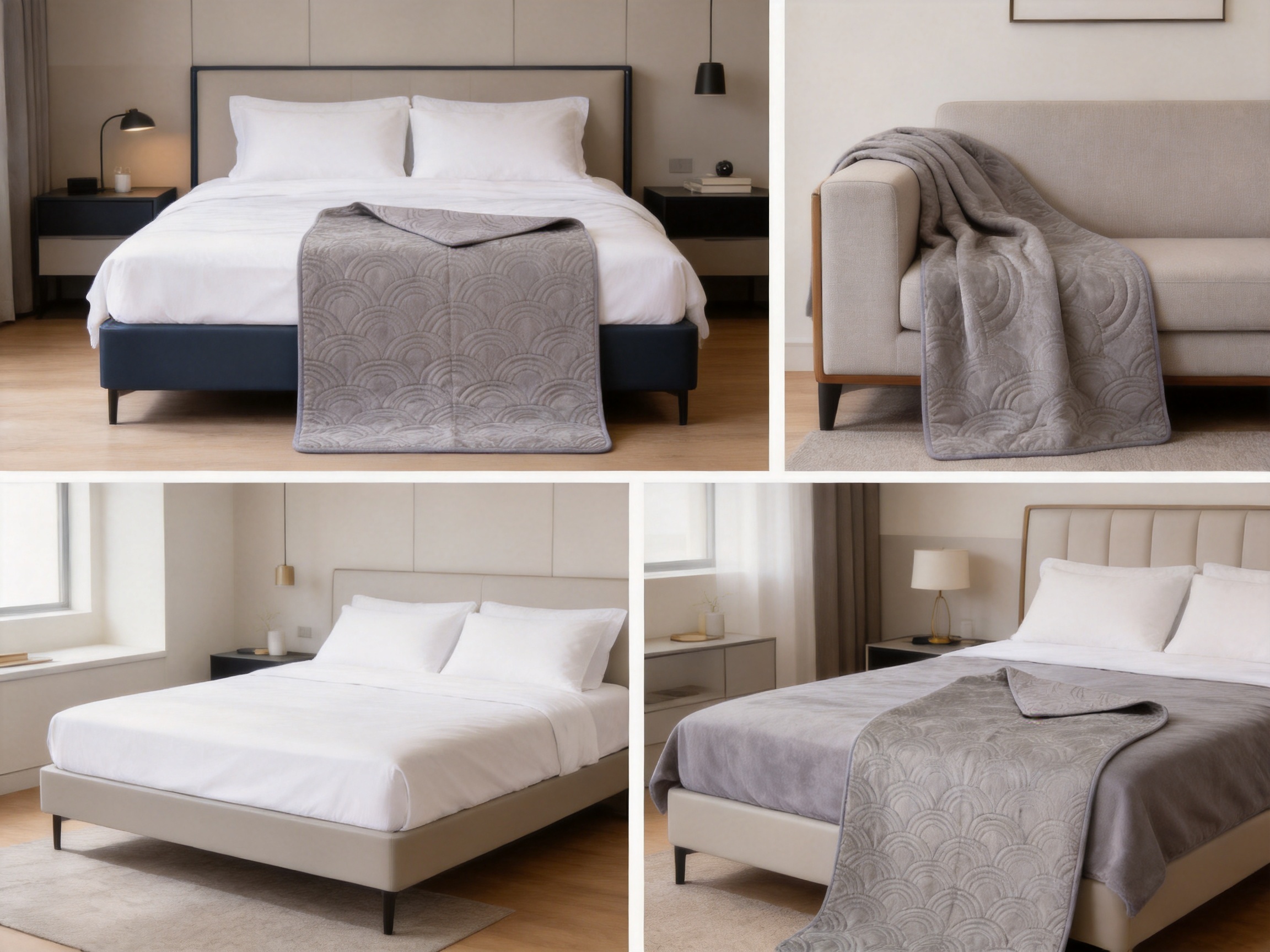
Layering allows consumers to adjust bedding according to personal preference and changing temperature. The Short Plush Ultrasonic Blanket can be placed over a sheet, beneath a duvet, at the foot of a bed, or on a sofa. Its moderate thickness allows it to integrate with other bedding rather than competing with them for space.
This adaptability is particularly relevant for hospitality operators. Guest comfort preferences differ, and room temperatures can change throughout the year. A lightweight, attractive blanket gives hotels, serviced apartments, and guesthouses an additional comfort option that can be folded and stored conveniently when not in use.
Manufacturing Strengths and Quality Management
The quality of a finished blanket depends on more than its listed materials. It also depends on the manufacturer’s ability to source consistent fabrics, control production parameters, inspect finished goods, and respond to customer specifications. Tongxiang Xinlong Bedding Co., Ltd. was established in January 2002 and has developed its operations around the production of home-textile goods, including quilts, pillows, cushions, bedspreads, travel quilts, mattress protectors, blankets, quilt covers, pillowcases, shower curtains, and curtains.
This broad product experience is relevant to the Short Plush Ultrasonic Blanket because many home-textile manufacturing skills are interconnected. Fabric inspection, filling control, sewing, bonding, edge finishing, dimensional measurement, packaging, and final inspection are all important across multiple product categories. A supplier familiar with different bedding constructions can draw on wider technical knowledge when developing a customized blanket program.
Dedicated Equipment and Technical Personnel
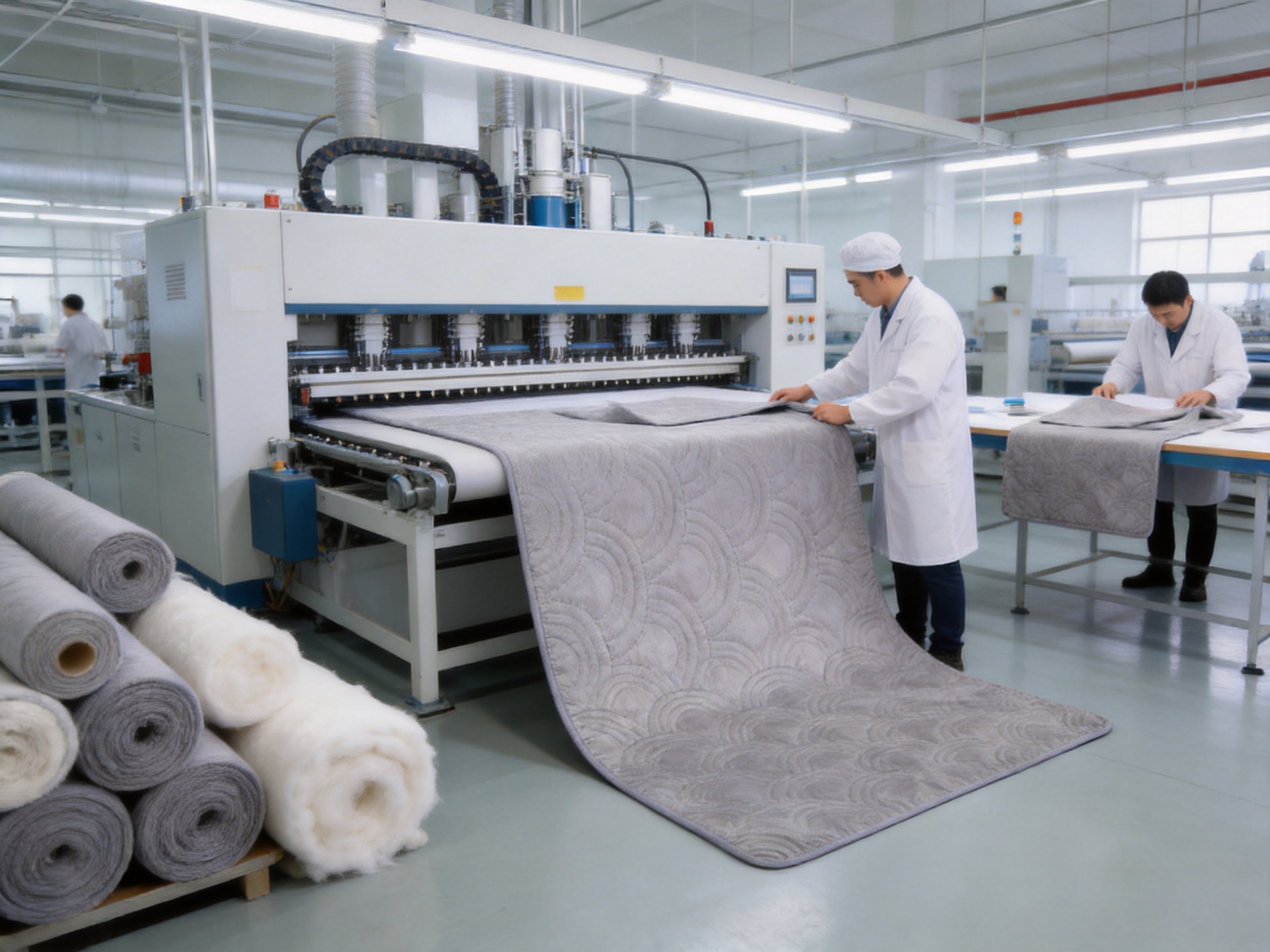
The company is equipped with various advanced production machines and maintains professional and technical personnel to support product development and manufacturing. For ultrasonic blankets, appropriate equipment is essential for creating stable embossed patterns. The machinery must be configured according to fabric composition, thickness, pattern geometry, production speed, and bonding requirements.
Technical personnel are responsible for converting design concepts into production-ready specifications. They may evaluate the suitability of a proposed pattern, determine whether the design requires a particular roller or tooling configuration, test the appearance of sample materials, and adjust process parameters to achieve consistent results. This technical stage is important because a pattern that looks attractive in a drawing may require modification when applied to a plush textile surface.
Material Inspection
Consistent raw materials are the foundation of reliable bedding. Before production, fabrics should be reviewed for width, weight, color consistency, surface defects, softness, and dimensional behavior. Filling should be checked for uniformity, cleanliness, and compatibility with the intended construction. The inspection process helps reduce variations that could affect the finished blanket’s appearance or feel.
For custom orders, material approval is particularly important. Buyers may request a specific shade, pattern scale, or surface texture, and these requirements should be confirmed through approved samples. Clear reference standards help ensure that production remains aligned with the customer’s expectations.
Process Control
Ultrasonic bonding requires careful process control. If the energy level is too low, bonding may be incomplete. If it is too high, the fabric may show unwanted compression, hardening, discoloration, or surface damage. The relationship between speed, pressure, temperature, vibration, and material thickness must therefore be evaluated during sample development and production.
Process control also includes checking the alignment of the front fabric, backing, and filling. The layers must remain correctly positioned as they pass through the equipment. Pattern registration, edge margins, product dimensions, and overall flatness should be monitored throughout the production run.
Finishing and Inspection
After the main ultrasonic operation, the blanket may require trimming, edge finishing, thread removal where applicable, cleaning, folding, labeling, and packaging. Finished products should be inspected for pattern clarity, bonding integrity, surface uniformity, dimensional accuracy, color consistency, stains, loose fibers, and packaging quality.
A systematic inspection process supports both customer satisfaction and production efficiency. Detecting an issue early allows the factory to identify the relevant stage and correct it before a larger quantity is affected. This is especially important for custom products, where a small deviation in pattern, color, or size may influence the entire order.
International Certifications and Standards
The company has passed international certifications and management or compliance programs including ISO 9001, ISO 14001, OEKO-TEX Standard 100, OEKO-TEX STeP, GRS, and BSCI, according to the supplied company information. These certifications and programs represent important aspects of quality management, environmental management, textile safety, responsible production, and social compliance.
Certification status should always be confirmed for the specific production facility, product scope, and current validity period before being used in commercial claims. Nevertheless, the stated certifications indicate that the manufacturer has developed systems relevant to international home-textile supply. For importers and brand owners, such systems can provide a stronger foundation for supplier evaluation, documentation, compliance review, and long-term cooperation.
The company also reports a long-term focus on standardized operating procedures, employee technical development, and continuous product-quality improvement. These principles are directly relevant to ultrasonic blanket manufacturing, where stable results depend on repeatable procedures and trained personnel rather than on equipment alone.
Design and Customization Opportunities
The product’s design potential extends beyond choosing a fabric color. Because the ultrasonic process can create various embossed patterns, buyers can develop a collection with a clear visual identity. The pattern may be subtle and tone-on-tone, or it may be selected to create a stronger contrast through fabric color, surface direction, or light reflection.
Pattern Development
Pattern development should begin with the intended market and product position. A hotel collection may favor clean lines and understated geometry. A children’s range may require softer shapes and friendly themes. A premium home collection may use elegant botanical forms, fine diamonds, or broad flowing patterns. A promotional product may benefit from a simple repeat that supports recognizable packaging and efficient production.
Pattern scale is another important consideration. Small patterns can create an even overall texture, while larger patterns may make a stronger visual statement. The pattern should also be evaluated against the short plush surface because pile direction and surface density can influence how clearly the embossing is seen.
Color Coordination
Color influences both perceived warmth and market positioning. Neutral shades such as cream, gray, beige, and muted blue can support minimalist or hotel-oriented collections. Richer colors may appeal to seasonal retail programs. Pastel shades can create a lighter, softer impression, while darker tones may emphasize the depth of an embossed pattern.
Customers can coordinate the front and reverse fabrics to create a uniform appearance or a contrasting two-tone effect. Color selection should be confirmed using physical samples because digital screens and printed references may not reproduce textile shades accurately.
Size Selection
The product can be made in customized dimensions. This allows buyers to develop sizes for single beds, double beds, larger beds, children’s beds, sofa throws, travel applications, and commercial projects. Custom sizing is especially valuable for hospitality groups and retailers operating in markets with different standard bed dimensions.
Size customization should consider the intended drop, mattress depth, folding method, packaging dimensions, and the relationship between the pattern repeat and the finished product. If the design has a strong directional or border element, the size must be reviewed carefully to ensure that the final pattern is balanced.
Private-Label Development
Private-label buyers can use the blanket as a foundation for a coordinated product range. The same manufacturing platform may support different colors, patterns, sizes, labels, packaging formats, and seasonal themes. This gives brands the ability to create a distinctive collection while benefiting from an established production process.
Packaging can be designed to emphasize softness, embossed texture, lightweight warmth, multipurpose use, or customization. Product information should be accurate and should clearly communicate the material composition, intended use, care instructions, size, and any applicable compliance information.
Applications Across Residential and Commercial Markets
The Short Plush Ultrasonic Blanket is suitable for a wide range of applications because it combines decorative appeal with practical functionality.
Residential Bedrooms
In the home, the blanket can serve as an everyday comfort layer or an accent piece. It may be placed across the top of a bed to add texture and visual interest, used as an extra layer during cool evenings, or folded at the foot of the bed for convenient access. Its short plush surface can complement both contemporary and traditional interiors.
Guest Rooms
Guest rooms benefit from bedding that is attractive, comfortable, and easy to organize. A lightweight ultrasonic blanket can be presented as an additional layer for visitors who prefer more warmth. Its moderate construction helps staff fold and store it efficiently, while its embossed surface can contribute to a neat, coordinated room appearance.
Hotels and Serviced Apartments
Hospitality buyers often require bedding that balances guest comfort, presentation, durability, and procurement efficiency. Custom sizes and patterns make it possible to align the blanket with a property’s interior design. A hotel may choose a restrained embossed pattern that coordinates with existing sheets and duvet covers, while a serviced apartment may select a more versatile design intended for repeated guest use.
Retail and E-Commerce
The product is also well suited to retail and online sales. Its embossed texture can be highlighted through close-up photography and product demonstrations. Retailers can position it as a lightweight blanket, decorative bedspread, seasonal comforter, or multipurpose household textile. Because it can be manufactured in different sizes and designs, it can support multiple price levels and collection themes.
Dormitories and Student Housing
Students and residents in shared or compact accommodation often value bedding that is easy to move, store, and use in changing indoor conditions. The blanket’s manageable weight and flexible function make it appropriate for dormitory rooms, temporary accommodation, and rental properties. Buyers can select practical colors and standardized sizes to simplify purchasing and replacement.
Travel and Leisure
The product may also be adapted for travel-related uses, vacation homes, camps, or leisure facilities where a soft, lightweight textile layer is useful. Custom sizes can be developed for specific applications, although the final design should be evaluated according to the intended packing volume, washing conditions, and frequency of use.
Care, Maintenance, and Product Longevity
Correct care is important for preserving the softness and appearance of any plush bedding product. The precise care label should be determined through product testing and should reflect the final materials, construction, finishing, and customer requirements. Buyers should not rely on general assumptions when establishing washing and drying instructions.
In general, polyester bedding should be handled according to the manufacturer’s approved care guidance. Appropriate washing temperatures, detergent selection, spin settings, drying methods, and storage conditions can help protect the fabric surface and filling. Excessive heat may affect synthetic fibers or bonding areas, while overly aggressive mechanical treatment may reduce surface softness over time.
The short pile construction offers a practical maintenance advantage compared with some longer-pile textiles. Its compact surface is less prone to dramatic matting and may be easier to keep visually neat. However, users should still avoid harsh treatment, sharp objects, and improper storage. The blanket should be completely dry before long-term storage to help prevent odor or moisture-related problems.
For commercial users, a documented care program can improve product service life. Hotels and other institutions may benefit from standardized laundry procedures, regular inspection, and planned replacement schedules. When a blanket is used frequently, appropriate laundering and handling practices are as important as the initial fabric selection.
Why the Supplier Is Suitable for Custom Home Bedding
A custom bedding project requires more than the ability to manufacture one product. It requires communication, sampling, technical review, production planning, inspection, and shipment coordination. A supplier with experience across multiple home-textile categories can provide a broader perspective on how a new blanket will fit into a customer’s product range.
Tongxiang Xinlong Bedding Co., Ltd. has operated since 2002 and produces a wide selection of household textile products. This experience supports familiarity with different fabrics, fillings, sewing and finishing methods, packaging requirements, and customer expectations. The company’s reported workforce of more than 320 employees provides an organizational base for product development and production management.
The company’s location in Wuzhen, Tongxiang, Zhejiang Province places it within an established textile manufacturing region. Access to a developed textile supply network can assist with fabric sourcing, accessories, production support, and logistics coordination. For international buyers, regional manufacturing experience may also simplify the development of related products within one supply program.
The company states that it emphasizes quality as a central business principle and continuously improves employee technical skills and operating procedures. These priorities are valuable for products such as ultrasonic blankets, where the appearance of the embossing, consistency of the filling, and accuracy of the dimensions all influence the customer’s perception of quality.
Environmental and social responsibility are also increasingly important in international sourcing. The reported ISO 14001, OEKO-TEX, GRS, BSCI, and OEKO-TEX STeP-related credentials may support buyers’ compliance and responsible-sourcing assessments, subject to verification of current certificates and applicable product scope. A transparent documentation process helps brands make more reliable claims and build confidence across their supply chains.
Recommended Purchasing and Development Process
Buyers interested in developing this blanket should begin by defining the target market, intended use, size range, color direction, pattern style, packaging format, and expected order quantity. Clear specifications reduce misunderstandings and allow the factory’s technical team to evaluate the project efficiently.
Step One: Confirm the Product Brief
The product brief should identify the required front fabric, backing fabric, filling, approximate finished weight, dimensions, edge treatment, color, pattern, labeling, packaging, and care information. It should also state whether the blanket is intended for retail, hospitality, promotional, institutional, or private-label use.
Step Two: Review Design Feasibility
Design files or visual references should be reviewed for compatibility with ultrasonic embossing. The factory may recommend adjustments to line thickness, pattern spacing, repeat size, border width, or surface coverage. These adjustments are not necessarily limitations; they help ensure that the final textile result matches the intended appearance.
Step Three: Approve Materials and Samples
Physical samples should be used to confirm softness, color, pattern clarity, filling distribution, dimensions, edge finishing, and overall appearance. If multiple colors or sizes are required, representative samples should be evaluated before bulk production. The approved sample should become the reference standard for production inspection.
Step Four: Establish Quality Requirements
Quality requirements should be documented in advance. They may include acceptable dimensional tolerance, color variation, bonding strength, surface defects, packaging condition, labeling accuracy, and carton specifications. A clear inspection standard protects both the buyer and the manufacturer by providing an objective basis for evaluation.
Step Five: Plan Production and Delivery
Production timing depends on design complexity, material availability, order quantity, sampling requirements, and packaging specifications. Buyers should allow sufficient time for sample approval, raw-material preparation, manufacturing, inspection, and shipment. Early planning is particularly important for seasonal retail programs and hospitality projects with fixed opening dates.
Frequently Asked Questions
What is an ultrasonic blanket?
An ultrasonic blanket is a multilayer textile product made using high-frequency vibration, heat, and pressure to bond or emboss fabric layers. The process can create decorative patterns while joining suitable materials with a clean and consistent appearance.
What materials are used in this blanket?
The specified construction uses 160gsm polyester short pile fabric on the front, 80gsm polyester fabric on the back, and 100gsm bonded polyester filling between the fabric layers.
Is the blanket suitable for all seasons?
It is designed as a lightweight to moderate comfort layer rather than an extremely heavy winter quilt. It is suitable for mild weather, transitional seasons, air-conditioned rooms, layering, and indoor environments where moderate warmth is preferred.
Can the embossed pattern be customized?
Yes. The manufacturer has ultrasonic equipment and can develop various embossed patterns according to customer requirements. Final pattern feasibility should be confirmed through technical review and sample approval.
Can the blanket be produced in custom sizes?
Yes. The stated specification indicates that the size can be customized to any required dimension, subject to production review, pattern layout, and order requirements.
Can it be used as a bed sheet?
It can be used as a thin blanket or bed sheet according to the supplied product description. Buyers should define the exact intended use and confirm the preferred dimensions and finishing details during product development.
Is short plush difficult to maintain?
Short plush is generally practical to maintain because its compact pile is less likely to become heavily tangled than long-pile fabric. The final care method should follow the approved care label and product testing results.
Is the blanket appropriate for hotels?
Yes. Its moderate weight, soft surface, decorative appearance, and customizable sizing make it suitable for hotels, serviced apartments, guesthouses, and similar accommodation environments. Commercial buyers should confirm laundering requirements and durability expectations before placing an order.
Can private-label packaging be supplied?
Private-label packaging, labels, and other presentation details can be discussed with the manufacturer. Requirements should be confirmed during quotation and sample development.
What quality systems does the manufacturer report?
The company reports certifications and compliance programs including ISO 9001, ISO 14001, OEKO-TEX Standard 100, OEKO-TEX STeP, GRS, and BSCI. Buyers should request current documentation and verify the specific scope relevant to their order.
What should buyers check before mass production?
Buyers should check the approved fabric, color, pattern, finished size, filling distribution, edge treatment, labels, packaging, care instructions, inspection standard, and delivery schedule. A signed or formally approved sample is recommended as the production reference.
Conclusion
The Short Plush Ultrasonic Blanket offers a strong combination of tactile comfort, moderate warmth, visual sophistication, and commercial flexibility. Its 160gsm short plush front provides a soft and attractive surface, while the 80gsm polyester backing and 100gsm bonded polyester filling create a lightweight multilayer structure. The product can be used as a thin blanket, a bed sheet, a decorative bed covering, or an adaptable comfort layer for residential and commercial environments.
Its most distinctive advantage is the ultrasonic embossed construction. This technology allows the manufacturer to create customized patterns that add depth and texture without relying solely on printing or traditional decorative stitching. The result is a product that can be adapted to different design languages, market segments, room concepts, and private-label collections.
The manufacturing capabilities of Tongxiang Xinlong Bedding Co., Ltd. further support the product’s appeal. Established in 2002, the company operates a substantial home-textile facility, employs a large production workforce, uses advanced equipment, and maintains technical personnel for product development and process control. Its broad range of bedding experience and reported international certifications provide a useful foundation for buyers seeking a custom home-textile supplier.
For retailers, wholesalers, hospitality groups, and private-label brands, this blanket presents an opportunity to offer a product that is comfortable, attractive, adaptable, and suitable for efficient large-scale development. With appropriate sampling, material approval, quality control, and care guidance, the Short Plush Ultrasonic Blanket can become a reliable part of a modern home-bedding collection.
References
1. Product specification supplied for the Short Plush Ultrasonic Blanket, including fabric composition, filling, size flexibility, and intended applications.
2. Company information supplied for Tongxiang Xinlong Bedding Co., Ltd., including establishment history, facility area, workforce, equipment, product categories, and manufacturing capabilities.
3. ISO 9001 principles for quality-management systems and continual improvement.
4. ISO 14001 principles for environmental-management systems.
5. OEKO-TEX textile-safety and harmful-substance assessment principles.
6. Global Recycled Standard principles for recycled-material content and responsible processing, where applicable.
7. Business Social Compliance Initiative principles relating to responsible working conditions and supply-chain practices.
8. General textile-manufacturing references concerning ultrasonic bonding, embossed textile construction, polyester fabrics, and bonded fiberfill.



 +86-573-88798028