



 Français
 Español
 Deutsch
Content
- 1 Product Overview
- 2 Layered Construction for Balanced Comfort
- 3 Advantages Compared with Basic Pillow Designs
- 4 Comfort and Support Performance
- 5 Manufacturing Strengths
- 6 Production Process for the Quilted Pillow
- 7 Quality and Compliance Strengths
- 8 Commercial Value for Different Buyers
- 9 Care, Handling, and Product Presentation
- 10 Why the Product Is Suitable for Modern Bedding Collections
- 11 Recommended Quality Checks for Buyers
- 12 Q&A
- 12.1 What is the size of the Polyester Quilted High Pillow?
- 12.2 What is the pillow filled with?
- 12.3 What material is used for the outer fabric?
- 12.4 What does the quilting fill contribute?
- 12.5 Is the pillow suitable for different sleeping positions?
- 12.6 What makes this pillow different from a basic polyester pillow?
- 12.7 Is the filling synthetic?
- 12.8 Can the pillow be used in hospitality projects?
- 12.9 Can the product be customized?
- 12.10 What manufacturing capabilities does the supplier have?
- 12.11 What certifications and management systems are associated with the company?
- 12.12 What should a buyer confirm before placing a bulk order?
- 13 Conclusion
- 14 References
- 15 Product: Polyester Quilted High Pillow
Polyester Quilted High Support Pillow: Construction, Comfort, and Manufacturing Excellence
A pillow is one of the most important elements in a complete sleep system. It supports the head and neck, affects sleeping posture, contributes to temperature and moisture management, and influences how comfortable a person feels throughout the night. For retailers, distributors, hospitality buyers, and private-label bedding brands, a successful pillow must therefore combine comfort, appearance, durability, efficient production, and dependable quality control.
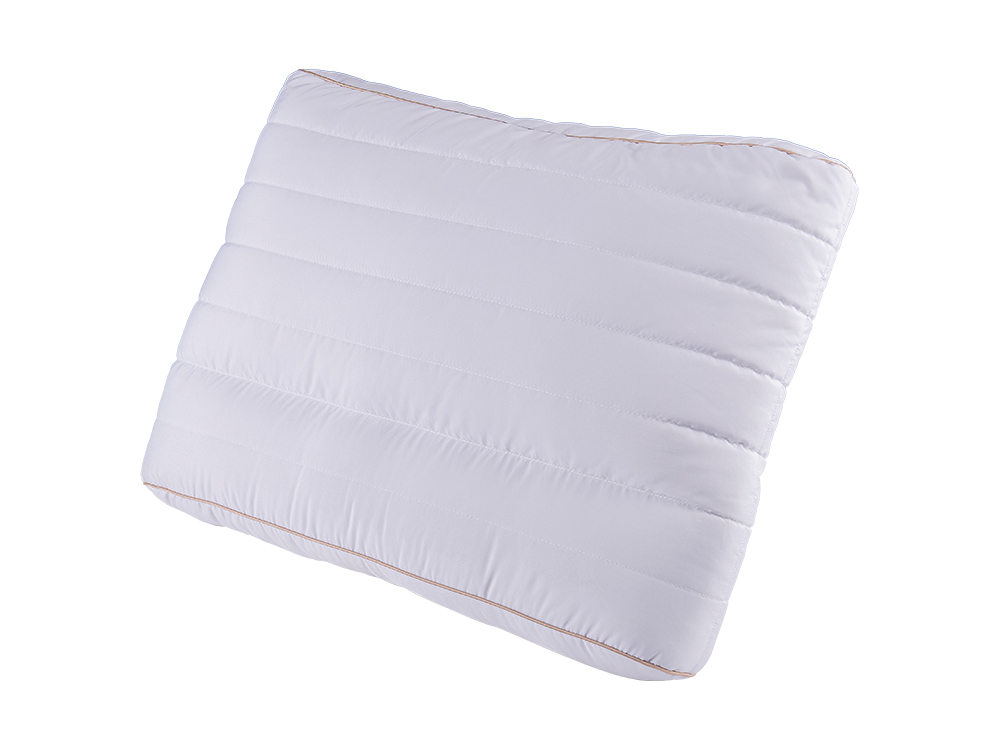
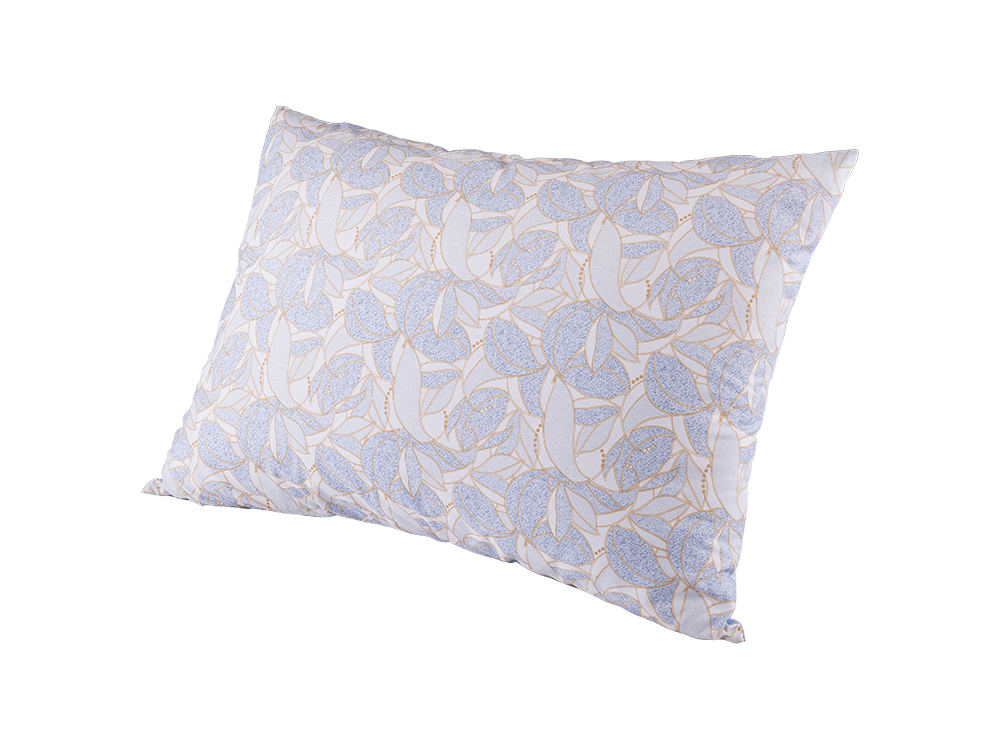
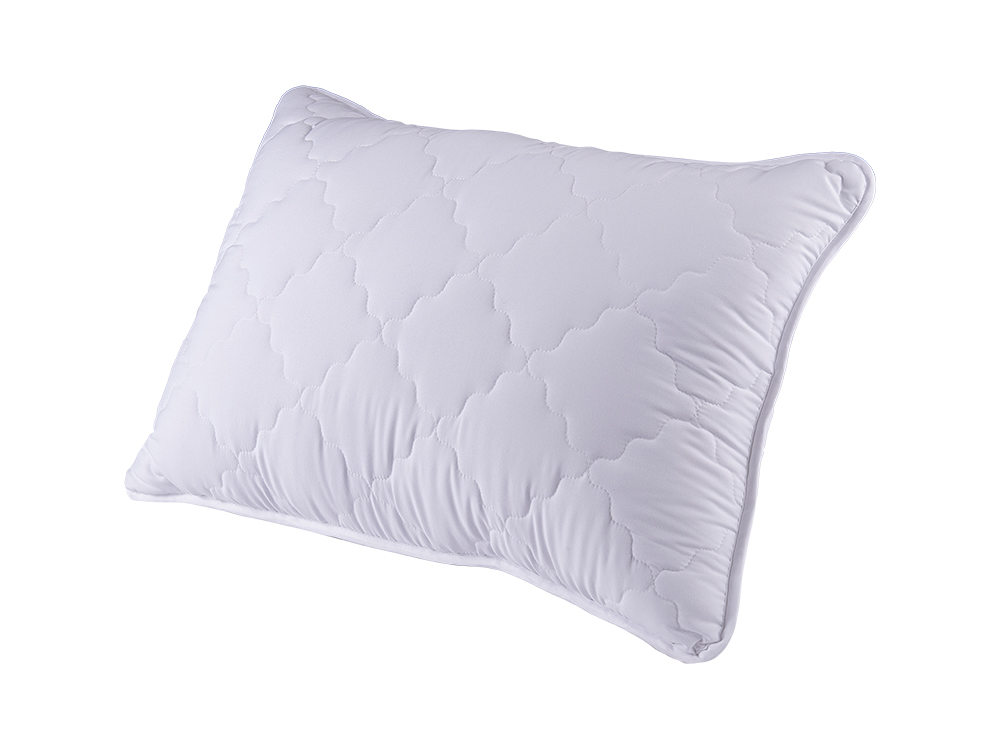
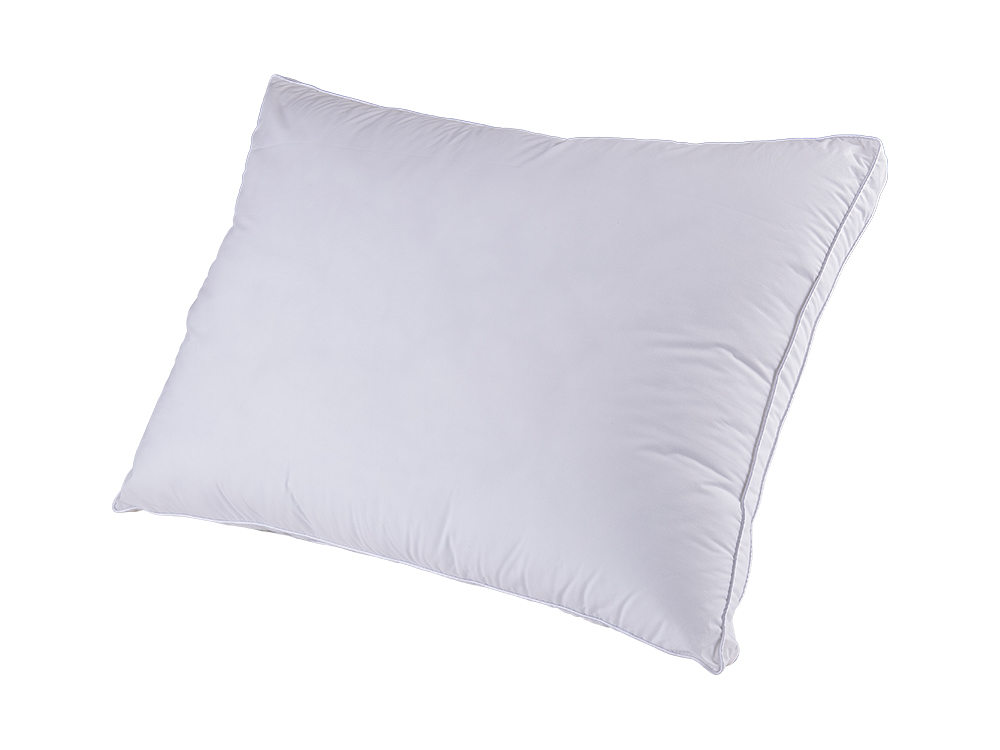
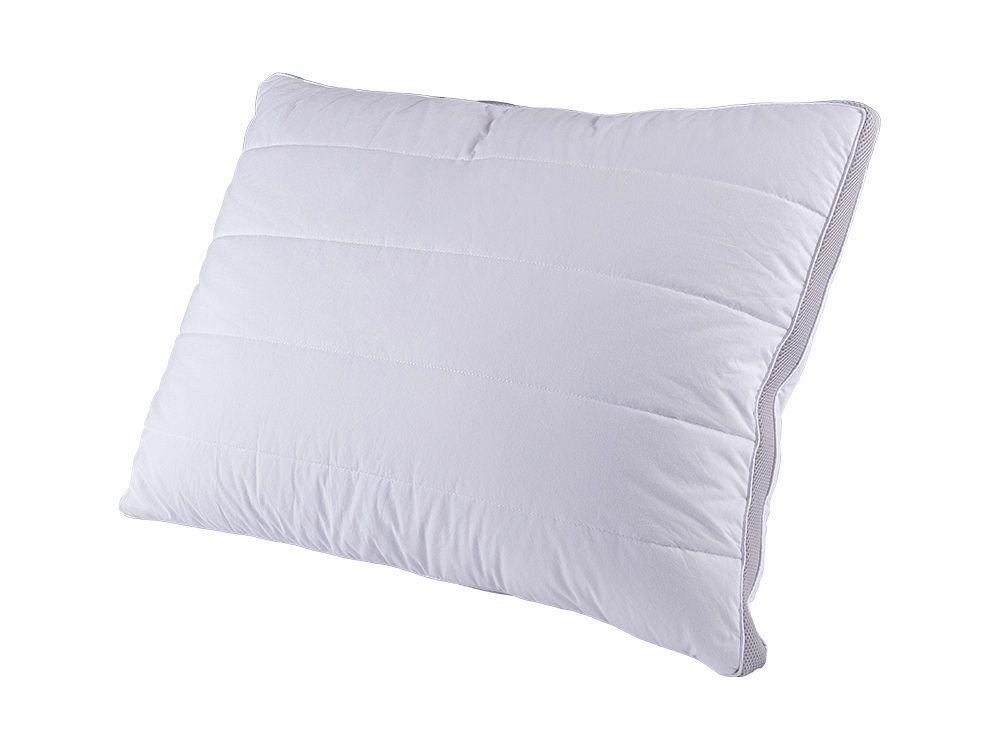
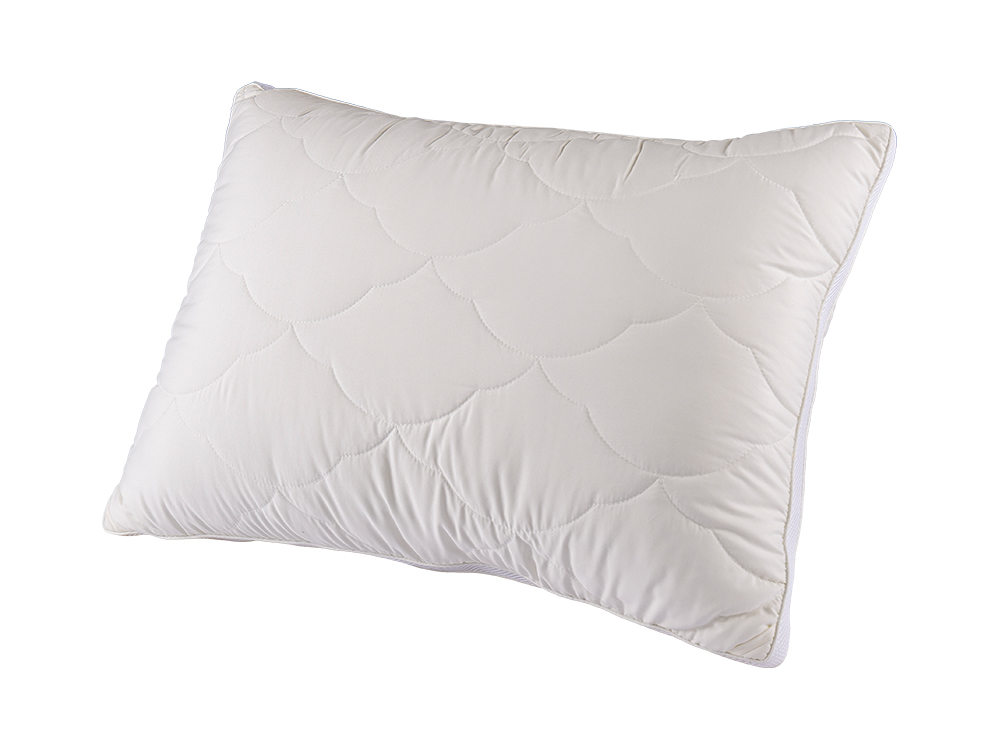
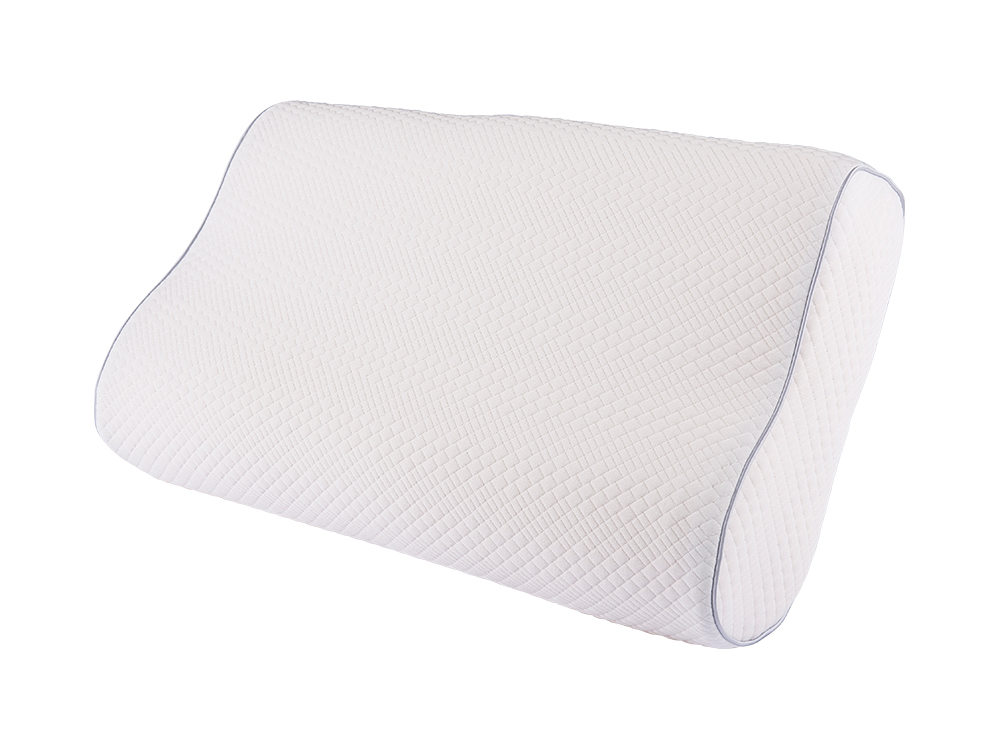
The Polyester Quilted High Pillow is designed around these requirements. Measuring 50 by 70 centimeters, it combines a brushed microfiber shell, a quilted polyester layer, and 700 grams of high-density 6D ball fibre. The result is a generously filled pillow intended to provide high support while maintaining a soft and inviting surface. Its decorative quilting and light blue piping also give it a polished appearance suitable for modern bedding collections.
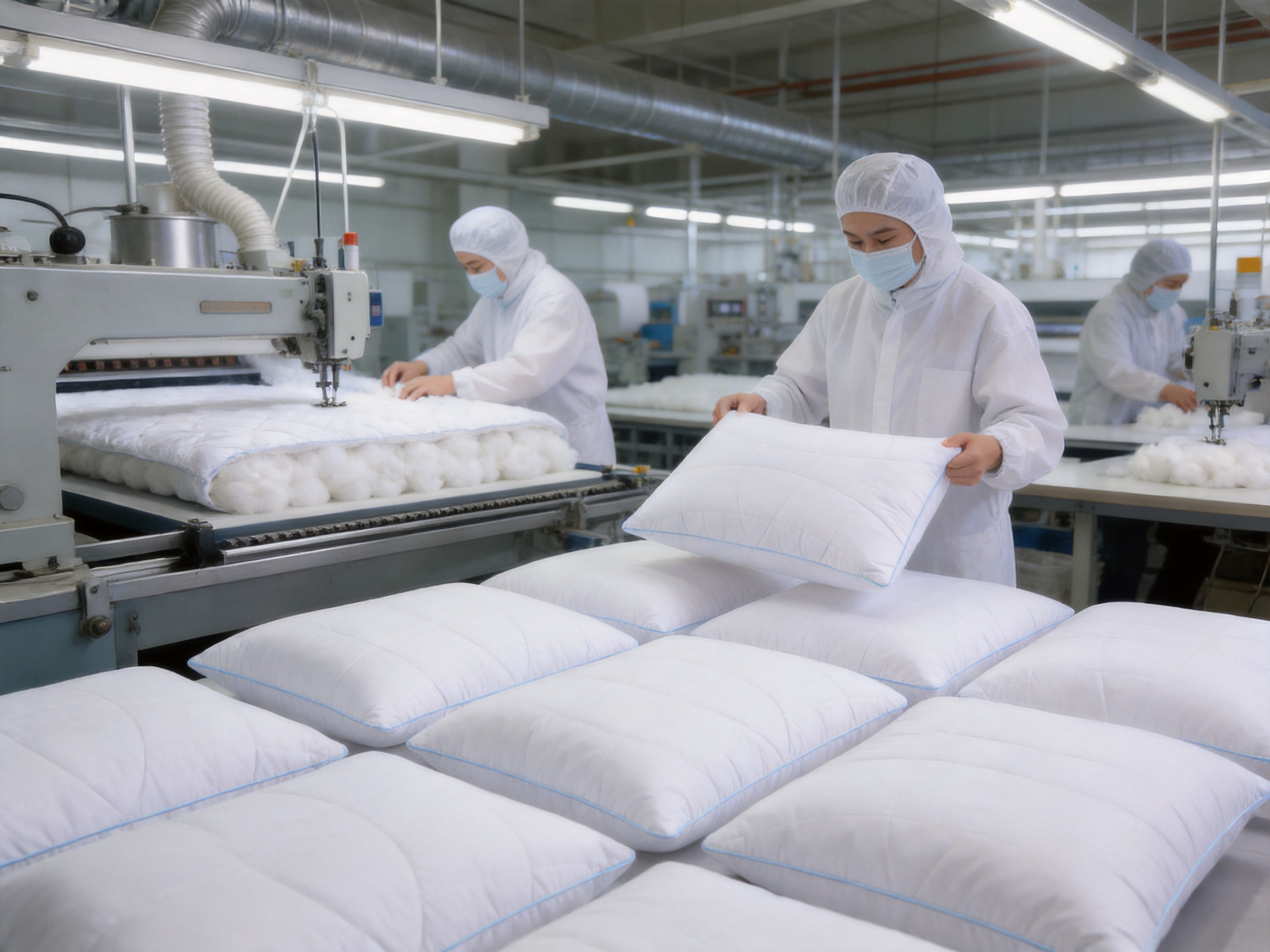
Manufactured by Tongxiang Xinlong Bedding Co., Ltd., the pillow reflects the capabilities of an established home textile producer with experience across pillows, quilts, mattress protectors, blankets, mattress covers, cushions, bedspreads, travel quilts, quilt covers, pillowcases, curtains, and related products. The company operates from Wuzhen, Tongxiang City, Zhejiang Province, China, and combines product development, textile processing, filling, quilting, sewing, inspection, and order support within an experienced manufacturing organization.
This article examines the pillow’s materials, structure, comfort benefits, visual appeal, manufacturing strengths, quality considerations, and commercial value. It also explains why a high-support polyester pillow can be a practical alternative to more expensive or less versatile filling systems.
Product Overview
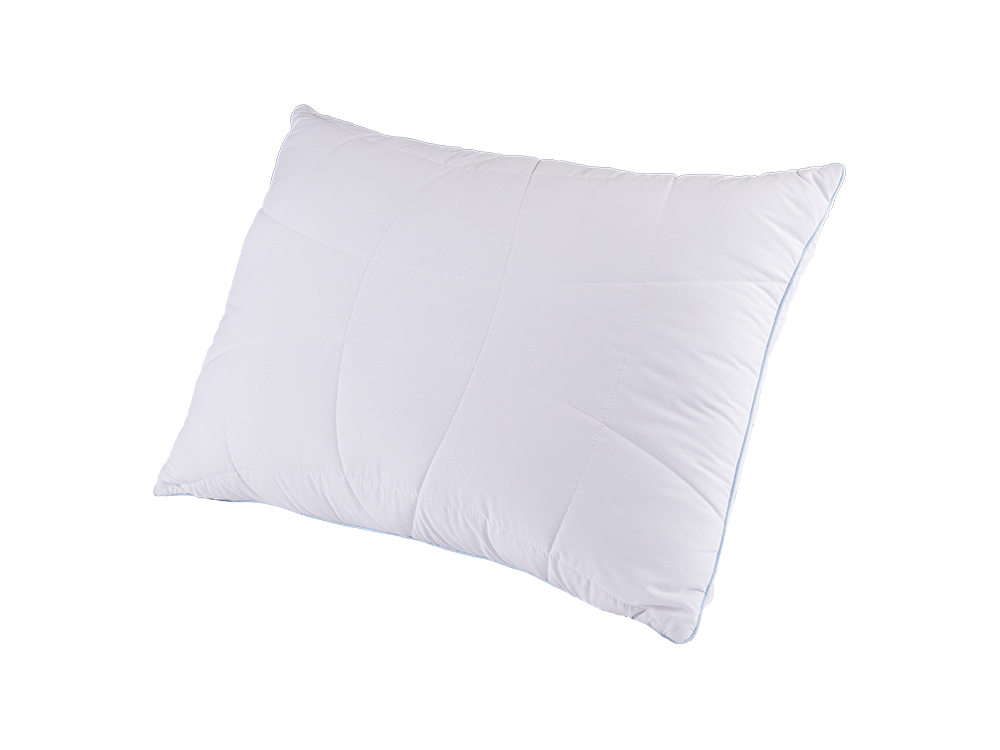
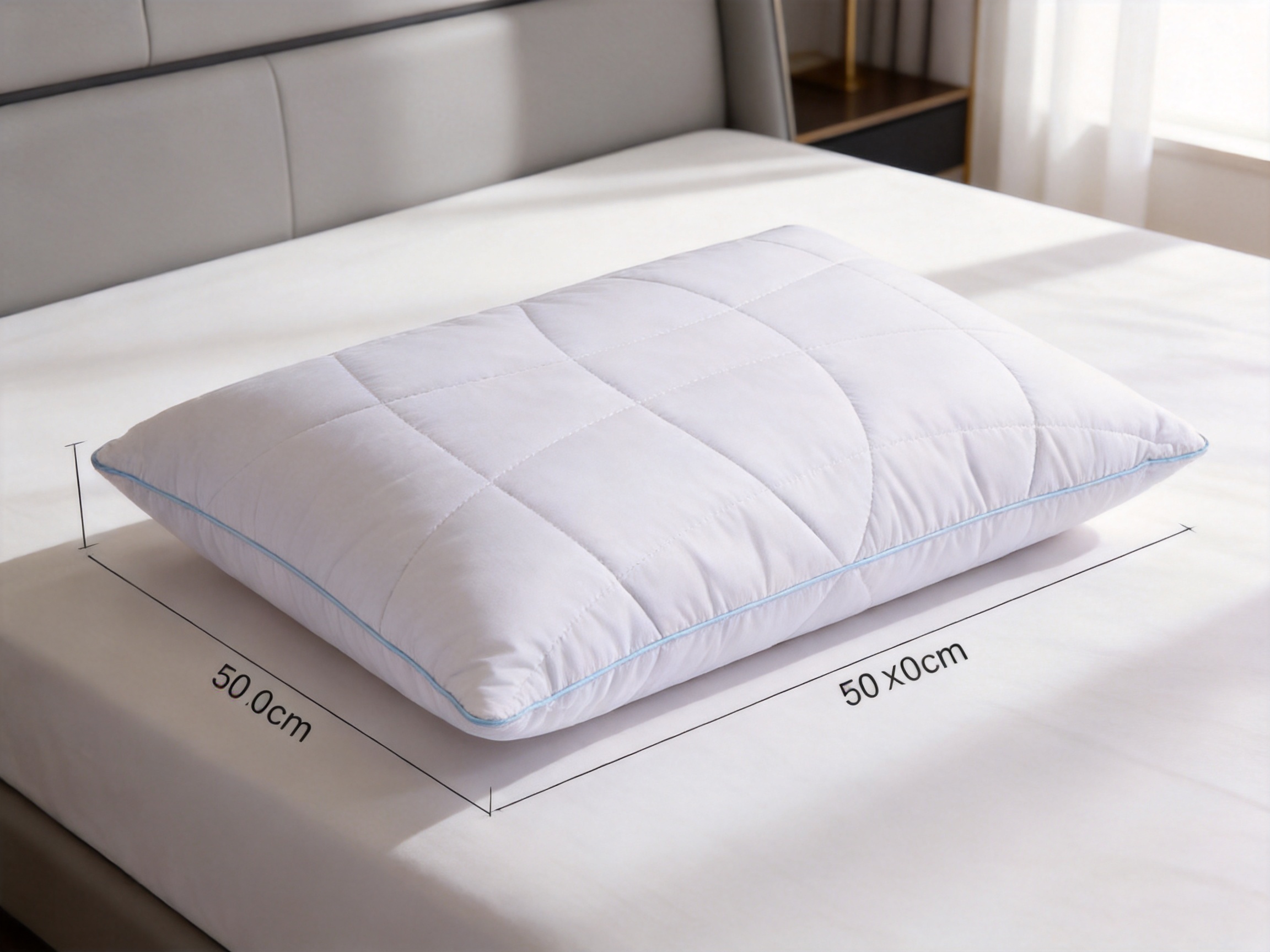
The Polyester Quilted High Pillow is a rectangular sleeping pillow with a 50 by 70 centimeter finished size. This dimension provides broad coverage for the head and upper shoulders while remaining compatible with many standard bedding arrangements. It can be used as a primary sleeping pillow, a supportive backrest, or part of a coordinated bedroom product range.
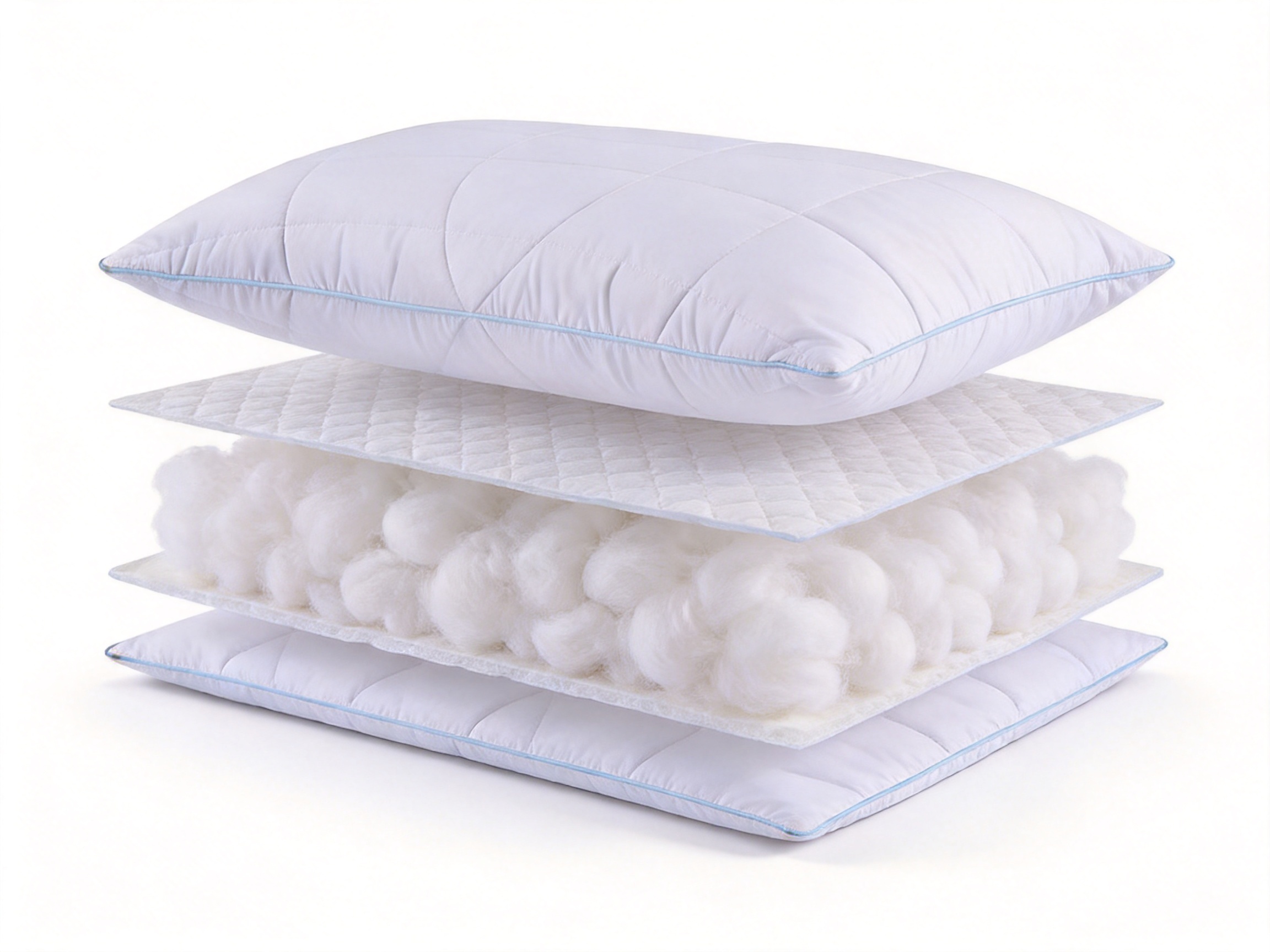
The product has three principal construction elements. The outer fabric is polyester microfiber brushed fabric with a listed weight of 85 grams per square meter. Over or within the surface structure is a 150-gram-per-square-meter polyester quilting fill. The central filling consists of 700 grams of high-density 6D ball fibre, selected to provide high support.
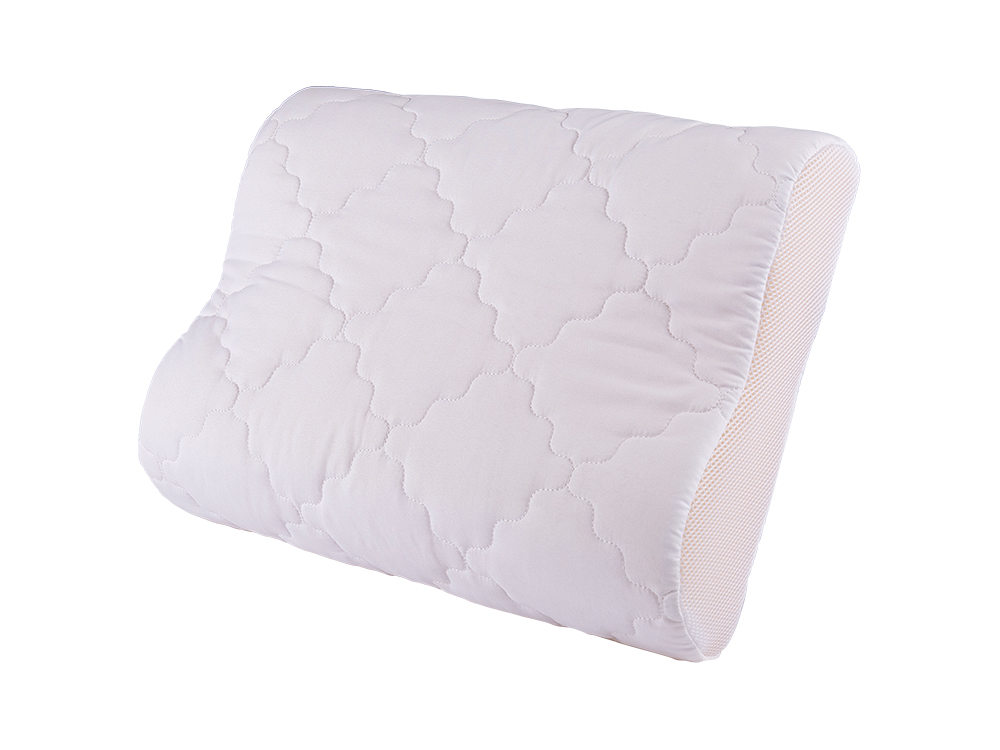
The exterior is enhanced by a quilted pattern and light blue piping. These details are more than decorative additions. Quilting helps organize the surface and gives the pillow a structured appearance, while piping defines the perimeter and reinforces the visual shape. Together, they create a finished product that looks more premium than a simple plain-shell pillow.
The pillow is described as suitable for side sleepers, back sleepers, and stomach sleepers. Sleeping preferences vary significantly, so no single pillow can provide an identical experience for every user. However, the combination of substantial filling, resilient fibre, and broad rectangular dimensions gives this design a versatile foundation for multiple sleeping positions.
| Product Attribute | Specification | Practical Significance |
|---|---|---|
| Product type | Quilted polyester high-support pillow | Combines a decorative shell with substantial internal support |
| Finished size | 50 x 70 centimeters | Provides generous head and shoulder coverage |
| Outer fabric | Polyester microfiber brushed fabric, 85 gsm | Creates a soft, smooth, and comfortable surface |
| Quilting fill | 150 gsm polyester | Adds loft, softness, and surface structure |
| Inside filling | 700 grams of high-density 6D ball fibre | Supports a fuller shape and a high-support feel |
| Surface design | Quilted pattern with light blue piping | Improves presentation and defines the product edge |
Polyester Quilted High Pillow
Layered Construction for Balanced Comfort
Brushed Microfiber Surface
The outer fabric uses polyester microfiber with a brushed finish. Brushing raises and softens the surface fibers, creating a smoother hand feel than many conventional flat polyester fabrics. This is especially relevant for pillows because the product remains close to the face and neck for several hours at a time.
At 85 grams per square meter, the fabric is designed to provide a lightweight outer layer while supporting the pillow’s soft and flexible character. Polyester is widely used in bedding because it offers consistent performance, broad color compatibility, and practical manufacturing properties. It can be processed efficiently, sewn reliably, and incorporated into a wide range of product designs.
Microfiber construction also supports a clean visual presentation. A smooth brushed surface allows quilting lines and piping to stand out clearly. It can be coordinated with duvet covers, sheets, mattress protectors, blankets, and other bedroom products to create a unified collection.
Quilted Polyester Layer
The pillow includes a 150-gram-per-square-meter polyester quilting fill. This layer contributes to the soft surface sensation and creates a more substantial appearance than a shell filled only with loose fiber. It also helps distribute the visual and tactile transition between the cover and the central filling.
Quilting joins the fabric and filling through a planned stitched pattern. This process helps keep the quilting layer positioned during handling and use. It also creates a decorative rhythm across the surface, making the pillow look carefully constructed rather than simply assembled from a cover and loose filling.
For commercial bedding, quilting can provide an important presentation advantage. Consumers frequently judge quality through visible details before they experience the product. Even stitching, balanced pattern placement, clean edges, and accurately applied piping can contribute to confidence at the point of sale.
High-Density 6D Ball Fibre Filling
The inner filling contains 700 grams of high-density 6D ball fibre. Ball fibre is formed into rounded clusters that can help create a resilient, lofty filling structure. The term “6D” identifies a fiber denier specification, while the high-density description indicates the intended fullness and supportive character of the filling.
A major benefit of this type of filling is its ability to provide a fuller pillow profile without relying on natural down or feather. Polyester ball fibre is a practical choice for buyers seeking a synthetic product with a soft hand feel, consistent sourcing, and easier specification control. It can be suitable for customers who prefer animal-free bedding or who require a more standardized filling composition.
The 700-gram filling quantity gives the pillow a substantial internal core. Rather than producing an extremely thin or easily compressed product, this design is intended to maintain a supportive presence under the head. The final feel depends on factors such as the user’s body weight, sleeping posture, pillowcase, room temperature, and personal preference, but the specification clearly positions the pillow in a high-support category.
Advantages Compared with Basic Pillow Designs
More Structured Than a Plain Fiber Pillow
Many entry-level polyester pillows use a simple woven or non-quilted shell and a relatively light loose-fiber fill. Such products can be economical, but they may have a less distinctive appearance and a softer, less supportive profile. The Polyester Quilted High Pillow differentiates itself through its layered construction, decorative quilting, and substantial 700-gram filling.
The quilted exterior makes the product look more finished on a retail shelf or in a hotel bedroom. The additional quilting layer gives the surface a more developed feel, while the high-density ball fibre creates a fuller internal structure. These features help the pillow occupy a stronger position between basic commodity bedding and highly specialized premium pillows.
Alternative to Feather and Down
Feather and down pillows are traditionally associated with softness and loft, but they may not meet every buyer’s requirements. Some consumers prefer synthetic bedding because of personal sensitivities, animal-welfare considerations, maintenance preferences, or cost objectives. A polyester-filled pillow can provide a practical alternative while offering consistent material composition.
Unlike natural fillings, polyester fiber can be specified according to measurable characteristics such as weight, denier, shape, and density. This can simplify communication between manufacturers, distributors, and private-label customers. It also supports a more repeatable production process when the same specifications are ordered over time.
Greater Visual Appeal
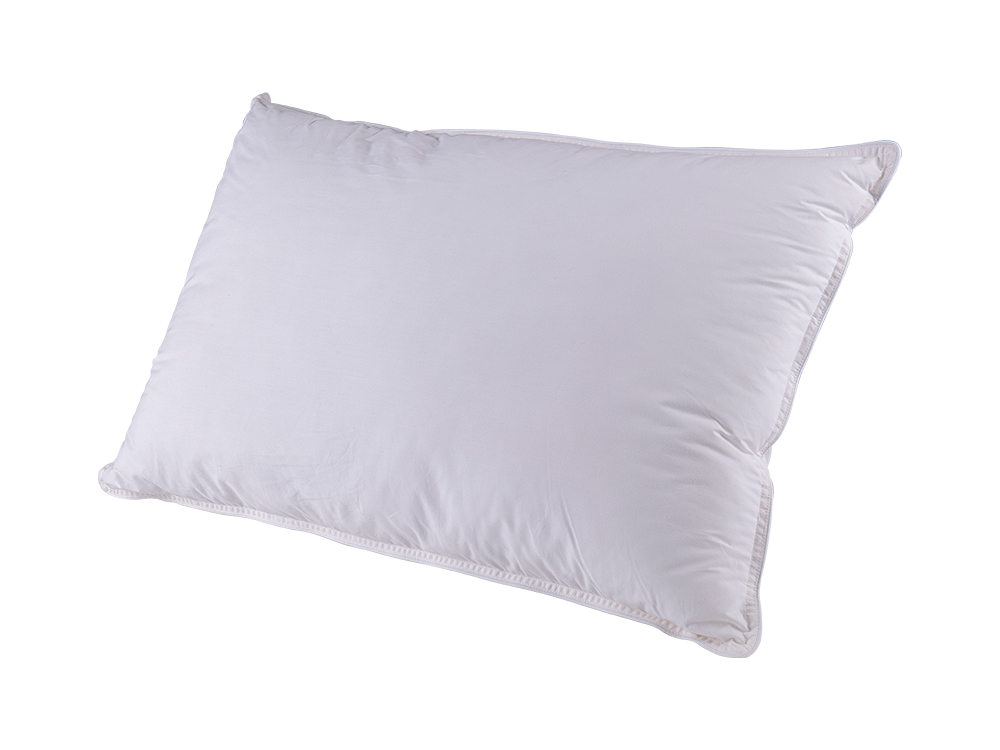
The light blue piping is a distinctive feature. It provides contrast against the pillow surface and outlines the rectangular form. Piping can make the edges look cleaner and more deliberate, while the color accent can be incorporated into a broader bedding collection.
The quilted pattern adds a second visual layer. Instead of presenting a completely uniform surface, the pillow displays texture and pattern that can suggest comfort, care, and craftsmanship. For retailers, these details can help create a more attractive product image in catalogs, online listings, showrooms, and packaging.
Broad Sleeping-Position Compatibility
The product is presented as suitable for side, back, and stomach sleepers. A side sleeper often seeks enough height and support to help fill the space between the head and mattress. A back sleeper may prefer a balanced level of elevation and cushioning. A stomach sleeper generally tends to favor a lower or more compressible feel.
Because individual preferences differ, the pillow should not be described as providing identical ergonomic results for everyone. Its advantage is versatility: the generous size, resilient fiber structure, and substantial fill allow it to serve a broad customer base. Retailers can position it as a general high-support pillow rather than limiting it to one narrow sleep profile.
Comfort and Support Performance
Supportive Loft
The internal structure is intended to deliver supportive loft. Loft refers to the thickness and spring-like volume of a filled textile product. A pillow with sufficient loft can help maintain a more stable position for the head and upper neck than a pillow that rapidly collapses under pressure.
The high-density 6D ball fibre contributes to this objective by creating a resilient filling mass. As the user changes position, the rounded fiber clusters can shift and recover within the shell. This provides a balance between cushioning and shape retention, although the exact result will vary with use, compression, and care.
Soft Surface, Firm Interior Character
The combination of brushed microfiber and quilting creates a softer contact surface, while the 700-gram ball fibre gives the interior a more supportive character. This layered balance is important because a pillow that is firm throughout may feel harsh, whereas a pillow that is soft throughout may not provide enough elevation.
The surface layer helps soften the initial contact. The inner filling then provides the volume and resistance needed to create a fuller shape. This construction can appeal to users who want comfort without sacrificing a sense of support.
Shape and Edge Definition
Edge definition is often overlooked in pillow design. A clean edge affects both the product’s appearance and its usable sleeping area. The piping helps frame the perimeter and can make the pillow look more orderly when placed on a bed.
Quilting also supports the visual distribution of the pillow’s surface. When carefully executed, the pattern can reduce the impression of an irregular or lumpy exterior. The result is a pillow that presents a more controlled shape, particularly when displayed without a pillowcase.
Manufacturing Strengths
Established Home Textile Experience
Tongxiang Xinlong Bedding Co., Ltd. was established in January 2002. Its long operating history provides experience in the production and coordination of multiple home textile categories. The company manufactures products including silk cotton quilts, chemical fiber quilts, pillows, cushions, bedspreads, travel quilts, mattress protectors, blankets, quilt covers, pillowcases, shower curtains, and curtains.
This broad product portfolio is valuable because pillow manufacturing does not exist in isolation. A supplier experienced in quilts, mattress protectors, blankets, and covers is familiar with fabric selection, filling control, quilting, sewing, inspection, packaging, and the requirements of coordinated bedding programs.
For buyers, a diversified manufacturer can simplify supplier management. Instead of sourcing each bedding category from a separate factory, customers may be able to develop complementary products through one experienced production partner. This can improve collection consistency and make communication more efficient.
Production Facilities and Workforce
The company covers approximately 21,000 square meters, with a construction area of approximately 18,000 square meters. It has more than 320 employees and is equipped with advanced production equipment. These resources support a structured manufacturing process from material preparation through finished-product inspection.
A sizable facility allows different production activities to be organized according to workflow. Fabric and filling materials can be received and prepared, quilting and sewing can be carried out in dedicated areas, and finished products can be inspected and packed before shipment. Although factory size alone does not determine quality, sufficient space and personnel can support better organization and production continuity.
Professional and Technical Personnel
The company continues to develop products and improve its technical capabilities in response to changes in the home textile market. Professional and technical personnel contribute to product design, material selection, process planning, sample development, and production improvement.
For a pillow such as this one, technical attention is needed at several stages. The quilting pattern must be applied consistently. The piping must be positioned accurately around the perimeter. The shell must be filled evenly. The final dimensions must remain within the agreed tolerance. The filling weight must be controlled so that the product delivers a repeatable level of support.
Technical personnel also help translate customer requirements into manufacturable specifications. Buyers may request changes in color, pattern, fabric, filling weight, packaging, or labeling. A capable technical team can evaluate these requests and coordinate the necessary adjustments with production.
Quality-Oriented Operating Philosophy
The company identifies quality as a central part of its business purpose. Standardized operating procedures and continuing improvement in employee technical skills are used to support product quality. This approach is particularly relevant for filled bedding, where small variations in fabric cutting, stitching, filling distribution, and finishing can affect the final product.
Standardization helps reduce avoidable variation. For example, a defined filling procedure can help ensure that every pillow receives the specified amount of material. A consistent quilting process can help maintain the intended pattern. Inspection procedures can identify loose threads, open seams, uneven filling, piping problems, stains, or dimensional irregularities before shipment.
Production Process for the Quilted Pillow
Material Preparation
Production begins with the preparation of polyester microfiber fabric, polyester quilting fill, 6D ball fibre, and piping material. Incoming materials should be checked against the agreed specifications, including color, width, surface condition, composition, weight, and quantity.
Material preparation is important because the quality of the finished pillow depends on the stability of its components. Fabric with inconsistent width can affect cutting efficiency. Filling with variable density can change the pillow’s loft. Piping with an inconsistent color can weaken the appearance of the finished product.
Cutting and Quilting
The brushed microfiber fabric is cut into the required panels. The quilting fill is positioned with the fabric, and the selected quilting design is applied. Accurate cutting helps maintain consistent dimensions, while controlled quilting helps prevent shifting and produces a uniform decorative pattern.
The quilted panel must be handled carefully after stitching. Excessive tension, incorrect alignment, or uneven feeding can distort the pattern. Experienced operators and suitable equipment help maintain a balanced surface and reduce rework.
Filling and Assembly
The quilted shell is assembled and prepared for filling. The 700 grams of high-density 6D ball fibre are introduced into the pillow cavity using a controlled process. The filling should be distributed evenly across the corners, sides, and center so that the finished pillow does not have thin areas or excessive lumps.
Filling control is one of the most important stages in pillow manufacturing. Too little filling may produce a flat product with insufficient support. Too much filling may create excessive firmness or make the shell difficult to close properly. Accurate weighing and effective distribution help the pillow achieve its intended high-support profile.
Piping and Sewing
Light blue piping is applied around the pillow edge. The piping must follow the perimeter smoothly, with corners formed neatly and seams secured. It should be neither excessively loose nor so tight that it causes puckering.
The final closure seam is sewn after filling. This seam must be strong enough to contain the fiber during handling and regular use. Operators inspect the seam for skipped stitches, loose threads, open sections, and other defects. Clean finishing at this stage helps protect both durability and appearance.
Inspection and Packing
Finished pillows can be checked for size, shape, filling weight, surface cleanliness, quilting appearance, piping alignment, and seam integrity. Inspection may take place during production and again after completion. Any identified issue can then be corrected or removed from the shipment according to the applicable quality requirements.
After inspection, the pillows are folded, compressed, packed, or presented according to the customer’s requirements. Packaging can be adapted for retail display, wholesale distribution, hospitality projects, or private-label programs. Correct packaging protects the product during transportation and helps preserve its presentation at the point of delivery.
Quality and Compliance Strengths
Tongxiang Xinlong Bedding Co., Ltd. has passed international certifications and assessment systems including ISO 9001, ISO 14001, OEKO-TEX, OEKO-STEP, GRS, and BSCI, according to the supplied company information. These certifications and standards represent important aspects of quality management, environmental management, textile safety, recycled-material responsibility, and social compliance.
Certification does not replace product-specific inspection, but it can provide buyers with additional confidence in the manufacturer’s management systems and operating practices. Customers should confirm the current validity, scope, and product applicability of any certification when placing an order.
ISO 9001 Quality Management
ISO 9001 is associated with quality management systems. In a bedding factory, a quality management approach can support documented procedures, responsibility allocation, corrective action, process monitoring, and continual improvement.
For the Polyester Quilted High Pillow, these principles can be applied to raw-material receiving, production instructions, filling control, stitching inspection, final measurement, and shipment release. A documented system helps ensure that quality is treated as a repeatable process rather than an informal final check.
ISO 14001 Environmental Management
ISO 14001 relates to environmental management systems. Home textile manufacturing can involve fabric cutting, fiber handling, energy consumption, packaging materials, wastewater considerations, and production waste. An environmental management framework encourages organizations to identify and control relevant environmental impacts.
For buyers with sustainability goals, the presence of an environmental management system can be a useful part of supplier evaluation. It should be considered alongside specific material information, packaging choices, production efficiency, and the customer’s own sustainability requirements.
Textile and Social Responsibility Standards
OEKO-TEX-related certifications are commonly associated with testing textiles for harmful substances, subject to the specific certificate and product scope. GRS is associated with requirements for recycled materials and chain-of-custody controls where applicable. BSCI is associated with social compliance assessment in supply chains.
These systems can be especially relevant to international buyers that require formal documentation before approving a supplier. They can support a more complete sourcing review that considers not only product specifications but also chemical safety, traceability, workplace conditions, and responsible production practices.
Commercial Value for Different Buyers
Retail Bedding Brands
Retail brands can position the pillow as a high-support synthetic option with decorative value. The quilted shell and light blue piping create recognizable product features that can be communicated in packaging and product photography. The 50 by 70 centimeter size is easy to explain to consumers, while the 700-gram filling specification supports a clear high-support product story.
Retailers may also use the pillow as part of a larger bedding collection. Coordinated colors and quilting patterns can connect the pillow with quilts, mattress protectors, blankets, mattress covers, cushions, and bed linens. A cohesive collection can encourage multi-product purchases and strengthen the visual identity of a bedroom range.
Hospitality and Accommodation Projects
Hotels, serviced apartments, guesthouses, and other accommodation providers require pillows that look clean, consistent, and presentable across many rooms. A standardized polyester pillow can simplify purchasing and replacement planning. Its synthetic composition may also be preferred by operators seeking consistent specifications across properties.
The high-support design can be offered as one option within a broader pillow menu. Hospitality buyers may combine high-support pillows with medium-support or softer models to address different guest preferences. The quilted appearance can also support a neat presentation when the bed is made and photographed.
Wholesalers and Distributors
Wholesalers benefit from products that are easy to categorize and explain. This pillow has clear specifications: a defined size, a named fabric type, a specified quilting fill, and a stated internal filling weight. Such information can support product sheets, sales training, packaging copy, and customer quotations.
The product’s broad appeal can also reduce the risk associated with highly specialized inventory. Because it is intended for multiple sleeping positions and uses a familiar synthetic material, it may be suitable for a range of regional markets and retail channels.
Private-Label Customers
Private-label buyers often require a reliable manufacturing partner that can produce an agreed specification repeatedly. The company’s experience across home textile categories, technical personnel, production resources, and quality systems can support private-label development.
Potential customization areas may include fabric color, piping color, quilting pattern, label application, packaging format, carton markings, and product assortment. Any modification should be reviewed through sampling and written approval before bulk production to ensure that the finished product meets the brand’s expectations.
Care, Handling, and Product Presentation
Care instructions should be confirmed according to the final fabric, filling, seam construction, and customer requirements. Polyester materials are generally selected for practical use, but the correct care method depends on the finished product and the approved testing results.
Users should keep the pillow dry, air it regularly, and use a suitable pillowcase or protector. Periodic fluffing can help redistribute the internal fiber and maintain the pillow’s loft. If washing is permitted, the product should be washed and dried according to the manufacturer’s instructions, with particular attention to complete drying before use or storage.
For retailers and distributors, packaging should communicate the pillow’s main benefits without making unsupported medical claims. Suitable descriptions may refer to high support, quilted comfort, brushed microfiber softness, resilient polyester filling, and a decorative piped finish. Claims relating to allergy relief, orthopedic correction, therapeutic performance, or guaranteed posture improvement should only be made when supported by appropriate evidence.
Why the Product Is Suitable for Modern Bedding Collections
Modern bedding buyers often look for a combination of function and design. A pillow must perform as a comfort product, but it is also part of the bedroom’s visual environment. The Polyester Quilted High Pillow addresses both considerations through its supportive interior and decorative exterior.
The product can be incorporated into minimalist, contemporary, classic, or hospitality-inspired collections depending on the chosen color and packaging. Its rectangular profile is familiar, its polyester construction is commercially accessible, and its quilted design provides enough visual interest to stand apart from a basic pillow.
The product also aligns with the growing importance of practical material choices. Polyester can provide consistent availability, predictable specifications, and a broad range of processing options. For brands that need a scalable synthetic bedding product, these characteristics may be more valuable than a highly specialized filling that is difficult to source or standardize.
Recommended Quality Checks for Buyers
Before approving a bulk order, buyers should review a production sample and confirm the final specification in writing. The sample should be evaluated for finished dimensions, weight, loft, surface softness, quilting alignment, piping color, seam quality, and overall appearance.
Buyers may also consider testing fabric composition, fabric weight, filling composition, filling weight, color fastness, dimensional stability, seam strength, and any applicable textile safety requirements. The exact testing program should reflect the destination market and the customer’s internal standards.
Packaging approval is equally important. The buyer should confirm folding or compression requirements, label placement, barcode information, carton quantities, polybag specifications, and shipping marks. Clear documentation helps prevent confusion when the product moves from the factory to warehouses, retailers, and end users.
Q&A
What is the size of the Polyester Quilted High Pillow?
The listed finished size is 50 by 70 centimeters. This provides a broad rectangular sleeping surface and can suit many standard bedding arrangements.
What is the pillow filled with?
The inner filling is 700 grams of high-density 6D ball fibre. This polyester filling is selected to create a fuller shape and a high-support feel.
What material is used for the outer fabric?
The outer fabric is polyester microfiber brushed fabric with a listed weight of 85 grams per square meter. The brushed finish is intended to provide a soft and smooth surface.
What does the quilting fill contribute?
The pillow includes 150 grams per square meter of polyester quilting fill. This layer supports surface softness, adds loft, and contributes to the structured quilted appearance.
Is the pillow suitable for different sleeping positions?
The product is presented as suitable for side sleepers, back sleepers, and stomach sleepers. Personal comfort depends on body shape, mattress firmness, sleeping habits, and individual preference, so users may experience the support level differently.
What makes this pillow different from a basic polyester pillow?
It combines a brushed microfiber shell, a quilted polyester layer, 700 grams of high-density 6D ball fibre, a decorative quilted pattern, and light blue piping. These features give it a more structured appearance and a more substantial support profile than many basic, lightly filled designs.
Is the filling synthetic?
Yes. The internal filling and quilting fill are polyester-based. This offers a consistent synthetic alternative to feather and down fillings.
Can the pillow be used in hospitality projects?
It may be suitable for hotels, serviced apartments, guesthouses, and other accommodation projects that require a standardized, high-support synthetic pillow. Buyers should confirm project-specific performance, care, packaging, and compliance requirements before ordering.
Can the product be customized?
Customization may be possible for features such as color, piping, quilting pattern, labeling, packaging, and assortment configuration. Each proposed change should be confirmed with the manufacturer and approved through sampling before bulk production.
What manufacturing capabilities does the supplier have?
Tongxiang Xinlong Bedding Co., Ltd. has operated since January 2002 and produces multiple home textile categories. The company covers approximately 21,000 square meters, has a construction area of approximately 18,000 square meters, employs more than 320 people, and uses advanced production equipment together with professional and technical personnel.
What certifications and management systems are associated with the company?
The supplied company information identifies ISO 9001, ISO 14001, OEKO-TEX, OEKO-STEP, GRS, and BSCI among the company’s international certifications and assessments. Buyers should request current certificates and verify their scope and validity for the specific order.
What should a buyer confirm before placing a bulk order?
The buyer should confirm the final dimensions, fabric specification, filling composition, filling weight, quilting pattern, piping color, tolerances, labels, packaging, testing requirements, inspection standards, production schedule, and shipping details. A signed sample or approved pre-production sample is recommended.
Conclusion
The Polyester Quilted High Pillow combines practical synthetic materials with a carefully presented design. Its 50 by 70 centimeter size provides generous coverage, while the brushed microfiber surface offers a soft contact layer. The 150-gram-per-square-meter polyester quilting fill contributes additional loft and visual structure, and the 700 grams of high-density 6D ball fibre create the fuller profile expected from a high-support pillow.
The quilted pattern and light blue piping strengthen the product’s appearance, helping it stand apart from plain commodity pillows. Its synthetic construction offers consistent material specification and a practical alternative to feather and down. Its broad suitability for side, back, and stomach sleepers also makes it relevant to general retail, hospitality, wholesale, and private-label bedding programs.
The manufacturing strengths of Tongxiang Xinlong Bedding Co., Ltd. further support the product’s commercial potential. Established in 2002, the company has extensive home textile experience, a substantial production base, more than 320 employees, advanced equipment, technical personnel, and a quality-focused operating approach. Its stated certifications and management systems provide additional points for buyers evaluating supplier capability and responsible production.
For customers seeking a supportive, visually distinctive, and scalable polyester pillow, this design offers a balanced combination of comfort, construction, presentation, and manufacturing reliability.
References
1. Product specification sheet for the Polyester Quilted High Pillow, including dimensions, fabric, quilting fill, internal filling, and product imagery information.
2. Company profile and manufacturing information for Tongxiang Xinlong Bedding Co., Ltd., including establishment history, facility area, workforce, product categories, and production capabilities.
3. ISO 9001 quality management system principles and general quality-control practices for textile manufacturing.
4. ISO 14001 environmental management system principles for manufacturing organizations.
5. General textile product safety and restricted-substance testing principles associated with OEKO-TEX standards.
6. General recycled-material and chain-of-custody principles associated with the Global Recycled Standard.
7. General social-compliance assessment principles associated with the Business Social Compliance Initiative.



 +86-573-88798028