



 Français
 Español
 Deutsch
Content
- 1 Why Stomach Sleepers Need a Thin Pillow (The Science of Neck Alignment)
- 2 The 5 Must-Have Features of a Stomach Sleeper Pillow
- 3 Filling Material Showdown: Memory Foam vs. Down Alternative vs. Polyester
- 4 How to Test if Your Pillow Is the Right Thickness (The 15-Degree Rule)
- 5 Top 5 Thin Pillows for Stomach Sleepers (Expert Picks)
- 6 When to Replace Your Thin Pillow (Signs It’s Time)
- 7 Bulk Buying Guide: What Hotel & Hospital Buyers Should Look For
Why Stomach Sleepers Need a Thin Pillow (The Science of Neck Alignment)
If you wake up with a stiff neck or a dull ache between your shoulder blades, your pillow is likely the culprit. Research from the Sleep Foundation indicates that stomach sleepers using pillows taller than 4 inches increase their risk of cervical spine misalignment by 40%. For the estimated 16% of adults who sleep on their stomachs full-time, even a few extra centimeters of loft can compress spinal discs and rotate the head past its neutral range.
The cervical spine naturally curves forward. When you lie face down, a thick pillow pushes your head backward and upward, forcing the neck into extension. Over seven or eight hours, that position strains the small facet joints and surrounding muscles. A pillow with a loft between 2 and 3 inches keeps the head almost in line with the spine. This reduces rotation of the cervical vertebrae and lets the surrounding soft tissue relax.
The airway also benefits. With the neck straight, the trachea stays open, which minimizes snoring and breathing interruptions. A thin pillow, therefore, does more than cushion your face; it preserves the alignment from your mid-back through your skull.
| Pillow Loft (inches) | Cervical Angle (degrees) | Neck Pain Risk Increase |
|---|---|---|
| 2 | 5 | 12% |
| 3 | 10 | 20% |
| 4 | 18 | 42% |
| 5 | 25 | 65% |
Selecting the right loft is non-negotiable. A pillow that feels flat when you test it in a store may be exactly what your neck needs overnight.
The 5 Must-Have Features of a Stomach Sleeper Pillow
Not every thin pillow automatically solves the alignment puzzle. Five specific attributes separate a high-performance stomach sleeper pillow from a generic low-loft option. These criteria come from sleep lab assessments and real-world pressure-mapping studies.
- Loft below 3 inches. The uncompressed height of the pillow should never exceed 3 inches. Some stomach sleepers do best with 2.5 inches, especially if they have a smaller frame. Anything taller will cock the head backward.
- Consistent fill distribution. Shifting fill creates uneven support. In a quality thin pillow, the material stays in place even after hours of facial pressure. Quilted channels or shredded foam that resists clumping are good signs.
- High breathability. Stomach sleepers press their face directly into the surface. Fabrics with an air permeability rating above 400 cubic feet per minute (CFM) allow heat and moisture to escape. Look for open-cell memory foam, TPE mesh, or cotton shells with a low thread-count percale weave.
- Machine washable construction. Because the pillow contacts the face, it picks up oils and bacteria quickly. A removable, washable cover and a core that can be refreshed in a front-loading machine extend the product's life and hygiene.
- Safety certification. OEKO-TEX Standard 100 or GRS (Global Recycled Standard) labels verify that the materials are free from harmful substances. For hotels, hospitals, and anyone with chemical sensitivity, these certifications remove guesswork.
Use these five points as your screening checklist. When a pillow meets all of them, you have a candidate worth testing on your own mattress.
Filling Material Showdown: Memory Foam vs. Down Alternative vs. Polyester
Fill type determines how a thin pillow supports the head, regulates temperature, and holds up after repeated use. Three materials dominate the stomach sleeper market, each with a distinct trade-off profile.
| Fill Material | Support Durability | Temperature Regulation | Hypoallergenic | Price per Unit |
|---|---|---|---|---|
| Memory Foam | High | Moderate (retains heat) | Moderate | Mid-range |
| Down Alternative | Low | Good | Yes | Budget |
| Polyester Fill | Medium | Good | Yes | Budget |
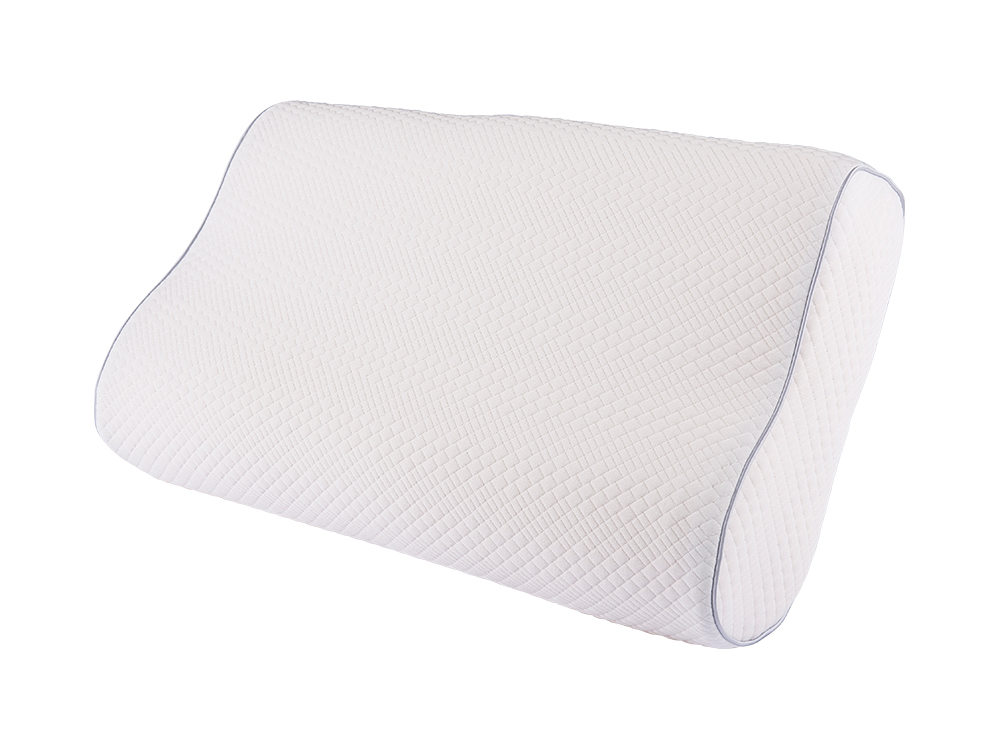
Memory foam, especially low-resilience varieties, contours to the exact shape of the head and neck without pushing back. It provides the most precise spinal alignment but tends to sleep warm. For stomach sleepers who need consistent support without excessive height, a slow-rebound memory foam pillow like our slow-rebound memory foam model works well because it maintains a low 2.6-inch profile while distributing pressure evenly across the face.
Down alternative fills feel cloud-soft and breathe better than foam. They work for warm sleepers and allergy sufferers, but the fibers flatten quickly. Within six months, a down-alternative pillow may lose up to 30% of its loft, requiring frequent fluffing or replacement.
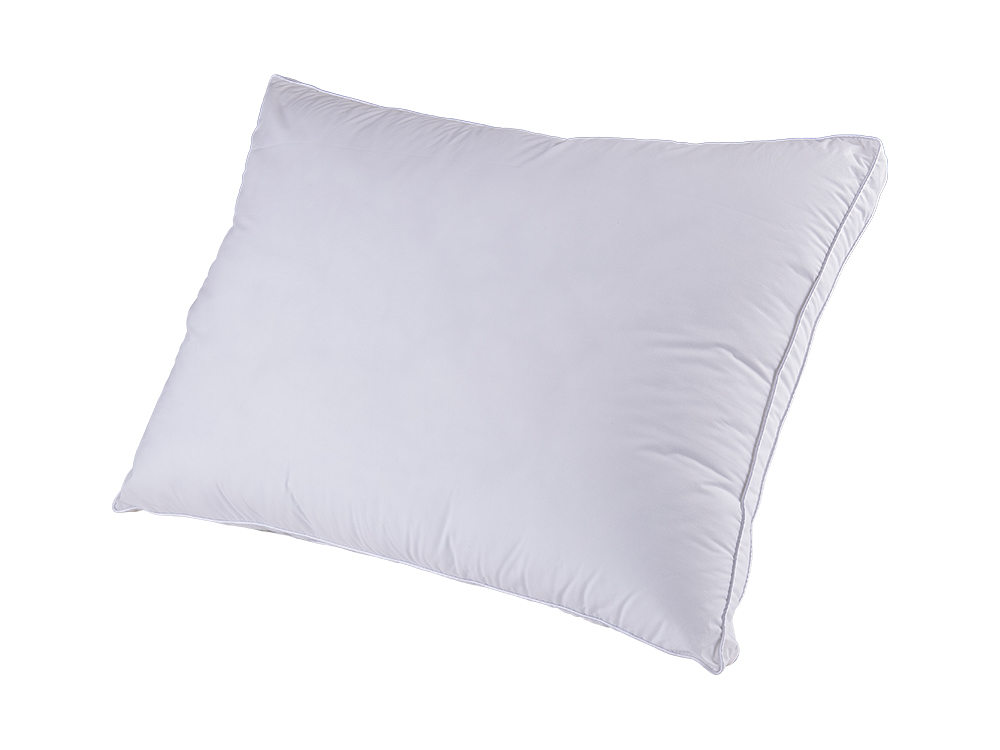
Polyester cluster fills strike a middle ground. They offer more resilience than down alternative while remaining cooler than memory foam. Many high-elastic polyester pillows are also engineered for commercial laundering, which makes them a common choice for hotels and extended-care facilities. Their price advantage and durability under frequent washing give them a strong value proposition in bulk purchases.
How to Test if Your Pillow Is the Right Thickness (The 15-Degree Rule)
You can quantify proper pillow height without a sleep lab. A simple at-home assessment tells you whether your current pillow puts your neck in a safe range.
Lie on your stomach with your pillow in its normal position and have someone look at you from the side. The line from your nose through your chin to your chest should form an angle of no more than 15 degrees. If your chin tilts up toward the ceiling, the pillow is too thick. If your face sinks deeply and your forehead tilts down, the loft is insufficient. In both cases, your cervical vertebrae are leaving their neutral zone.
You can also test alone. Place a small spirit level on the side of your neck while in your sleeping position. Any bubble movement off center signals rotation. For a quick check, press your palm flat against the pillow after lying down for two minutes. If you feel your neck muscles actively contracting to keep your head steady, the height is wrong.
Apply this test to every pillow you evaluate. A correct reading correlates directly with fewer morning headaches and less need to change positions during the night.
Top 5 Thin Pillows for Stomach Sleepers (Expert Picks)
Based on the loft, ventilation, and durability criteria outlined above, the following five pillow types consistently help stomach sleepers wake up without neck discomfort. Each represents a distinct material approach, so you can match the pillow to your temperature preferences and budget.
- Slow-rebound memory foam pillow. With a fixed loft of 2.6 inches, this design eliminates the shifting fill problem. The foam responds to body heat and molds to facial contours without forcing the head upward. Benefits: long-lasting support and low motion transfer. Best for: dedicated stomach sleepers who rarely change position.
- Cooling gel-infused thin pillow. Active cooling layers built into a 2.8-inch profile pillow keep surface temperatures down by 3 to 5 degrees Fahrenheit compared to standard foam. Our summer cooling pillow uses a TPE honeycomb core that channels air while resisting compression. Best for: hot sleepers and those in humid climates.
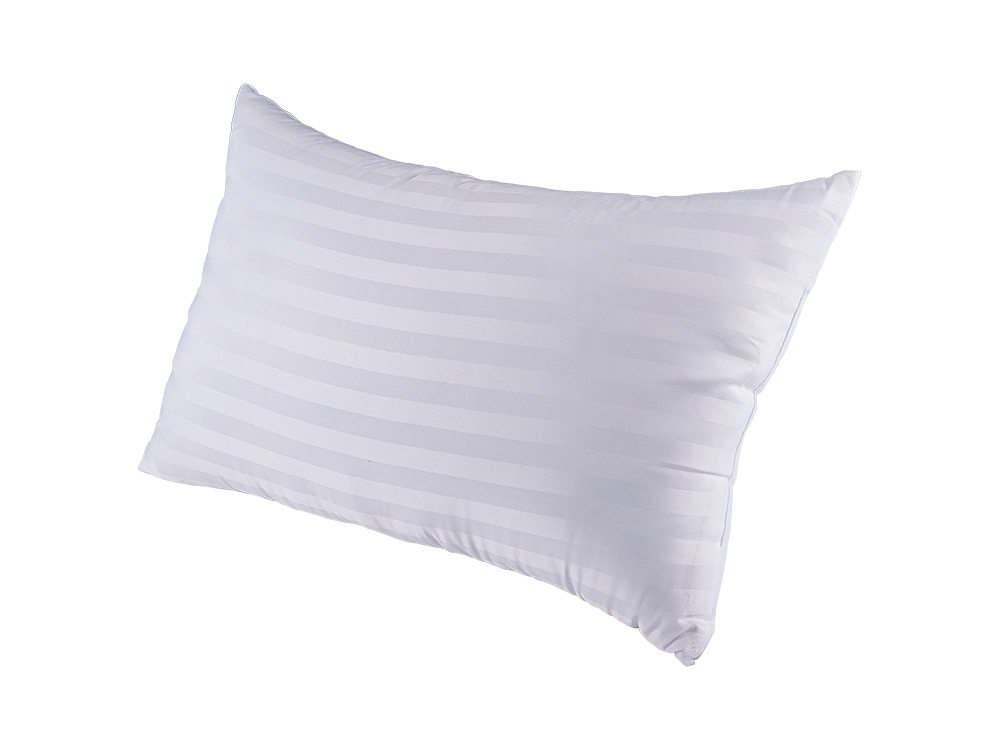
- Down alternative ultra-flat pillow. Approximately 5 to 6 inches of fill when new, but it compresses under head weight to roughly 1.5 inches. Hypoallergenic and machine-dryable. Benefits: plush face feel and easy care. Best for: stomach sleepers who prioritize softness over long-term shape retention.
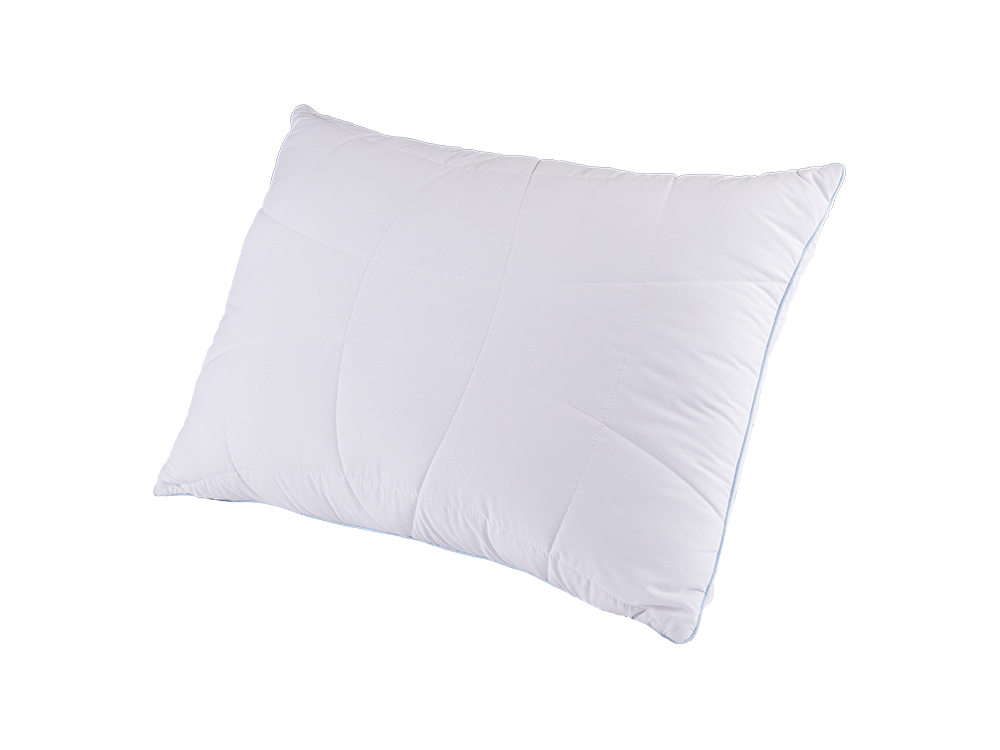
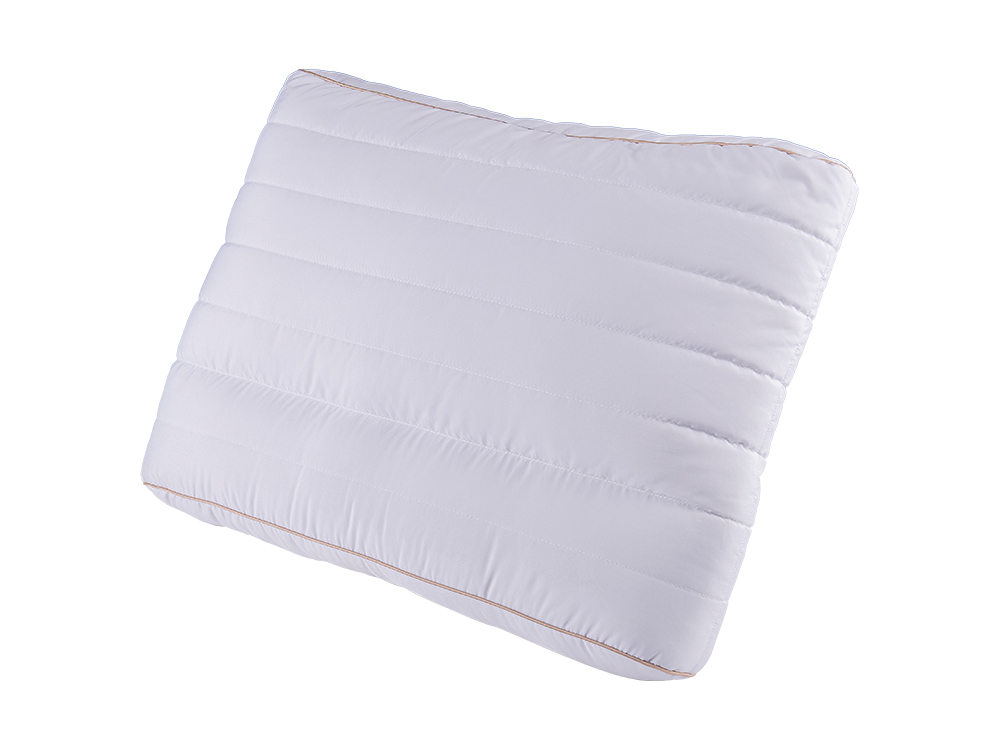
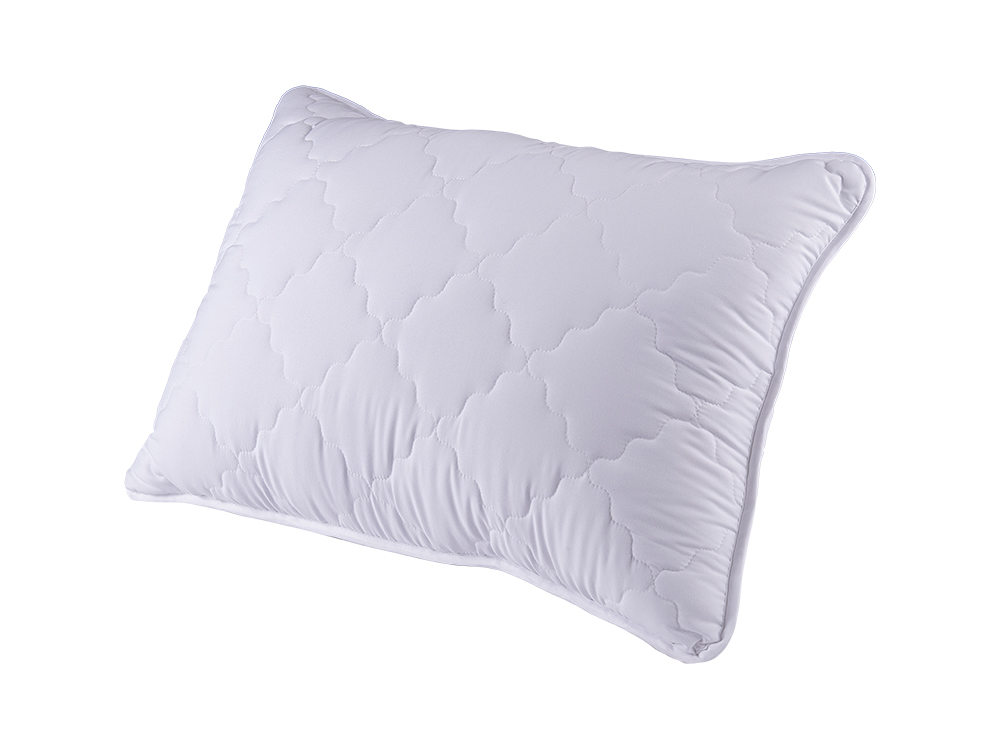
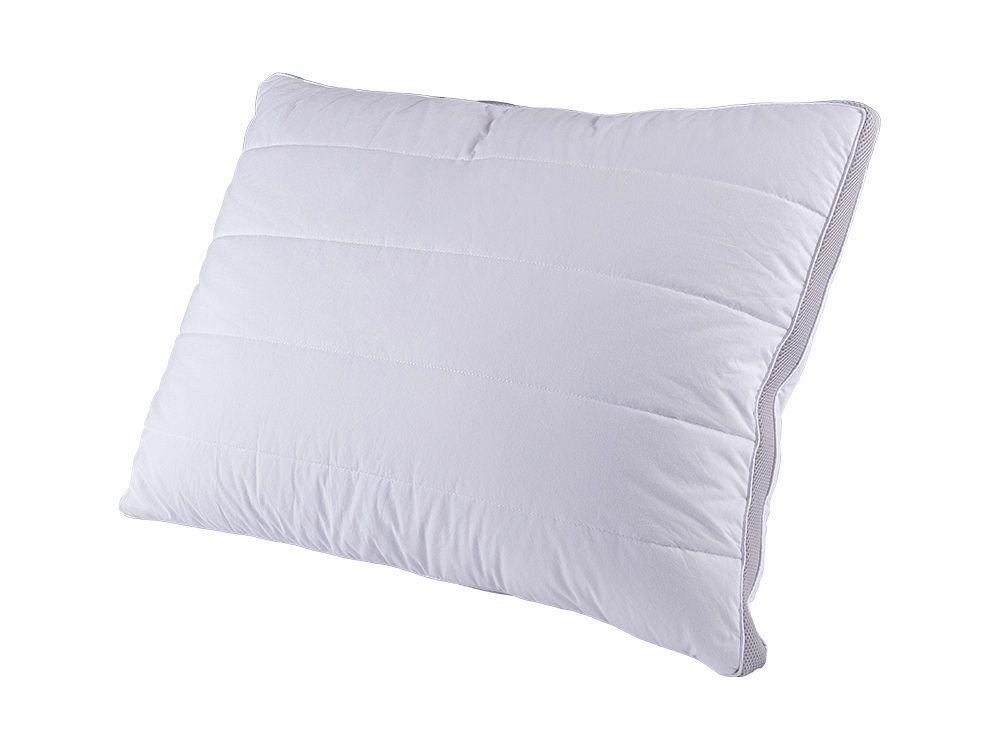
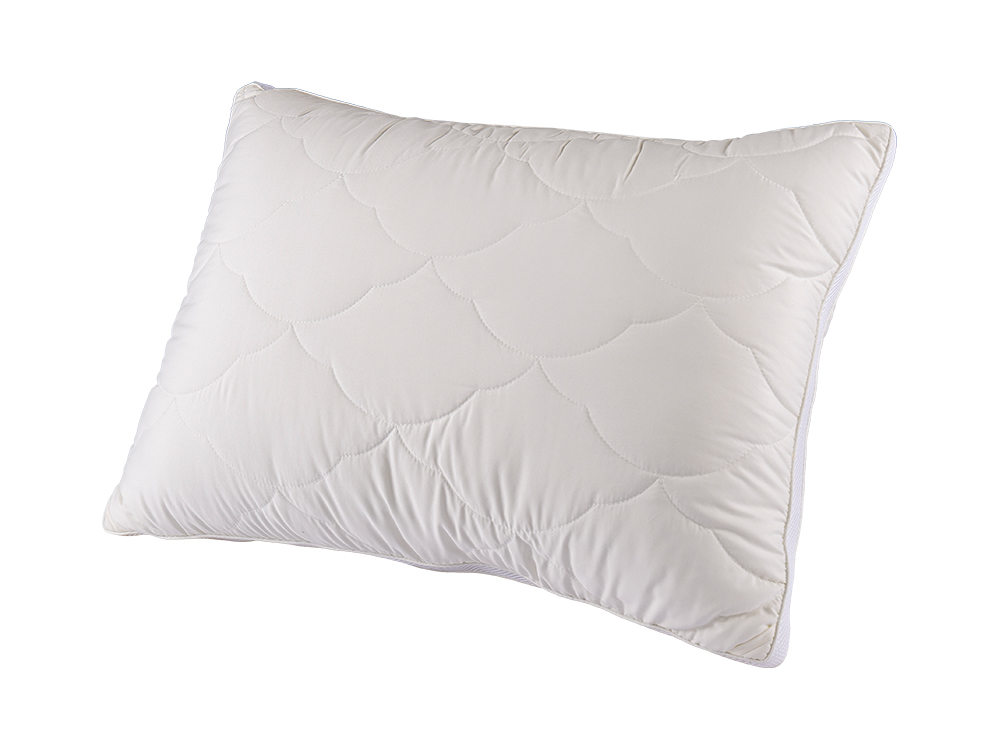
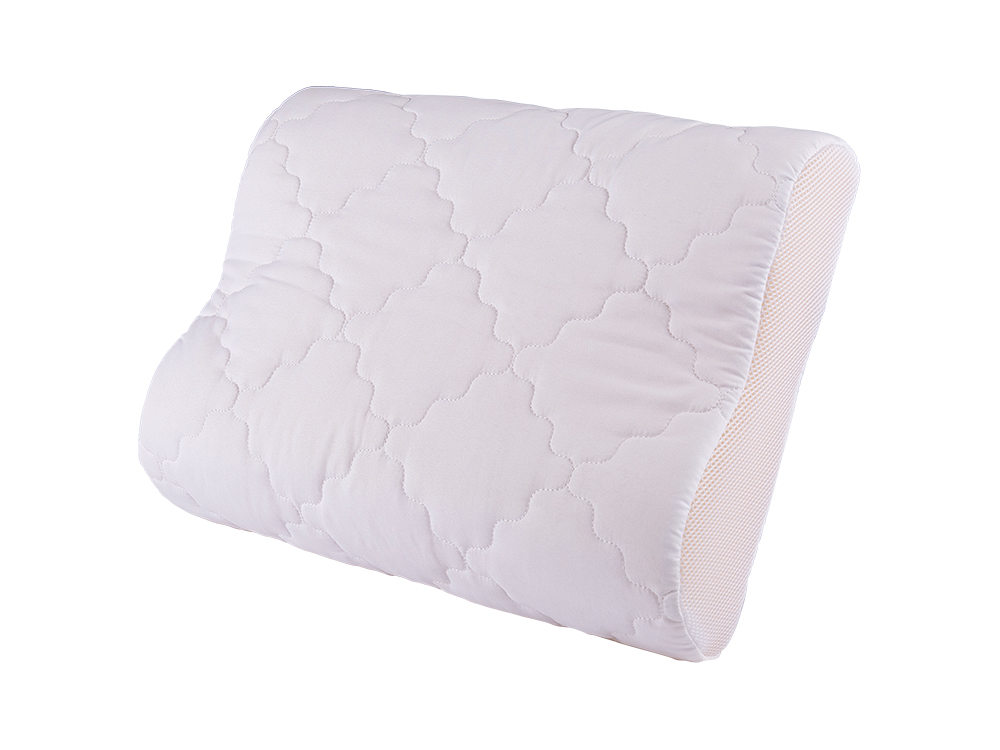
- Polyester quilted thin pillow. A high-elastic polyester fill inside a quilted shell maintains a consistent 2.5-inch height even after 50 wash cycles. The sewn-through box construction prevents fiber migration. Best for: combination sleepers who occasionally shift to their side but want a predominantly stomach-friendly loft.
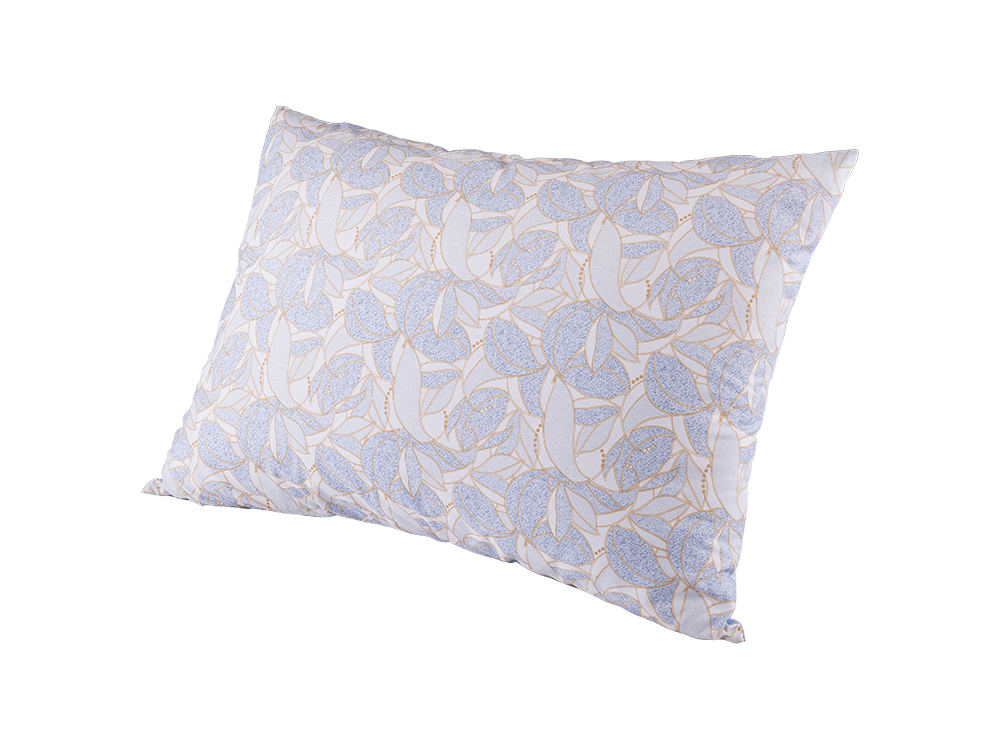
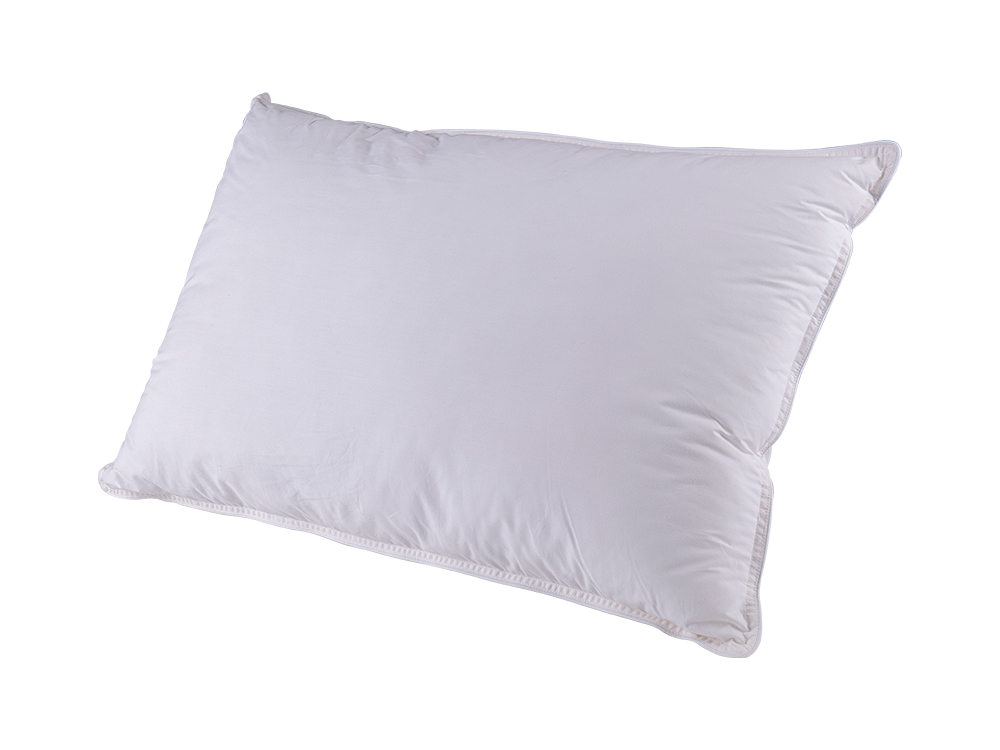
- Breathable cotton cloth pillow. A simple, unbleached cotton shell filled with tiny polyester clusters. This pillow weighs less than 2 pounds and provides a barely-there lift. Benefits: extremely lightweight and quick to air-dry. Best for: travelers and children's beds.
Each option meets the 15-degree rule for most adult users. The memory foam and cooling gel versions offer the greatest support longevity, while the cotton and down-alternative models trade a shorter lifespan for a lower price point.
When to Replace Your Thin Pillow (Signs It’s Time)
A thin pillow that has lost its low-profile support can suddenly become just as harmful as a thick one. Watch for these physical signals that your pillow needs to be retired.
- You can fold the pillow in half and it does not spring back within 10 seconds.
- Visible lumps or flattened areas remain after washing and drying.
- A persistent odor, even after following the care label instructions, indicates deep bacterial growth.
- You begin waking up with the same neck stiffness that had previously resolved with a thin pillow.
- If the pillow is older than 12 to 18 months, the fill has likely degraded regardless of appearance.
Mark your purchase date on the care tag. Even high-resilience fills lose structural integrity with daily use. Replace the pillow proactively, not after the pain returns.
Bulk Buying Guide: What Hotel & Hospital Buyers Should Look For
Procurement managers for hotels, extended-stay facilities, and hospitals face a different set of requirements. The average guest or patient will compress a pillow for 7 to 9 hours per night, and the pillow must survive industrial laundering at least twice per week. In these environments, specification sheets and certifications matter as much as comfort.
The first checkpoint is loft consistency across the entire order. A batch of 500 pillows should show no more than a 0.2-inch height variance, which demands precision quilting or molded foam manufacturing. Next, confirm that the product holds OEKO-TEX Standard 100 certification. This guarantees that every component, from the shell fabric to the thread, has been tested for harmful chemicals. In healthcare settings, GRS certification adds proof that recycled content meets traceability standards.
Minimum order quantity (MOQ) and customization options are the next practical concerns. For buyers seeking a cost-effective, OEKO-TEX certified option, our quilted polyester pillow offers GRS certification and a flexible MOQ that accommodates mid-size hotel chains. Custom packaging, embroidery, and size variants down to a 24-by-16-inch junior dimension can all be specified at the order stage.
Finally, request third-party test reports that document wash cycle durability and fiber content. A pillow that looks good after one wash but clumps after 50 will create costly complaints. Insist on a documented 50-wash cycle test with less than 10% loft loss. When the supplier provides that data, you can supply thin pillows that satisfy both guest comfort and operational budgets.


 +86-573-88798028