



 Français
 Español
 Deutsch
Content
- 1 What "Down Alternative" Actually Means
- 2 What Is Usually Inside a Down Alternative Fill
- 3 Down Alternative vs Real Down: The Practical Differences
- 4 Reading a Down Alternative Label Without Being Fooled
- 5 Who Gets the Most Out of Down Alternative
- 6 From Our Factory Floor: How Fill Gets Chosen
- 7 Keeping the Loft: Care Basics
- 8 Quick Answers to Common Questions
Search “down alternative meaning” and you'll get a tidy one-liner: a filling that behaves like down without using it. That's accurate, but it doesn't tell you much about what is actually going onto the bed. We have been manufacturing quilts and pillows in Tongxiang since 2002, and in that time we have watched “down alternative” grow from a niche marketing phrase into a catch-all label covering everything from fine brushed microfiber to cotton clusters, recycled fibers and gel-spun polyester. Below we unpack what the term really describes, why it exists, and how to judge a down alternative product before you spend money on it, whether you are furnishing a single bedroom or sourcing for a brand.
What "Down Alternative" Actually Means
Down, in its strict sense, is the soft underlayer waterfowl grow beneath their outer feathers. It has almost no quill shaft, so it packs into loose clusters that trap air extremely well. That structure is why real down delivers so much warmth for so little weight, and why it feels almost weightless on the body.
A down alternative is a filling engineered to do the same job without any animal material: hold air, feel light and puffy, and insulate. The word “alternative” points to a substitute for down, not to a lower grade of it. Nothing in a down alternative product comes from a bird.
So the clean definition is this: down alternative is a non-down filling designed to imitate the softness, loft and insulating performance of real down. It describes performance, not composition. Two comforters can both say “down alternative” on the label and be built from completely different fibers, at completely different densities, with completely different results on the bed.
What Is Usually Inside a Down Alternative Fill
In factory terms, “down alternative” is a family of fills rather than a single material. The versions you will meet most often are:
- Microfiber polyester. The most common option by far. Very fine polyester fibers, sometimes siliconized or brushed, are formed into clusters or a continuous web. The finer the fiber, the softer and more down-like the hand feel.
- Gel fiber. Polyester with a gel or slickened finish that gives it a springier, cooler hand feel and helps the clusters recover after compression.
- Recycled polyester. Chemically or mechanically recycled fiber, often paired with GRS certification. Demand from European and North American buyers has grown quickly.
- Cotton-based imitation down. Cotton fiber opened and blended to mimic down clusters, offering a natural-fiber story with no animal content.
- Bamboo viscose and blends. Usually blended with polyester for loft, marketed around softness and moisture handling.
Cotton is the interesting one for buyers who want a natural-sounding story without feathers. It behaves differently from polyester: slightly denser, less springy, but with a quieter, more fabric-like feel that many sleepers prefer.
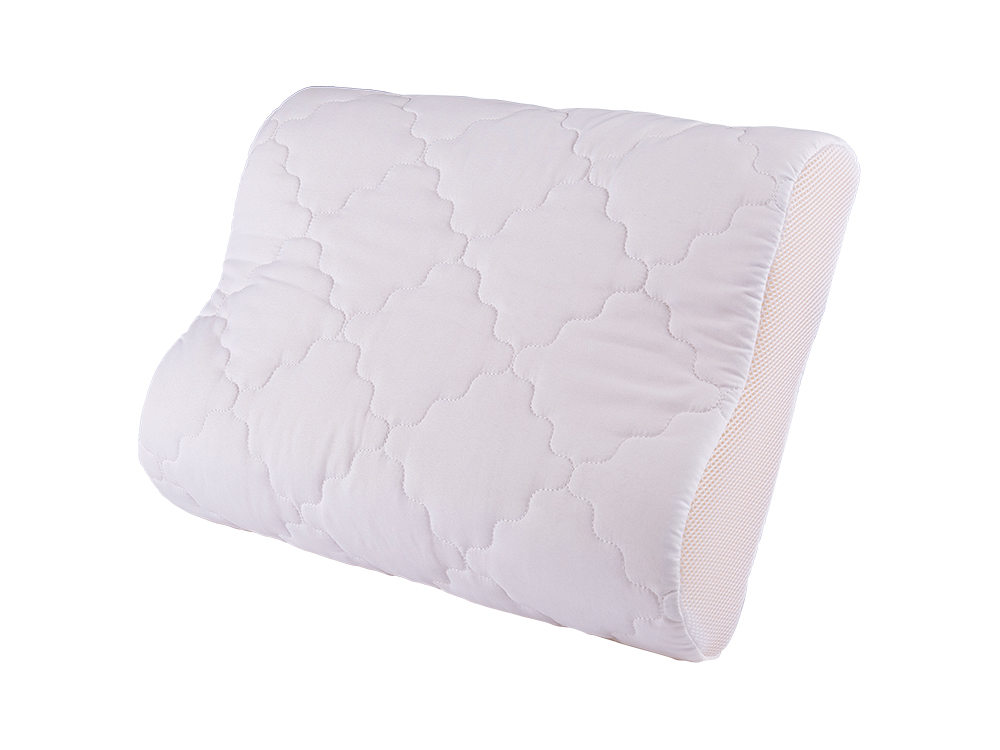
 Cotton Down Alternative Pillow for Sensitive SleepersPairs a breathable cotton shell with soft polyester down-alternative fill, offering a skin-friendly, non-allergenic option for sleepers who prefer a cotton feel.View Product →
Fill form matters as much as fiber type. Cluster and staple fills loft up loosely and trap more air; continuous sheet fills are flatter, cheaper, and tend to go compact sooner. When someone says a down alternative duvet feels thin, the fiber is usually not the problem. The fill weight and the fill structure are.
Down Alternative vs Real Down: The Practical Differences
The honest summary is that real down wins on warmth-to-weight and longevity, while down alternative wins on allergen control, easy washing and price. Everything else depends on how a specific product is built.
| Point of comparison | Real down | Down alternative |
|---|---|---|
| Fill source | Down clusters from ducks or geese | Polyester microfiber, gel fiber, recycled fiber, cotton, bamboo blends |
| Warmth for its weight | Excellent; high fill power traps more air per gram | Good, but usually needs more fill to reach the same warmth |
| Feel and drape | Very light, floats above the body | Slightly denser and heavier; drapes closer to the body |
| Breathability | Naturally breathable, though it can trap heat | Wide range; open microfiber structures breathe well, dense ones sleep warm |
| Allergy considerations | Feather dust and dust mites can be an issue for sensitive sleepers | Generally lower allergen risk and easy to wash thoroughly |
| Home care | Often best left to professional cleaning; slow to dry | Usually machine washable and dryable |
| Typical lifespan | Ten years or more with good care | Roughly three to eight years, depending on fill and quilting |
| Animal content | Yes | None |
If you want the longer version, including how fill power and fill weight translate into real-world warmth, our team wrote a fuller breakdown in this comparison of down and down alternative comforters.
Reading a Down Alternative Label Without Being Fooled
Because the phrase is descriptive rather than regulated, a label alone tells you very little. Four numbers and details do most of the work:
- Fill weight. Expressed in grams per square meter or grams total. It is the single best predictor of warmth, and it is far more useful than the word “all-season” on the front of the pack.
- Fiber type and denier. Finer denier means a softer, more down-like hand feel. Blended or recycled content should be stated openly.
- Shell fabric. Brushed microfiber feels soft and stays quiet; cotton breathes better but shows stains sooner. A tight weave keeps fine fibers from migrating through the seams.
- Construction. Box stitching, sewn-through channels, baffle walls or ultrasonic bonding all change how evenly the fill stays put. Poor construction is why many inexpensive alternatives end up with cold spots.
Third-party certification is the other thing worth checking. OEKO-TEX Standard 100 speaks to harmful substances in the finished textile, while GRS verifies recycled content claims. Neither one is required to call a product a down alternative, so their presence is a useful signal about how seriously the maker treats material sourcing.
Who Gets the Most Out of Down Alternative
In our experience, down alternative is the better answer in a few predictable situations:
- Sleepers with dust mite or feather sensitivities who still want a soft, puffy bed.
- Vegan households and buyers with animal-welfare policies in their sourcing standards.
- Families with children or pets, where bedding gets washed far more often than a down duvet would tolerate.
- Guest rooms, holiday rentals and hospitality projects where turnover is high and laundry cycles are constant.
- Hot sleepers, provided they choose an open, breathable microfiber rather than a dense sheet fill.
Real down still has the edge for anyone chasing the lightest possible loft, the longest service life, or the traditional feather-and-down feel. There is no universal winner here, only a better match for how you sleep and wash.
From Our Factory Floor: How Fill Gets Chosen
We are a bedding manufacturer based in Wuzhen, Tongxiang, working out of an 18,000 square meter facility with more than 320 staff. Over 22 years of making quilts, pillows and mattress protectors, the conversation with buyers almost never starts with the word “alternative”. It starts with three questions: how warm should it sleep, how will it be washed, and what certifications does the market require?
From there we match fill weight, fiber type and quilting construction to the target price and the target climate. A quilt destined for a humid coastal market is not built like one headed for a cold inland one, even if both are called down alternative. Our production runs through ISO9001 and ISO14001 systems and carries OEKO-TEX, GRS and BSCI certification, which matters when a brand needs documentation rather than just a sample.
 Luxury Polyester Quilt for Spring and SummerChampagne polyester pongee cover and 3D polyester fill create a soft, breathable summer quilt; custom fill, shell and size options are available.View Product →
For buyers who need a specific fill weight, shell, size range or label artwork, we handle that through our custom bedding program, from first sample through bulk production.
Keeping the Loft: Care Basics
Down alternative is forgiving, but it is not indestructible. A few habits keep a quilt or pillow looking full for years:
- Wash on a gentle cycle with a mild detergent, and skip fabric softener, which coats fibers and flattens loft.
- Tumble dry low with two or three dryer balls to break up clumps as the fill dries.
- Use a duvet cover or pillow protector so the fill itself is washed less often.
- Air bedding in shade rather than direct sun, and store it loosely, never compressed in a vacuum bag for long periods.
 Simple Brushed Four Seasons QuiltA thick and thin brushed quilt can be used separately or joined for winter, offering a wash-friendly everyday option for family homes.View Product →
An everyday brushed quilt built for repeat washing is often the practical choice for family homes, because the care routine matters as much as the fill spec.
Quick Answers to Common Questions
Is down alternative as warm as down?
It can be, but rarely at the same weight. Expect a slightly heavier quilt to match the warmth of a high fill-power down one.
Is down alternative hypoallergenic?
The term is not a medical claim. Most synthetic alternatives carry a lower allergen risk than feather fill and can be washed hot enough to reduce dust mites, but check the care label and certifications.
Is it vegan?
Yes, when the fill and shell contain no animal-derived materials. Polyester, recycled polyester, cotton and bamboo fills all qualify.
Does it go flat over time?
All fills compress eventually. Good quilting, adequate fill weight and proper drying after washing are what separate a five-year quilt from a two-year one.
So, to return to the original question: down alternative means a filling made to imitate down's softness and warmth without using down. The phrase is a starting point for a conversation about fill weight, fiber and construction, not a quality grade in itself. Read the specification, not just the label, and the choice between down and down alternative becomes a straightforward question of how you sleep, how you wash, and what you are willing to spend.


 +86-573-88798028
