



 Français
 Español
 Deutsch
Content
- 1 Understanding the Product Concept
- 2 Why Cooling Bedding Has Become More Important
- 3 Two-Sided Construction and Its Competitive Value
- 4 Skin-Friendly Comfort for Summer Use
- 5 Manufacturing Strengths of the Producer
- 6 Advanced Manufacturing Process
- 7 Quality Management and Certifications
- 8 Advantages Compared with Conventional Summer Quilts
- 9 Applications in Retail, Hospitality and Private Label
- 10 Customization Opportunities
- 11 Product Development and Sample Approval
- 12 Care, Handling and Consumer Guidance
- 13 Sustainability and Responsible Production Considerations
- 14 Why Manufacturing Experience Matters to Buyers
- 15 Frequently Asked Questions
- 15.1 What is a knitted cooling quilt?
- 15.2 What is the standard size?
- 15.3 Can both sides of the quilt be used?
- 15.4 What is the front fabric weight?
- 15.5 What filling is used?
- 15.6 Is the quilt suitable only for hot weather?
- 15.7 Does “cooling” mean the quilt actively lowers body temperature?
- 15.8 Can the product be customized for private-label brands?
- 15.9 Can the quilt be supplied in different colors?
- 15.10 What should buyers check during sample approval?
- 15.11 Is the product suitable for hospitality use?
- 15.12 What certifications are associated with the manufacturer?
- 15.13 How should the quilt be washed?
- 15.14 Why is a two-sided quilt valuable for retailers?
- 15.15 How can buyers begin a project?
- 16 Conclusion
- 17 References
- 18 Product: Knitted Cooling Quilt
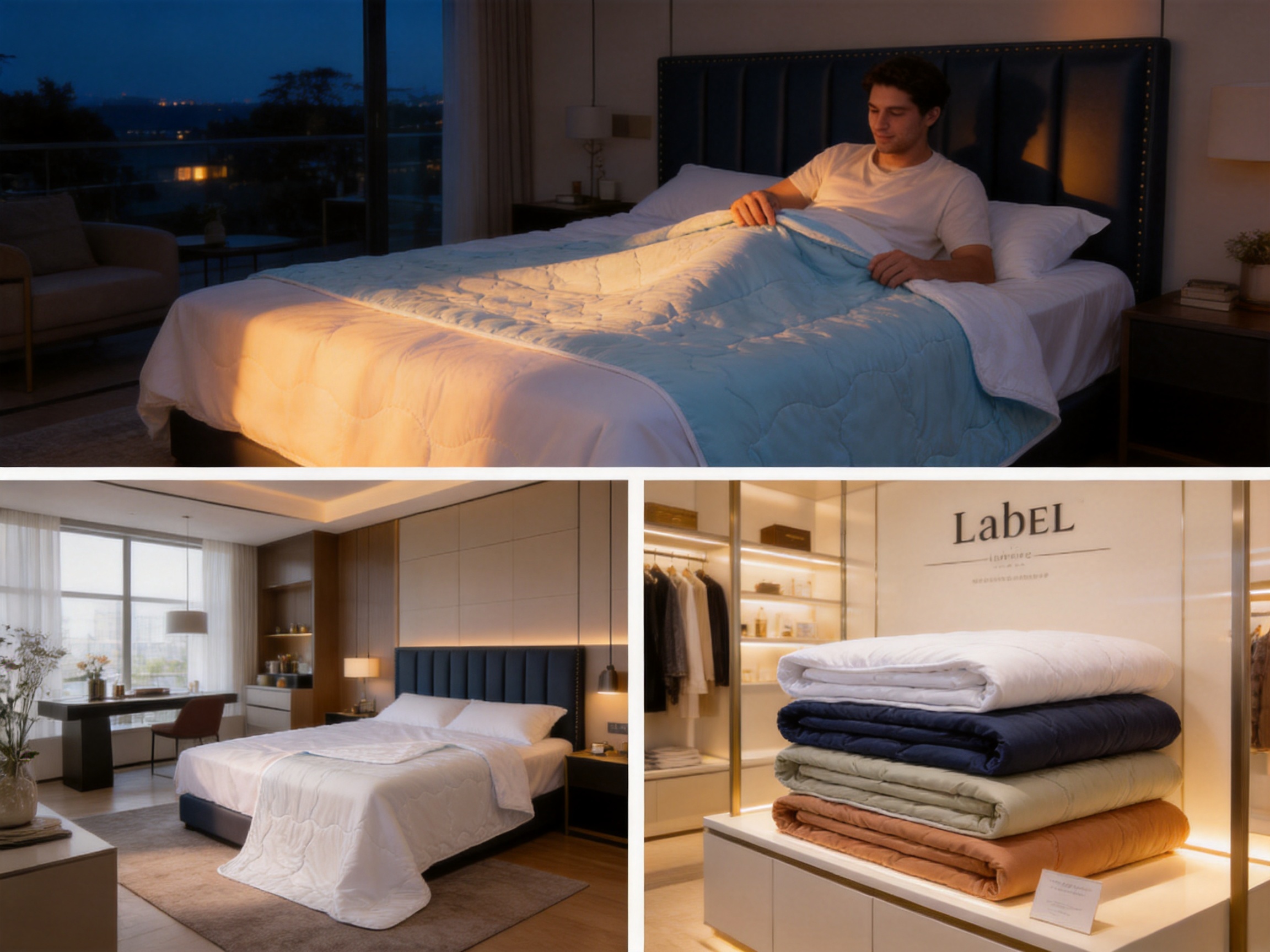
Summer bedding must do more than provide a light layer. It should help sleepers feel comfortable when temperatures rise, reduce the sensation of heat and humidity, remain gentle against the skin, and offer enough flexibility for changing indoor conditions. The knitted cooling quilt is designed around these practical needs. It combines a 170gsm knitted cooling fabric on the front with a soft microfiber brushed fabric on the reverse, while a lightweight 3D and 0.9D fiber filling provides loft and cushioning without creating the heavy, insulated feeling associated with traditional winter quilts.
This construction gives the product a balanced position in the bedding market. It is not simply a thin blanket, nor is it a conventional quilt covered with a standard polyester shell. Instead, it uses two different fabric surfaces to provide different comfort characteristics. The cooling side is intended to deliver a fresh, smooth and skin-friendly contact experience, while the brushed microfiber side adds softness and warmth when the sleeper prefers a more comfortable, cozy surface.
For home textile distributors, retailers, hospitality suppliers and private-label bedding brands, this two-sided design offers a practical way to serve consumers who want one adaptable product for summer and transitional seasons. It also creates opportunities for customized sizing, packaging, labeling and color development, depending on the buyer’s requirements.
Understanding the Product Concept
The knitted cooling quilt is made for users who want lightweight bedding with a fresh hand feel. Its front side uses 170gsm knitted cooling fabric. Knitted construction can provide a flexible, comfortable surface that follows the movement of the body more naturally than rigid woven materials. The cooling fabric is selected to make the quilt feel more suitable for warm weather, especially when a sleeper wants a cover but does not want excessive heat retention.
The reverse side uses microfiber brushed fabric. Brushing raises fine fibers on the surface, creating a softer touch and a more comfortable feel against pajamas, sheets or bare skin. This side is useful when the room becomes cooler during the night or when a user simply prefers a warmer and more cushioned texture. The two-sided structure therefore makes the quilt more versatile than a product that offers only one surface treatment.
The filling consists of 3D and 0.9D fiber. This combination is intended to create a light, resilient interior that supports loft while keeping the product manageable in daily use. A quilt filling must be sufficiently full to avoid feeling flat, but it should not become so dense that the product loses its summer-friendly character. The selected fiber construction helps provide a balance between softness, volume and low overall weight.
The default size is 140 by 200 centimeters, and customized sizes are available. This standard dimension can suit individual sleeping arrangements, guest rooms, dormitory-style applications and selected export markets. Custom dimensions can support different mattress sizes, regional bedding standards, hospitality projects and private-label collections.
Product feature |
Specification or benefit |
Product type |
Knitted cooling quilt |
Default size |
140 by 200 centimeters |
Customization |
Size customization available according to project requirements |
Front fabric |
170gsm knitted cooling fabric |
Back fabric |
Microfiber brushed fabric |
Filling |
3D and 0.9D fiber |
Primary use |
Summer bedding, warm-weather bedrooms and transitional-season comfort |
Product positioning |
Lightweight, reversible and skin-friendly home textile bedding |
Why Cooling Bedding Has Become More Important
Consumers increasingly pay attention to sleep comfort, not only to the visual appearance of bedding. A quilt that looks attractive but feels too warm may be used less often, particularly in regions with hot summers, high indoor humidity or limited air conditioning. Modern buyers are looking for bedding that responds to actual sleeping conditions. This has increased interest in lightweight quilts, breathable covers, moisture-conscious materials and fabrics with a cool hand feel.
Traditional quilts may provide excellent warmth in cold weather, but they are not always appropriate for summer. Heavy fillings can make sleepers feel enclosed, while dense fabrics may reduce the fresh sensation users expect from warm-weather bedding. At the other extreme, a very thin blanket may not offer enough coverage or softness. The knitted cooling quilt addresses this middle ground by combining a summer-oriented front fabric with a more comfortable brushed reverse surface and a light filling.
The product can also appeal to households with different sleeping preferences. One person may prefer a cooler surface, while another may value a softer and slightly warmer feel. Because the quilt has two usable sides, the product can be turned over according to personal preference, room temperature or seasonal change. This flexibility increases the likelihood of regular use throughout the year rather than limiting the quilt to a narrow period.
For retailers, adaptable products can simplify assortment planning. A reversible quilt can be presented as a cooling product, a lightweight summer quilt or a versatile two-sided comforter. The same core construction may be offered in different colors, prints, sizes or packaging formats to create several market presentations without changing the fundamental product concept.
Two-Sided Construction and Its Competitive Value
A Cooling Front Surface
The 170gsm knitted cooling fabric is the defining feature of the product. Its role is to create a fresh and comfortable surface for warm weather. The knitted structure is also associated with flexibility and a soft touch, which can improve the way the quilt drapes over the body. Instead of feeling stiff or overly structured, the surface can move naturally with the sleeper.
A cooling fabric does not mean that the quilt actively refrigerates the body or replaces climate control. Its practical purpose is to provide a cooler-feeling contact surface and a more suitable textile experience for warm conditions. This distinction is important for responsible product communication. The strongest value comes from the combination of fabric hand feel, lightweight construction, surface comfort and appropriate filling density.
A Soft Brushed Reverse
The microfiber brushed reverse adds a different comfort character. Microfiber can be engineered into fine, soft fibers, and brushing creates a raised surface that feels pleasant and smooth. This side can be useful in air-conditioned bedrooms, during cooler summer nights or in transitional seasons when a purely cooling surface may not feel ideal.
Compared with a single-surface cooling quilt, the reverse side creates more product versatility. Compared with a basic microfiber comforter, the cooling front provides a more distinctive summer positioning. The combination helps the product compete through function rather than relying only on color, pattern or price.
A Balanced Interior Filling
The 3D and 0.9D fiber filling is selected to support a lightweight quilt profile. The different fiber specifications can contribute to a balanced filling structure, helping the quilt maintain softness and body. The interior should feel sufficiently full for comfort while remaining easy to fold, store and transport.
Filling selection is a major part of quilt performance. If a filling is too dense, it can add unnecessary weight and reduce warm-weather suitability. If it is too sparse, the product may look flat and provide limited cushioning. A carefully controlled blend of fibers can help manufacturers achieve a more consistent appearance and a more stable hand feel from one production batch to another.
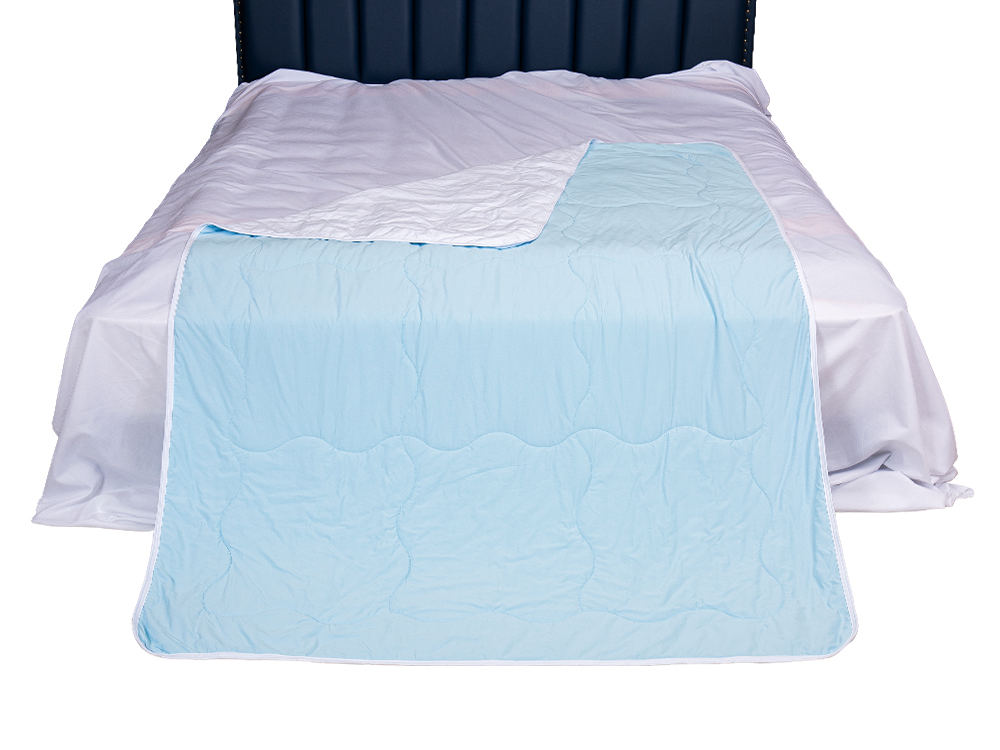
Knitted Cooling Quilt
Skin-Friendly Comfort for Summer Use
Skin contact is one of the most important considerations in bedding. During warm weather, perspiration and increased body heat can make rough, stiff or poorly finished fabrics feel uncomfortable. The knitted cooling quilt is designed to respond to this issue through a soft front surface, a brushed reverse and a lightweight interior.
The phrase “skin-friendly” describes the intended tactile experience of the product. It reflects the use of comfortable fabric surfaces and a construction designed for direct or near-direct contact with the sleeper. The product is suitable for consumers who prefer gentle bedding and who want to avoid the heavy or rigid sensation that may come from traditional quilt fabrics.
Softness is not created by one material alone. It depends on fiber selection, yarn or fabric construction, finishing, sewing quality and final inspection. A fabric may be soft when first produced but lose its pleasant touch if it is poorly finished or handled incorrectly. For this reason, manufacturing control must continue from raw material preparation through fabric inspection, cutting, filling, sewing and packing.
The knitted front and brushed reverse also give the product tactile contrast. Users can select the side that feels more appropriate on a particular night. This simple feature can improve perceived value because the buyer receives two distinct comfort surfaces in one quilt.
Manufacturing Strengths of the Producer
Tongxiang Xinlong Bedding Co., Ltd. was established in January 2002 and specializes in home textile products. Its product range includes silk cotton quilts, chemical fiber quilts, pillows, cushions, bedspreads, travel quilts, mattress protectors, blankets, quilt and pillowcases, shower curtains and curtains. This broad category experience is relevant to the production of knitted cooling quilts because it demonstrates familiarity with different filling materials, fabric types, sewing methods and finished home textile requirements.
The company is located in Longxiang Industrial Park, Wuzhen Town, Tongxiang City, Zhejiang Province, China. Its production site covers approximately 21,000 square meters, with a construction area of approximately 18,000 square meters. The company has more than 320 employees and is equipped with various advanced production machines. These resources provide a foundation for organized production, product development and order management.
Experience in several bedding categories can support the development of a more balanced finished product. Quilts, pillows, mattress protectors and blankets each require attention to fabric handling, filling distribution, quilting or stitching, edge finishing, dimensional control and packing. Knowledge gained across these categories can help the producer identify potential problems before they affect large-scale production.
The company also maintains professional technical personnel to support product design and manufacturing. This is important for buyers who need more than a standard catalog item. Custom size, fabric color, packaging requirements and market-specific specifications may require coordination between product development, production planning and quality control teams.
Advanced Manufacturing Process
Material Selection and Incoming Inspection
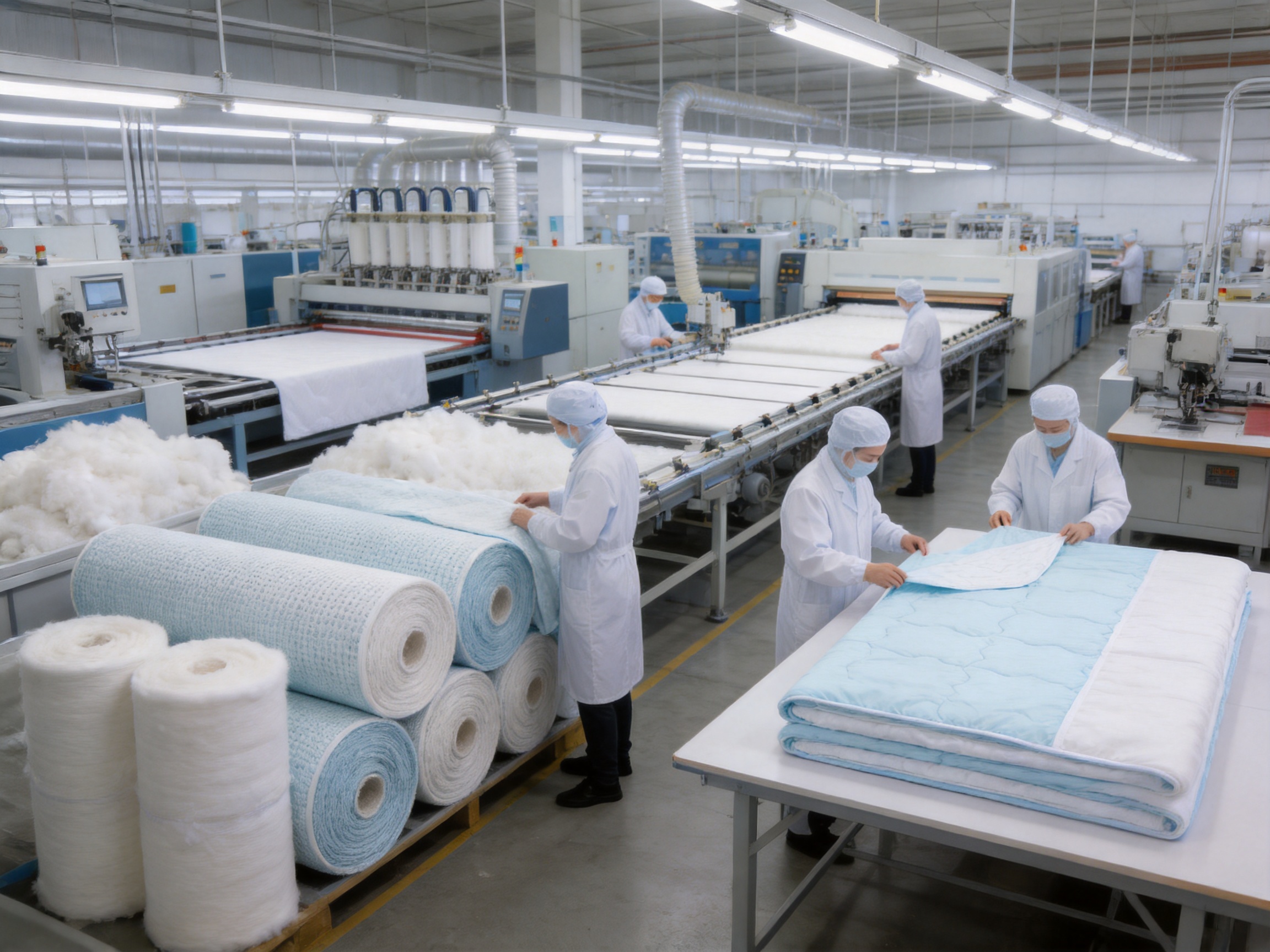
The production process begins with the selection of suitable materials. For the knitted cooling quilt, the key materials include knitted cooling fabric, microfiber brushed fabric, 3D fiber, 0.9D fiber and sewing components. Each material needs to be checked for appearance, width, weight, color consistency, softness and suitability for the planned construction.
Incoming inspection helps prevent raw material variation from becoming a finished product problem. Fabric rolls can be examined for stains, holes, weaving or knitting defects, uneven color and inconsistent surface treatment. Filling materials can be assessed for cleanliness, resilience, fiber distribution and general conformity to the approved sample. A disciplined inspection stage supports stable output and reduces unnecessary rework.
Fabric Preparation
Before cutting, fabric may need to be conditioned and prepared so that the finished panels remain dimensionally stable. Correct preparation is especially important when a product combines two different fabrics. Knitted material may behave differently from microfiber brushed fabric during spreading, cutting and sewing. Manufacturing teams must account for stretch, relaxation, edge behavior and alignment.
Fabric preparation also includes color and appearance confirmation against approved standards. For custom orders, the buyer may specify a particular color, printed design or private-label presentation. Maintaining a retained sample or approved reference helps the production team compare bulk materials with the agreed product standard.
Cutting and Panel Control
Accurate cutting influences the final size, shape and symmetry of the quilt. Cutting patterns must account for seam allowances, shrinkage expectations, fabric direction and the relationship between the front and reverse panels. A panel that is cut incorrectly can cause shifting, uneven edges or a finished dimension that does not meet the order specification.
For larger production orders, organized panel control is equally important. Cut pieces should be sorted by size, color and production batch. Keeping front and reverse fabrics properly matched can reduce assembly errors. Traceability at this stage can also help the factory investigate quality concerns if a problem is later identified.
Filling Preparation and Distribution
The filling must be distributed evenly across the quilt area. Uneven filling can create thin spots, bulky areas or an inconsistent appearance. It can also affect how the quilt drapes and how comfortable it feels during sleep. Production teams therefore need to control the filling quantity, spreading method and positioning before the quilt is closed.
The use of 3D and 0.9D fiber requires attention to the relationship between the two components. The intended blend or layered arrangement should be maintained according to the approved product specification. Consistent filling preparation helps ensure that the bulk product resembles the development sample in loft, softness and weight.
Layer Assembly
Once the materials are prepared, the front fabric, filling and microfiber reverse are assembled into a complete quilt structure. The order of the layers, the orientation of the fabrics and the handling of the filling all influence the result. Operators must avoid wrinkles, trapped folds and displaced fiber while bringing the layers together.
Because the front and back fabrics have different surface characteristics, assembly requires careful handling. The cooling fabric should retain its intended appearance and hand feel, while the brushed microfiber should remain smooth and free from avoidable compression marks. Proper alignment at the edges supports a neat final finish.
Quilting, Sewing and Edge Finishing
Quilting or securing operations help keep the filling in position during use and washing. The chosen stitch pattern, stitch density and seam allowance should be appropriate for the quilt’s weight and construction. Excessively dense stitching may affect softness, while insufficient securing may allow the filling to migrate.
Edge finishing is also important. Neat edges improve appearance and help protect the interior filling. The seams should be secure, even and free from loose threads. Corner construction deserves particular attention because corners are commonly handled during folding, spreading and laundering.
Advanced production equipment can improve repeatability in these processes. Machines can support more consistent stitching, better edge control and higher production efficiency. However, equipment alone does not determine quality. Skilled operators, approved process standards, machine maintenance and regular inspections are all necessary to achieve reliable results.
Final Inspection and Packing
Finished quilts should be inspected for size, fabric appearance, stitching, filling distribution, edge condition, loose threads, stains, odor and packaging accuracy. A final inspection provides an opportunity to identify defects before the products are packed and shipped.
Packing must protect the quilt from dust, moisture and handling damage. It should also present the product clearly for retail or wholesale distribution. Depending on the order, buyers may request individual bags, cartons, barcode labels, care labels, woven labels, inserts or customized outer packaging. The packing process should be checked against the approved packing instructions before shipment.
Manufacturing stage |
Main control point |
Contribution to product quality |
Material inspection |
Fabric, filling and accessory conformity |
Reduces variation and prevents unsuitable materials from entering production |
Fabric preparation |
Width, color, surface and dimensional behavior |
Supports accurate cutting and consistent appearance |
Cutting |
Panel dimensions, alignment and sorting |
Helps maintain the finished size and shape |
Filling preparation |
Fiber type, quantity and distribution |
Creates balanced loft and a comfortable hand feel |
Assembly and sewing |
Layer placement, seam strength and stitch consistency |
Improves durability, appearance and filling stability |
Final inspection |
Dimensions, workmanship, appearance and packing |
Confirms readiness for delivery and customer use |
Quality Management and Certifications
Quality management is a central part of reliable home textile manufacturing. Tongxiang Xinlong Bedding Co., Ltd. has passed international certifications including ISO9001, ISO14001, OEKO-TEX Standard 100, OEKO-TEX STeP, GRS and BSCI, according to the supplied company information. Each certification or assessment relates to a different area of business operation, and buyers should request current certificates and confirm the precise scope and validity for their specific project.
ISO9001 is associated with quality management systems. In practical manufacturing, a quality management system can help define responsibilities, document procedures, manage corrective actions and establish a more consistent approach to production control. For a bedding buyer, this type of system can provide greater confidence that product requirements are handled through an organized process rather than relying only on final inspection.
ISO14001 relates to environmental management systems. This is relevant to textile manufacturing because production involves fabric processing, packaging materials, energy consumption, water use and waste management. An environmental management framework can help a factory identify environmental impacts and establish procedures for improvement.
OEKO-TEX Standard 100 is associated with testing textiles for harmful substances according to the applicable certification requirements. OEKO-TEX STeP relates to sustainable textile and leather production facilities. The Global Recycled Standard, commonly known as GRS, focuses on recycled materials and related chain-of-custody and social, environmental and chemical requirements when applicable to a certified product.
BSCI is a social compliance initiative used by companies and suppliers to support responsible workplace practices. Social compliance is increasingly important for international buyers, particularly when products are sold through major retailers or distributed in markets with strict supplier qualification procedures.
Certifications do not eliminate the need for product-specific inspection. Buyers should still confirm fabric composition, filling specifications, dimensions, color standards, labeling, packaging and testing requirements for each order. Nevertheless, an established management and compliance foundation can make supplier evaluation more efficient and support long-term cooperation.
Advantages Compared with Conventional Summer Quilts
More Versatile Than a Single-Surface Product
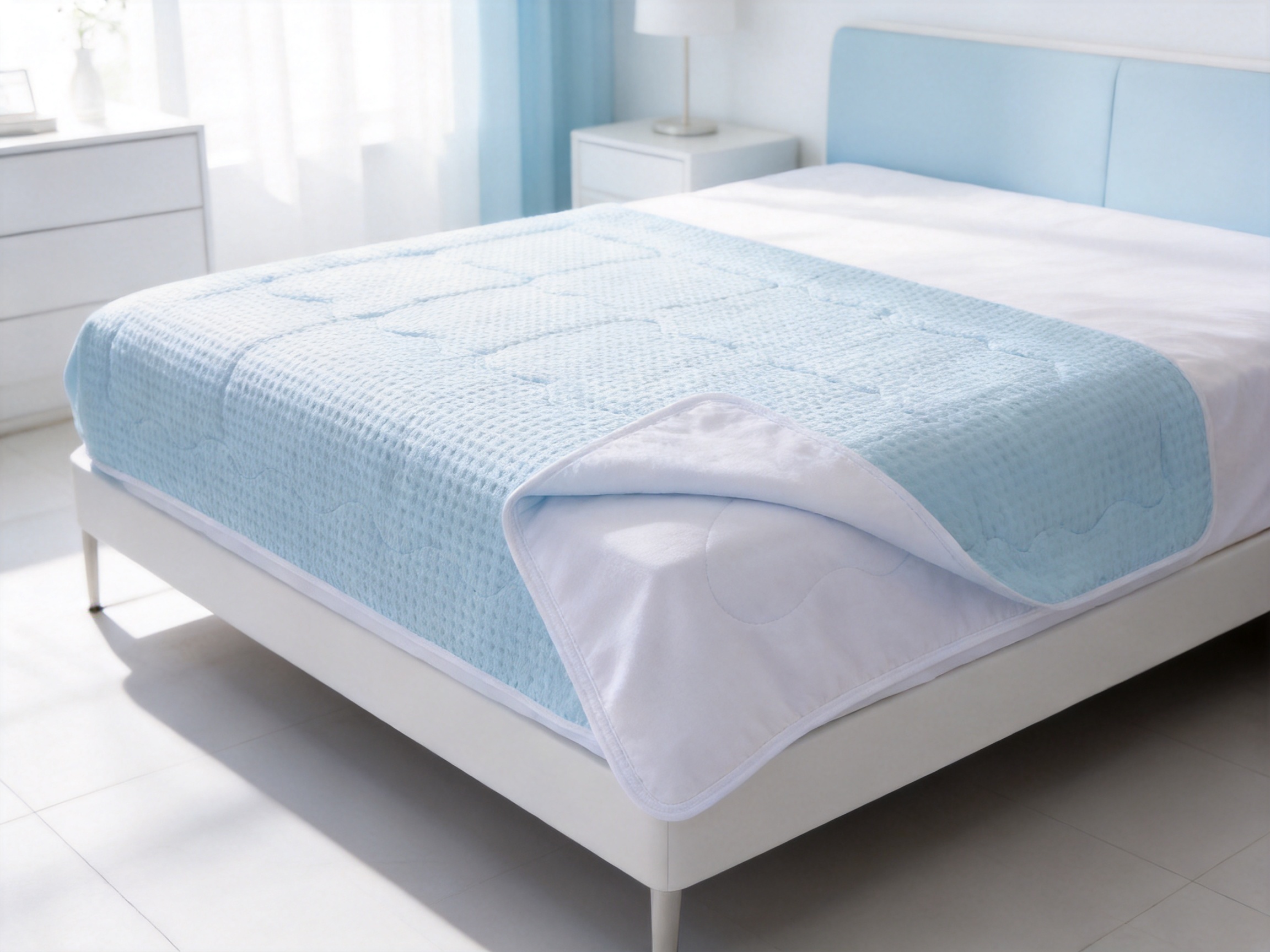
A conventional summer quilt may use the same fabric on both sides. While this approach can be simple and cost-effective, it gives the user only one surface experience. The knitted cooling quilt provides a cooling front and a brushed reverse, allowing users to select the preferred side. This reversibility gives the product a stronger daily-use proposition.
More Comfortable Than a Basic Thin Blanket
A basic thin blanket may cover the body but offer limited loft and cushioning. The 3D and 0.9D fiber filling gives the knitted cooling quilt a fuller quilt structure. It can therefore provide a more substantial feeling without becoming a heavy winter product. This distinction can be useful for consumers who want lightweight coverage but still expect the softness and volume associated with a quilt.
More Summer-Oriented Than a Standard Microfiber Quilt
Microfiber quilts are widely used because they are soft, practical and economical. However, a standard microfiber quilt may not communicate a clear cooling benefit. By combining microfiber brushed fabric with a dedicated knitted cooling fabric, this product provides a more distinctive warm-weather concept. Retailers can position it within cooling bedding, summer bedding or reversible comfort categories.
More Adaptable for Different Markets
The default size is 140 by 200 centimeters, while customization is available. This allows buyers to align the product with local bed dimensions, consumer expectations and distribution channels. A supplier capable of producing various home textile categories may also be better positioned to coordinate related products, such as pillows, mattress protectors, blankets and quilt covers, for a coordinated collection.
Applications in Retail, Hospitality and Private Label
The product is suitable for multiple sales channels. In retail stores, it can be displayed as a summer quilt, cooling comforter or reversible quilt. Product packaging can emphasize the two-sided construction, lightweight filling and skin-friendly hand feel. Clear communication is valuable because consumers may not immediately understand the difference between a cooling quilt and an ordinary thin comforter.
Online retailers can use close-up fabric photography, product measurements, side-by-side surface presentation and care information to explain the construction. The front and reverse should be shown clearly so that shoppers understand they are receiving two usable sides. Digital product descriptions should avoid unsupported promises and should accurately describe the quilt as a lightweight bedding product with a cooling fabric surface.
Hospitality buyers may consider the product for guest rooms, serviced apartments, seasonal accommodation and other settings where bedding needs to be easy to handle and suitable for changing room temperatures. The reversible structure can be convenient for room preparation, while the moderate size and lightweight filling may support storage and housekeeping operations.
Private-label brands can use the product as part of a broader temperature-comfort collection. Customized colorways, labels, packaging and sizes can help create a coherent brand presentation. Buyers may also coordinate the quilt with matching pillowcases, mattress protectors, blankets or cushions sourced from the same manufacturer.
For promotional and seasonal programs, the product can be introduced ahead of summer demand. Its cooling front makes it suitable for warm-weather campaigns, while the brushed reverse helps extend the selling period into spring and early autumn. Seasonal flexibility may reduce the risk associated with a product that is useful only during the hottest weeks of the year.
Customization Opportunities
Size is the most direct customization option. Buyers may need dimensions for single beds, larger beds, children’s bedding, guest rooms or regional standards. The requested size should be confirmed together with seam allowances, finished measurements, filling quantity and packing dimensions.
Color and appearance can also be developed for different customer groups. Neutral shades may suit minimalist home collections, while brighter colors can support seasonal retail programs. If printed or jacquard effects are requested, the buyer and factory should confirm how the design will appear on the knitted cooling surface and whether the reverse side should remain solid or use a coordinated color.
Branding can include sewn labels, printed labels, hangtags, care instructions, product inserts and customized packaging. All labeling should accurately identify the fiber composition, care method, size and country-of-origin information required by the destination market. Buyers should provide final artwork and compliance instructions early enough for production approval.
Filling weight can be considered when the intended climate or customer preference differs from the standard product. A warmer version may require a different filling level, while an ultra-light version may use less filling. Any change should be evaluated through sampling because filling quantity can affect loft, drape, stitching, packing volume and final warmth.
Packaging design is another important area. Vacuum or compressed packing may reduce transportation volume, but the buyer should confirm whether the selected method is appropriate for the fabric surface and filling recovery. The product should be allowed to recover according to the recommended procedure before final evaluation or retail display.
Product Development and Sample Approval
A successful custom project begins with a clear product brief. The brief should identify the intended market, finished size, front and reverse fabrics, filling composition, target weight, color, packaging, labeling, testing requirements and expected order quantity. Clear specifications reduce misunderstandings and make sample evaluation more objective.
The first sample should be checked for appearance, dimensions, hand feel, fabric direction, filling distribution, seam quality and general usability. Buyers should test both sides because the two surfaces are central to the product concept. The cooling side should feel comfortable and fresh, while the brushed side should provide the intended softness.
Wash testing is also recommended. The quilt should be evaluated after the applicable care process for shrinkage, color change, filling migration, surface pilling, seam stability and recovery of loft. The exact testing method should reflect the destination market and the care label instructions. A sample that performs well before washing may require adjustment if the filling or fabric reacts differently after laundering.
Once the sample is approved, the factory should retain a sealed or clearly identified reference sample. Bulk production can then be compared with the approved standard. This practice is especially useful for repeat orders because it helps maintain continuity in color, dimensions, fabric feel and workmanship.
Care, Handling and Consumer Guidance
Care instructions should be determined according to the actual fabric and filling specifications. Consumers should follow the care label supplied with the finished product rather than relying on general assumptions. Washing temperature, drying method, detergent selection and storage conditions can all influence the service life of a quilt.
Because the quilt combines a knitted cooling fabric with brushed microfiber, excessive heat or harsh mechanical treatment may affect the surface appearance. A suitable washing process can help preserve softness and maintain the visual quality of both sides. After washing, the product should be dried thoroughly before storage to prevent residual moisture and unwanted odor.
Regular airing can help refresh bedding between washes. When the quilt is not in use for an extended period, it should be stored in a clean, dry and well-ventilated place. Long-term compression may reduce loft temporarily, so the quilt can be gently shaken and allowed to recover before use.
Retailers and distributors should include understandable care information with the product. Clear instructions can reduce customer complaints and help users obtain better long-term performance. They can also reinforce the perception that the product is thoughtfully designed rather than simply marketed as a seasonal textile.
Sustainability and Responsible Production Considerations
Environmental responsibility in home textile manufacturing involves more than selecting one material. It includes production efficiency, waste reduction, chemical management, energy use, packaging choices, workplace practices and product durability. A quilt that remains attractive and useful for a longer period may reduce the need for frequent replacement.
The company’s ISO14001 certification and GRS-related capabilities, as listed in the supplied information, provide a basis for discussing environmental management and recycled-material projects where applicable. Buyers should confirm whether a particular knitted cooling quilt includes certified recycled content. Certification claims should always correspond to the actual materials, production site and product scope involved in the order.
Material efficiency can be improved through accurate cutting and production planning. Reducing offcuts, controlling rejected goods and using packaging of an appropriate size can contribute to more responsible operations. Buyers can support these efforts by providing stable forecasts, confirming specifications early and avoiding unnecessary last-minute changes.
Durability is also part of sustainability. A quilt that maintains its softness, shape and appearance through normal use can deliver better value to consumers. Consistent sewing, secure edges and balanced filling distribution are therefore not only quality features but also contributors to responsible product life cycles.
Why Manufacturing Experience Matters to Buyers
Choosing a bedding supplier involves more than comparing the unit price of a finished quilt. Buyers must consider whether the manufacturer can maintain quality across repeat orders, manage custom requirements, coordinate packaging and respond to technical questions. A company with more than two decades of operating experience may offer useful knowledge in these areas, particularly when it has developed a broad home textile portfolio.
The producer’s history since 2002 indicates long-term participation in the bedding sector. Its workforce of more than 320 employees and its production facilities provide a foundation for handling organized manufacturing programs. The company’s range of quilts, pillows, cushions, mattress protectors and blankets may also support multi-product sourcing for customers seeking a unified supplier.
Technical personnel are important when a product requires adjustments. A buyer may need to modify the quilt’s size, fabric color, filling weight or packaging format. Such changes should be reviewed for their effect on sewing, comfort, transport and cost. A technically capable factory can help identify those effects and propose a workable sample before bulk manufacturing begins.
Quality systems and certifications can further support supplier evaluation. Buyers should still perform due diligence, including sample review, factory communication, product testing and order-specific inspection. However, an established factory structure can reduce some of the operational uncertainty associated with sourcing from an unfamiliar supplier.
Frequently Asked Questions
What is a knitted cooling quilt?
A knitted cooling quilt is a lightweight quilt that uses a knitted cooling fabric on one side, a soft microfiber brushed fabric on the other side and a fiber filling inside. It is designed for summer and warm-weather use while offering two different surface experiences.
What is the standard size?
The default size is 140 by 200 centimeters. Customized dimensions are available, subject to product development and order requirements.
Can both sides of the quilt be used?
Yes. The cooling knitted fabric is intended to provide a fresh, summer-oriented surface, while the microfiber brushed side provides a softer and more comfortable reverse surface. Users can select either side according to preference and room temperature.
What is the front fabric weight?
The front fabric is specified as 170gsm knitted cooling fabric. The exact finished weight of the quilt will also depend on its size, filling quantity, reverse fabric and sewing construction.
What filling is used?
The filling is made from 3D and 0.9D fiber. This combination is intended to provide lightweight loft, softness and a balanced quilt structure.
Is the quilt suitable only for hot weather?
The product is primarily positioned for summer and warm-weather use. Because it has a brushed microfiber reverse, it may also be useful during cooler summer nights, in air-conditioned rooms and during transitional seasons. It is not designed as a heavy winter quilt.
Does “cooling” mean the quilt actively lowers body temperature?
No. The term refers to the intended fresh hand feel and warm-weather suitability of the knitted cooling fabric. The quilt should not be presented as an active refrigeration device or as a replacement for room-temperature management.
Can the product be customized for private-label brands?
Customization may include size, color, labels, packaging and other project specifications. Buyers should confirm the required details with the manufacturer before sampling and bulk production.
Can the quilt be supplied in different colors?
Color development can be discussed according to the buyer’s collection and market needs. Color approval should be completed before bulk production so that the factory has a clear reference for the fabric and finished quilt.
What should buyers check during sample approval?
Buyers should check the dimensions, fabric hand feel, color, appearance, filling distribution, edge finishing, stitching, side reversibility, packaging and care information. Wash testing is also recommended when the product will be sold through markets with specific durability or labeling requirements.
Is the product suitable for hospitality use?
It may be suitable for guest rooms, serviced apartments, seasonal accommodation and other hospitality settings that require lightweight, flexible bedding. The final suitability should be evaluated according to the buyer’s washing procedures, durability expectations, size requirements and hygiene standards.
What certifications are associated with the manufacturer?
The supplied company information states that the manufacturer has passed or holds international certifications and assessments including ISO9001, ISO14001, OEKO-TEX Standard 100, OEKO-TEX STeP, GRS and BSCI. Buyers should request current documentation and confirm the scope that applies to their specific order.
How should the quilt be washed?
Consumers should follow the care label attached to the finished product. The correct method depends on the final fabric, filling, stitching and approved testing results. Proper drying is important before storage or continued use.
Why is a two-sided quilt valuable for retailers?
A two-sided quilt offers two different comfort surfaces in one product. This creates a clearer point of difference from basic single-surface quilts and allows retailers to present it as cooling, reversible and versatile bedding.
How can buyers begin a project?
Buyers can prepare a product brief covering size, materials, filling, color, packaging, labeling, testing and order quantity. The manufacturer can then review the requirements, develop a sample and confirm the production details before bulk ordering.
Conclusion
The knitted cooling quilt combines a 170gsm knitted cooling fabric, a microfiber brushed reverse and a 3D and 0.9D fiber filling to create a practical warm-weather bedding solution. Its most important advantage is the balance between freshness and softness. The cooling side supports summer comfort, while the brushed side provides a warmer and more flexible alternative when conditions change.
Its competitive value comes from the complete construction rather than from one isolated feature. The quilt is lightweight but not insubstantial, soft but not limited to one surface, and summer-oriented without being restricted to only the hottest nights. Custom sizing and private-label possibilities further increase its suitability for retailers, hospitality suppliers, distributors and bedding brands.
The product is supported by the manufacturing experience of Tongxiang Xinlong Bedding Co., Ltd., a home textile producer established in 2002 with a broad product range, a substantial production site, more than 320 employees and various advanced manufacturing machines. Its technical personnel, quality management approach and listed international certifications provide a foundation for organized product development and production control.
For buyers, the best results will come from combining the product’s inherent advantages with careful specification, sample approval, testing, packaging planning and order-specific quality inspection. When these steps are managed properly, the knitted cooling quilt can become a strong addition to modern summer bedding collections and a reliable option for consumers seeking comfortable, adaptable sleep products.
References
1. Product specification supplied for the knitted cooling quilt, including construction, size, fabric and filling information.
2. Company information supplied for Tongxiang Xinlong Bedding Co., Ltd., including establishment history, facilities, workforce, product categories and manufacturing capabilities.
3. ISO 9001 quality management system principles and related supplier quality practices.
4. ISO 14001 environmental management system principles for textile manufacturing operations.
5. OEKO-TEX Standard 100 and OEKO-TEX STeP framework information for textile product and facility assessment.
6. Global Recycled Standard principles for recycled material claims and supply-chain control.
7. Business Social Compliance Initiative principles concerning responsible supply-chain and workplace practices.
8. General textile manufacturing practices for fabric inspection, filling distribution, sewing, finishing, product testing and packaging control.



 +86-573-88798028