



 Français
 Español
 Deutsch
Content
- 1 1. Product Overview
- 2 2. Key Specifications
- 3 3. Cotton Fabric and Skin Contact
- 4 4. The Function of the Sandwich Mesh Wall
- 5 5. Down-Alternative Polyester Filling
- 6 6. Moisture Management and Breathability
- 7 7. Advantages Over Conventional Competitor Designs
- 8 8. Comfort for Everyday Use
- 9 9. Design Simplicity and Commercial Versatility
- 10 10. Manufacturing Experience and Production Capability
- 11 11. Quality Management and Certifications
- 12 12. Sustainability Considerations
- 13 13. Applications in Retail and Hospitality
- 14 14. Product Care and Service Life
- 15 15. Purchasing Guidance for Importers and Distributors
- 16 16. Why Manufacturing Strength Matters to Product Quality
- 17 17. Product Positioning
- 18 18. Q&A
- 18.1 Q1: What is the size of the Elegant Cotton Fabric Pillow?
- 18.2 Q2: What fabric is used on the pillow?
- 18.3 Q3: What is the grey sandwich mesh used for?
- 18.4 Q4: What type of filling does the pillow use?
- 18.5 Q5: Is the pillow suitable for people who prefer a down alternative?
- 18.6 Q6: Is the product suitable for sensitive users?
- 18.7 Q7: Is the pillow breathable?
- 18.8 Q8: How does this pillow compare with a basic polyester pillow?
- 18.9 Q9: How does it compare with memory foam?
- 18.10 Q10: Can the product be customized?
- 18.11 Q11: What types of customers can purchase this product?
- 18.12 Q12: What manufacturing certifications does the company state that it has?
- 18.13 Q13: Where is the manufacturer located?
- 18.14 Q14: What other products does the manufacturer produce?
- 18.15 Q15: What should buyers confirm before placing a bulk order?
- 19 19. Conclusion
- 20 References
- 21 Product: Elegant Cotton Fabric Pillow
A pillow is one of the most important components of a comfortable sleeping environment. Although it occupies less space than a mattress or quilt, it directly supports the head and neck for several hours every night. The quality of its fabric, filling, shape, ventilation, moisture management, and finishing can influence sleep comfort, perceived freshness, and long-term usability. The Elegant Cotton Fabric Pillow is designed around these essential requirements, combining a skin-friendly cotton cover, a breathable sandwich construction, and a soft down-alternative filling.
With its simple appearance and carefully selected materials, this cotton pillow is suitable for bedrooms, guest rooms, hospitality applications, family bedding collections, and customers seeking a practical alternative to natural down. Its construction is intended to offer a balanced sleeping experience: soft enough for everyday comfort, breathable enough for changing conditions, and structured enough to retain a neat appearance.
The product is manufactured by Tongxiang Xinlong Bedding Co., Ltd., a home textile producer established in 2002 in Wuzhen, Tongxiang, Zhejiang Province, China. The company produces pillows, quilts, cushions, mattress protectors, blankets, bedspreads, pillowcases, quilt covers, curtains, shower curtains, and other household textile products. Its production experience, technical personnel, equipment, quality systems, and broad product range provide an important foundation for consistent bedding manufacturing.
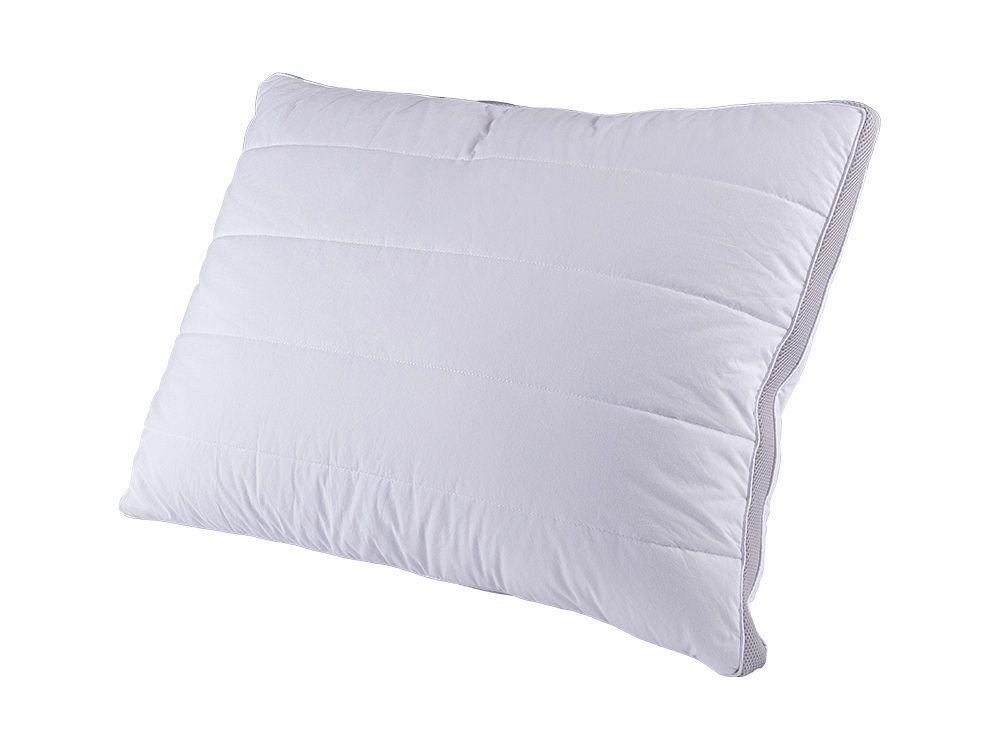
Elegant Cotton Fabric Pillow
1. Product Overview
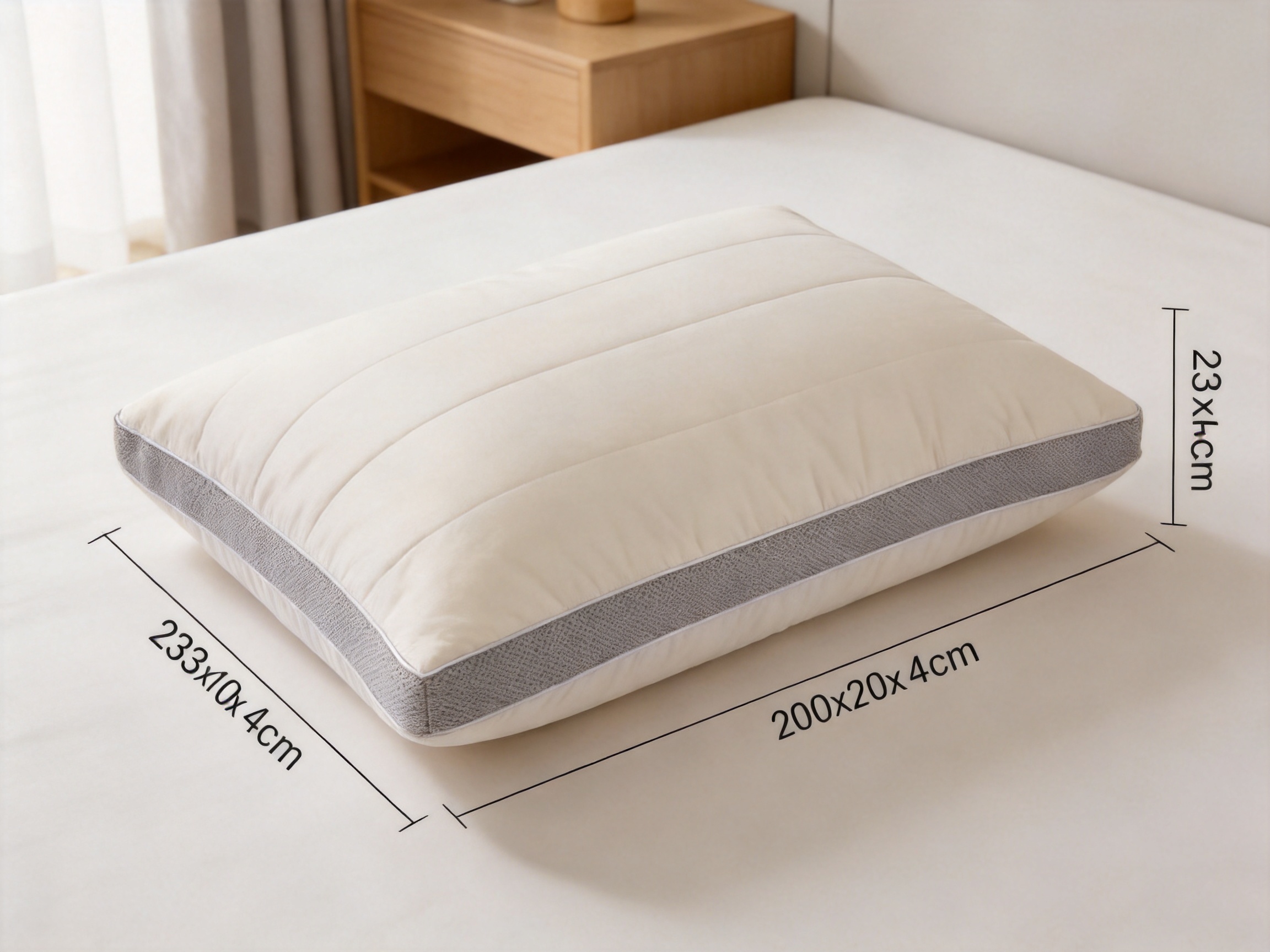
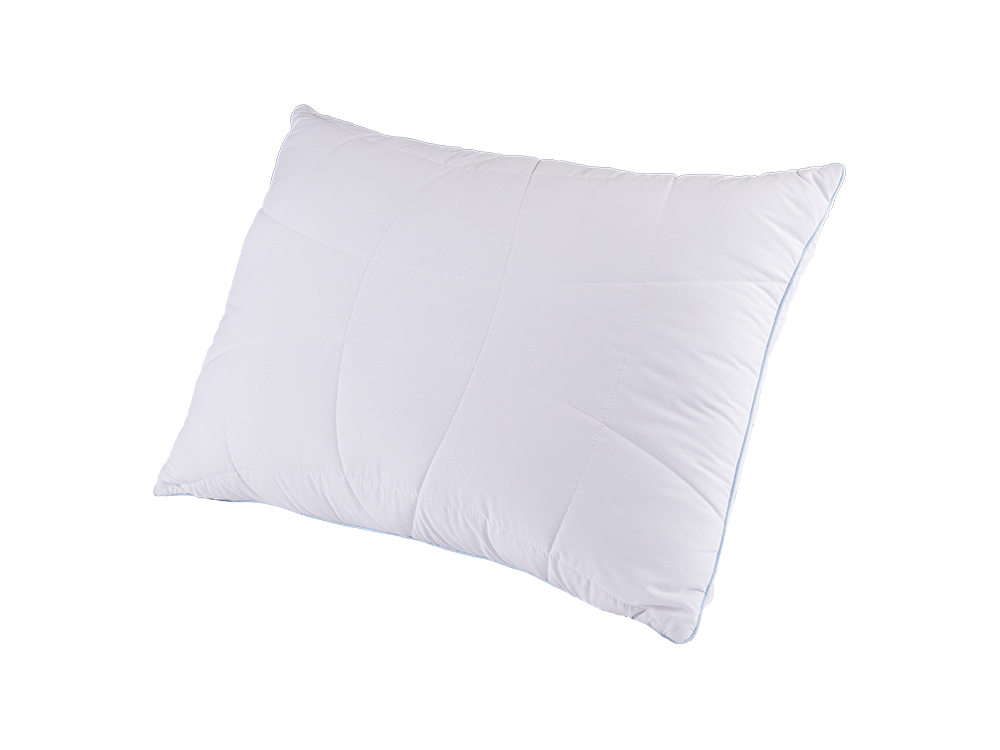
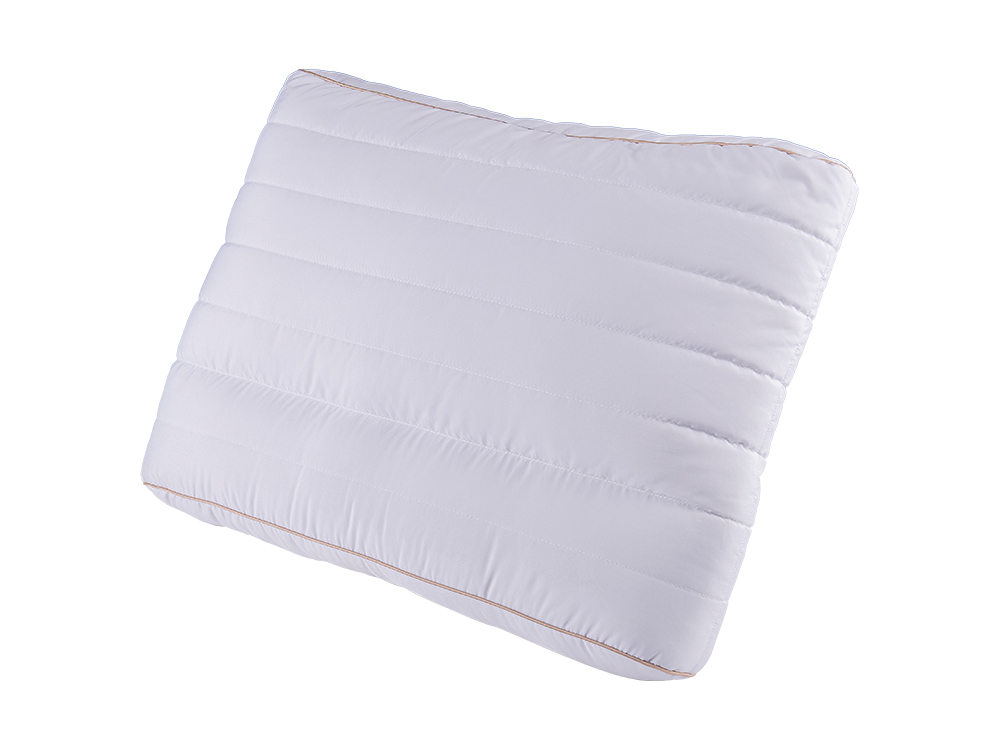
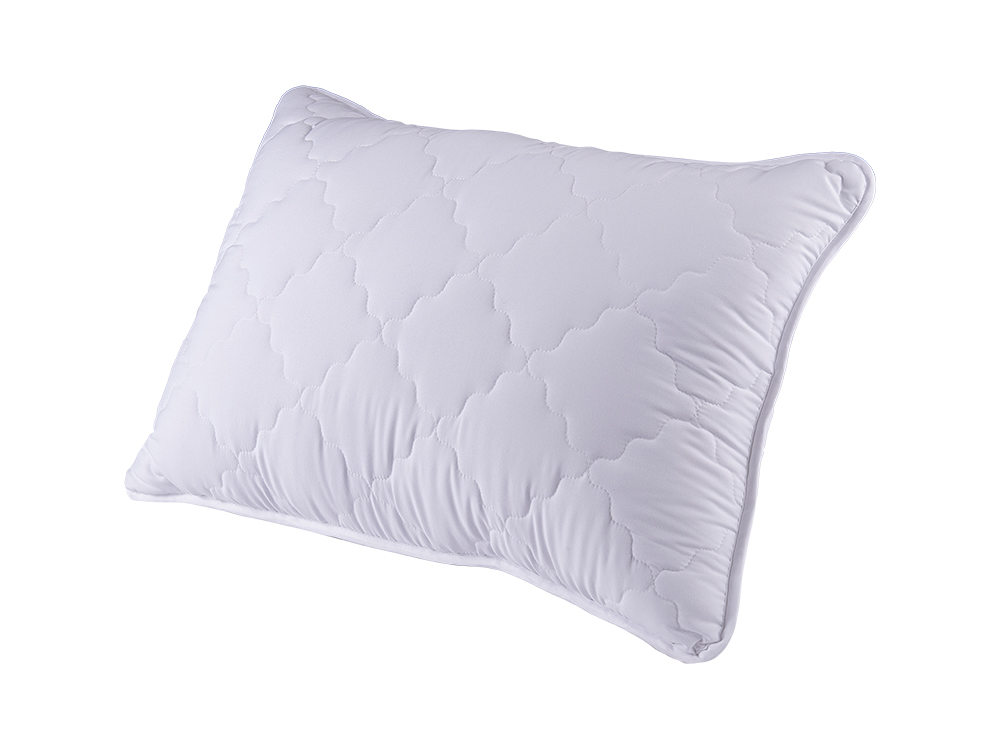
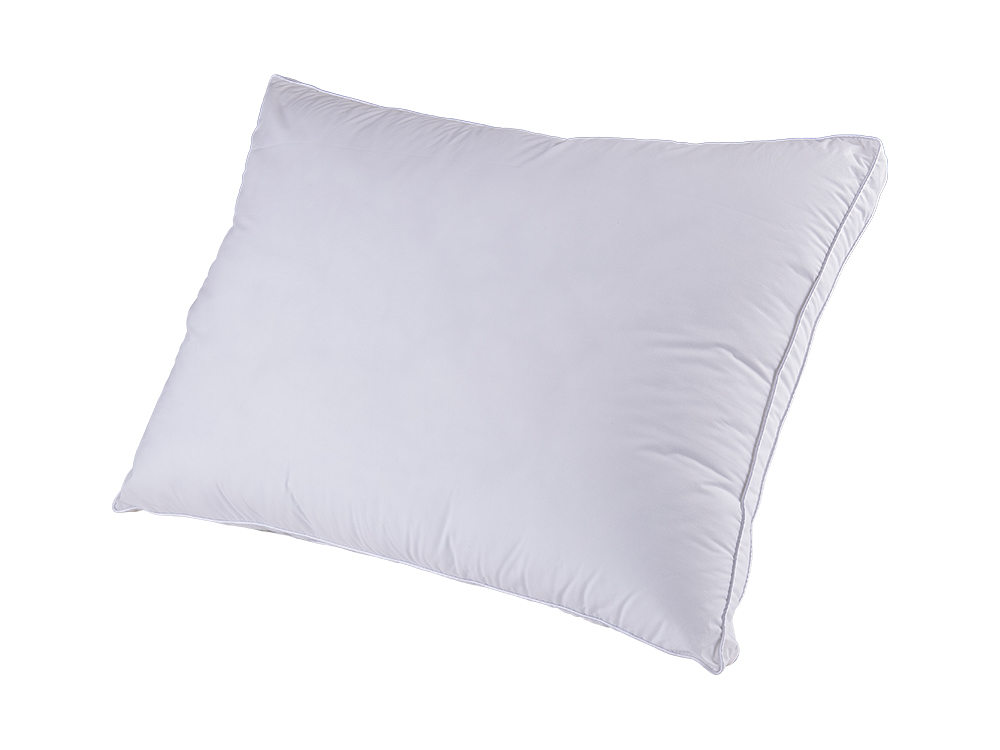
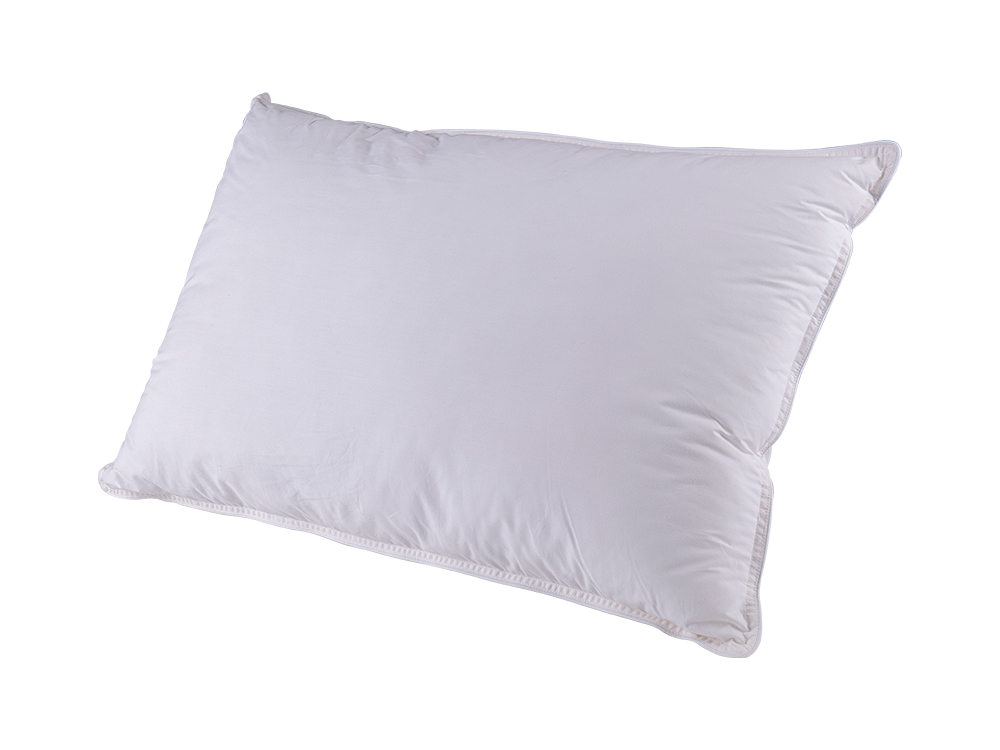
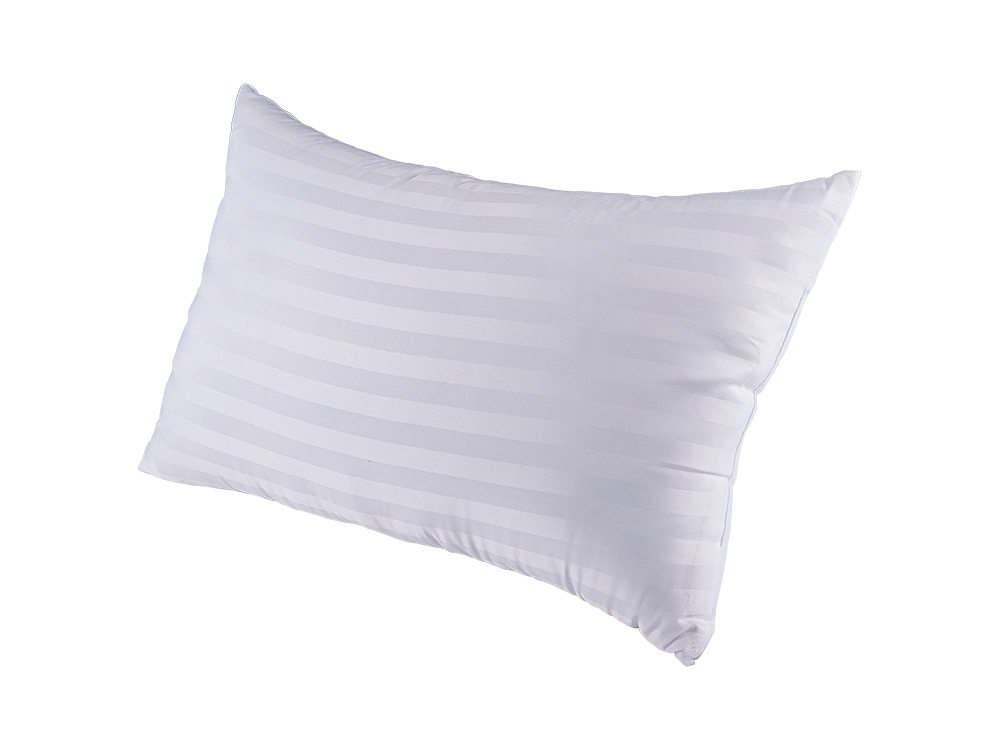
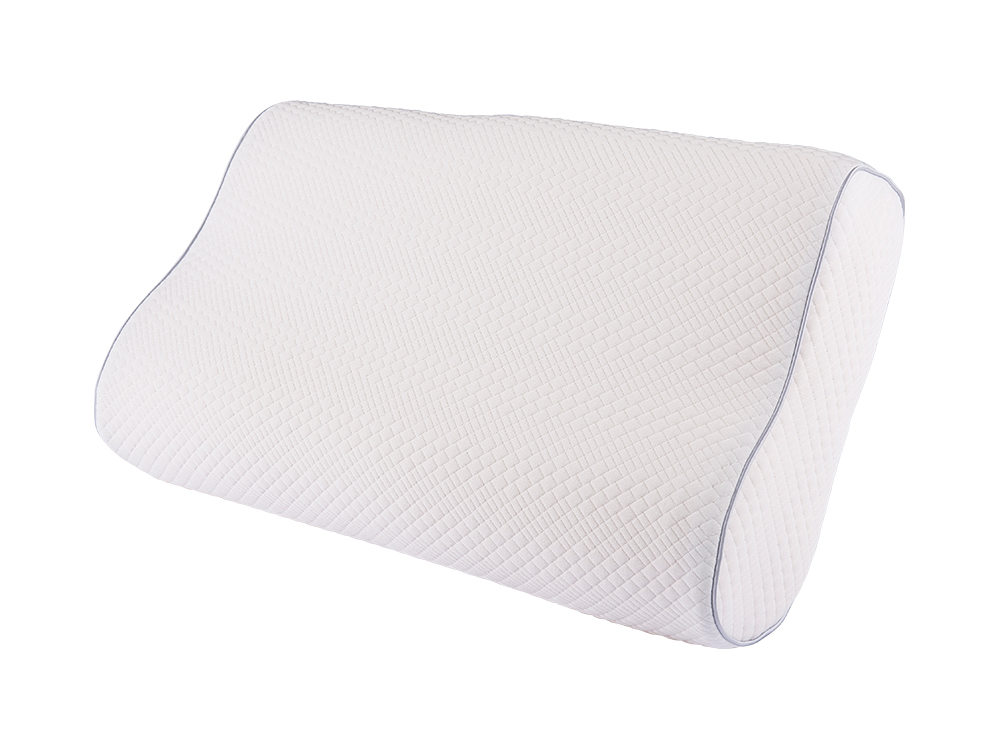
The Elegant Cotton Fabric Pillow has a rectangular sleeping format measuring 50 x 70 x 4 centimeters. This size offers a practical balance between coverage and manageability. It is large enough to provide a comfortable resting area for the head while remaining suitable for standard residential bedrooms, hotel rooms, guest rooms, and coordinated bedding sets.
The exterior uses 233-thread-count cotton fabric. Cotton is widely selected for bedding because it has a naturally comfortable hand feel and can provide a familiar, breathable surface against the skin. In comparison with many purely synthetic face fabrics, cotton can create a softer and more natural tactile impression. Its understated appearance also makes it suitable for a wide range of interior styles, from simple contemporary bedrooms to traditional home textile collections.
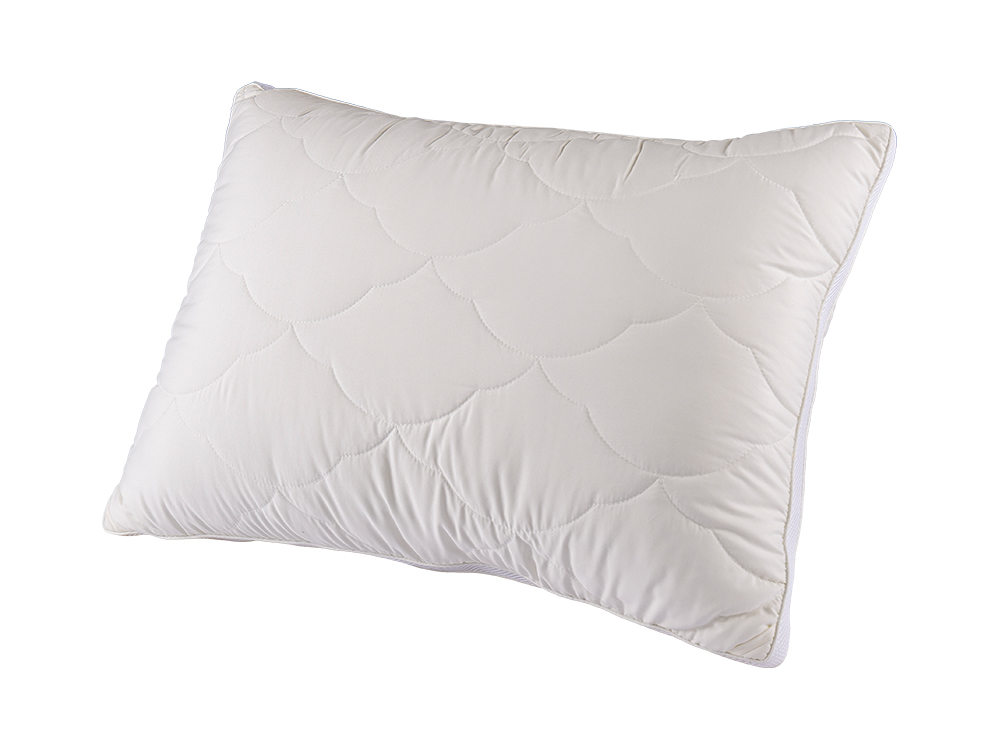
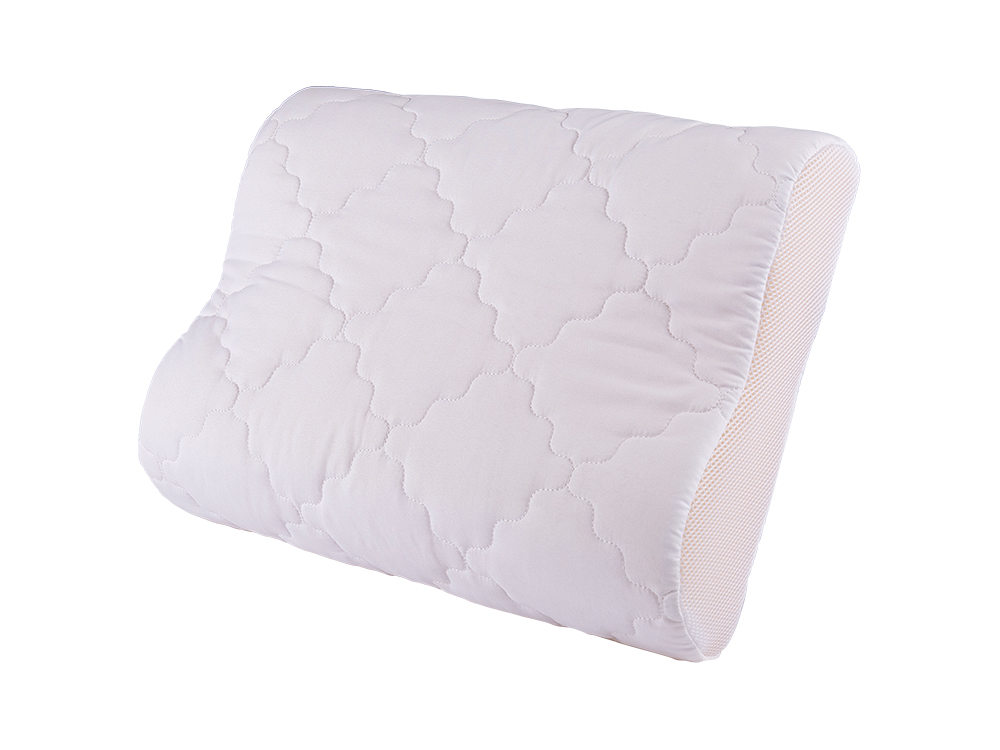
The pillow incorporates a grey sandwich mesh wall. This side construction is not merely decorative. Mesh can help create an air-permeable boundary around the pillow, supporting air movement through the structure and reducing the heavy, enclosed feeling that can occur in densely packed bedding products. The contrasting grey wall also gives the pillow a clean, modern visual detail while contributing to its functional design.
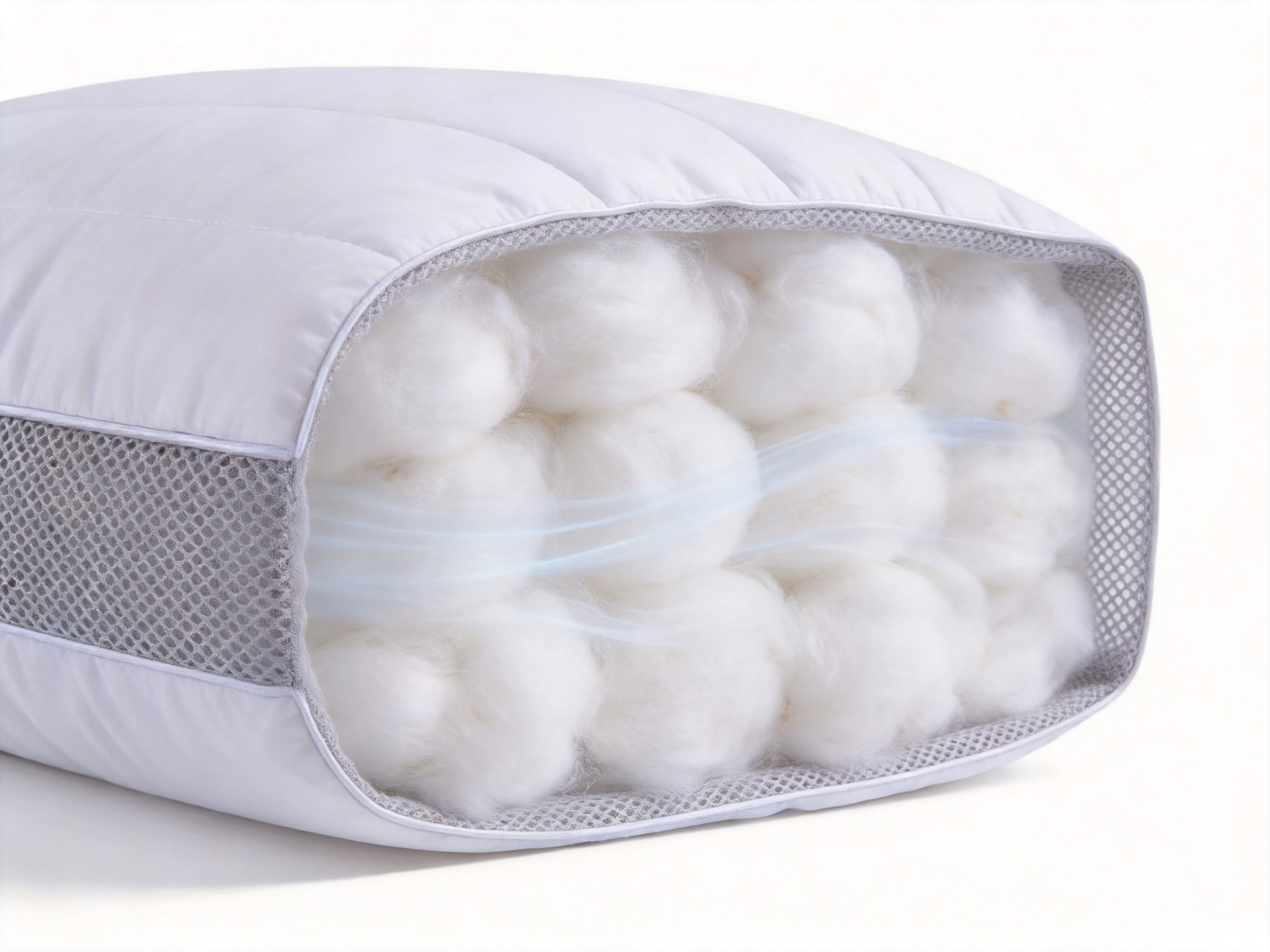
The filling consists of 3D and 0.9D down-alternative polyester. This combination is intended to reproduce some of the softness and lightness associated with down while avoiding the use of natural feather or down material. Polyester filling can be engineered into fibers with different dimensions and characteristics. The combination of 3D and 0.9D fibers supports a blend of loft, softness, resilience, and lightness.
The product description emphasizes a natural skin-friendly surface, a simple and elegant design, moisture-wicking performance, breathability, dry softness, and suitability for sensitive people and infants. These characteristics make the pillow especially relevant to buyers who want a gentle sleeping surface and a filling option that does not rely on animal down.
2. Key Specifications
Product name |
Elegant Cotton Fabric Pillow |
Product category |
Cotton Pillow |
Size |
50 x 70 x 4 cm |
Face fabric |
233TC Cotton Fabric |
Side wall |
Grey Sandwich Mesh |
Filling |
3D + 0.9D Down-alternative Polyester |
Design characteristics |
Simple appearance, breathable construction, moisture-wicking intention, soft and dry hand feel |
Recommended applications |
Residential bedding, guest rooms, hotels, children’s rooms, sensitive-skin bedding collections, and private-label home textile programs |
These specifications show that the pillow is designed as a complete textile system rather than simply a fabric shell filled with loose fiber. The face fabric, side wall, and filling work together to determine the product’s comfort, airflow, visual presentation, and handling behavior.
3. Cotton Fabric and Skin Contact
The part of a pillow that remains closest to the user’s face and neck should provide a comfortable tactile experience. The 233TC cotton fabric used in this product is selected to create a smooth and familiar bedding surface. Thread count alone does not determine total quality, but it provides useful information about the fabric’s construction density. In this application, the cotton fabric supports a refined appearance while maintaining the natural character expected from cotton bedding.
Cotton is valued in sleep products because it can absorb and release a certain amount of moisture. During sleep, the body naturally produces heat and perspiration. A suitable pillow surface should not feel excessively clammy or plastic-like when exposed to normal overnight humidity. The cotton cover helps create a more comfortable microclimate around the head, especially when used with breathable pillowcases and bedding layers.
The fabric’s skin-friendly positioning is also important for families and buyers who are cautious about harsh or uncomfortable materials. A soft cover can reduce the sensation of friction against the cheeks and neck. For infants and sensitive users, the pillow should always be selected according to age, sleeping guidance, and safety requirements, but a gentle textile surface remains a valuable product feature.
Compared with pillows that use coarse woven shells or heavily coated synthetic covers, the cotton face of this model offers a more natural hand feel. It can also fit more easily into cotton-based bedding collections, allowing retailers and hospitality buyers to create a consistent material story across pillowcases, sheets, quilts, and mattress protectors.
The simple elegance of the fabric is another commercial advantage. The product does not depend on excessive ornamentation, complicated colors, or decorative elements to communicate quality. Instead, its value is expressed through material selection and construction. This makes it easier to introduce into different markets, where consumer preferences for color, styling, and bedroom design may vary.
4. The Function of the Sandwich Mesh Wall
The grey sandwich mesh wall is a distinctive feature of the pillow. In a conventional pillow, the side wall may be made from the same dense fabric as the upper and lower panels. While this approach can produce a uniform appearance, it may restrict air movement around the edges. A mesh wall introduces a more open structure that can support ventilation.
Ventilation is significant because a pillow is positioned close to the head, an area that can generate heat during sleep. When air circulation is limited, warmth and humidity may remain trapped inside the pillow. The sandwich mesh construction is intended to help the internal structure release heat and moisture more effectively than a completely closed side design.
The side wall may also contribute to the pillow’s visual definition. It creates a subtle border around the cotton top panel and can help the product maintain a neat, tailored profile. The grey tone is restrained and versatile, making the pillow suitable for neutral bedding arrangements and commercial settings where a professional appearance is preferred.
From a manufacturing perspective, attaching mesh to a cotton panel requires control over cutting, alignment, seam allowance, and stitching. Mesh can behave differently from woven cotton during sewing because it may stretch, shift, or compress under pressure. A capable bedding manufacturer must therefore manage the relationship between the materials carefully. The final product should have a stable edge, secure seams, and an even appearance around the perimeter.
This construction provides an advantage over basic pillows that use only a dense outer shell. It combines the comfort of a cotton sleeping surface with a more ventilated side structure. The result is a product that can be positioned between a traditional cotton pillow and a highly technical performance pillow, offering practical functionality without an overly complex appearance.
5. Down-Alternative Polyester Filling
The filling is one of the most influential elements in a pillow’s performance. The Elegant Cotton Fabric Pillow uses a combination of 3D and 0.9D down-alternative polyester fibers. This filling is designed to provide a soft, dry, and lightweight feel while avoiding natural down.
Down-alternative polyester is attractive to many consumers because it can deliver a lofty and comfortable sensation without the concerns sometimes associated with feather quills, animal-derived materials, or natural down maintenance. It is also suitable for brands that prefer synthetic, washable, or easier-to-standardize filling systems, subject to the final product’s care instructions and testing requirements.
The two fiber dimensions serve complementary purposes. The larger 3D fiber can contribute to bulk, resilience, and the formation of a three-dimensional filling structure. The finer 0.9D fiber can contribute to a softer touch and a more delicate hand feel. By combining them, the manufacturer can seek a balance between volume and softness rather than relying on a single fiber type.
A pillow filled only with very fine fibers may feel soft at first but can lose loft or compact more easily if the structure is not properly engineered. A pillow filled only with coarse fibers may retain volume but feel less smooth or flexible. The blended filling approach is intended to address these competing requirements. It gives the product a soft surface response while supporting a fuller, more resilient internal body.
Polyester fibers can also provide consistent manufacturing results when the production process is well controlled. Natural down varies according to source, grade, cleanliness, and blend ratio. A down-alternative filling allows the manufacturer to specify fiber types and proportions more precisely. This can help support repeatable product development for wholesalers, retailers, hospitality groups, and private-label customers.
Another advantage is the absence of feather points. Some users are sensitive to the occasional quill or irregularity that may occur in feather-filled bedding. A down-alternative pillow presents a smooth, uniform filling experience. For consumers who want a soft pillow but prefer not to use animal-derived filling, this construction offers a practical alternative.
As with all bedding, performance depends on the complete product and its care. Filling distribution, seam construction, storage, packaging, laundering, and usage conditions all influence the product’s service life. A professional manufacturer must control these variables to deliver a pillow that performs consistently beyond the first impression.
6. Moisture Management and Breathability
Moisture management is a central part of comfortable bedding design. A pillow can be soft and visually attractive but still feel uncomfortable if it retains excessive heat or humidity. The Elegant Cotton Fabric Pillow addresses this concern through the combination of cotton fabric, sandwich mesh, and a breathable down-alternative filling.
Cotton can help absorb a portion of normal moisture at the surface, while the open mesh wall supports air exchange around the sides. The fiber structure of the filling also influences how air moves through the interior. Together, these components are intended to create a drier and less stuffy sleeping experience.
The term breathable should be understood as a design objective rather than a guarantee of identical performance in every environment. Room temperature, humidity, pillowcase material, mattress construction, user habits, and laundering practices all influence the final experience. Nevertheless, a pillow with an open side wall and moisture-conscious material selection has a practical advantage over products that use impermeable films or densely sealed synthetic layers.
For warm climates, breathable pillow construction can be especially relevant. In humid areas, users often prefer bedding that does not feel heavy or damp after extended use. In hospitality environments, breathable materials can improve guest comfort and help bedding feel fresher between uses when combined with appropriate laundering and room ventilation procedures.
Breathability also supports product versatility. The pillow can be paired with cotton, blended, bamboo-based, or other breathable pillowcase materials. It does not require a highly specialized cover to demonstrate its basic comfort characteristics. This gives retailers and consumers greater freedom when coordinating the pillow with existing bedding.
7. Advantages Over Conventional Competitor Designs
The Elegant Cotton Fabric Pillow competes in a market that includes basic polyester pillows, solid cotton pillows, feather pillows, memory foam pillows, and premium natural down products. Each category has its own strengths, but this product combines several desirable characteristics in one accessible design.
7.1 Compared with Basic Polyester Pillows
Basic polyester pillows commonly use a simple synthetic shell and a single type of polyester filling. They may be economical, but their construction can provide limited airflow and a less refined hand feel. The Elegant Cotton Fabric Pillow adds a 233-thread-count cotton face and a grey sandwich mesh wall, creating a more developed material system.
The combination of cotton and mesh can give the product a more premium appearance and a more comfortable surface. The blended 3D and 0.9D filling also offers a more intentional balance of resilience and softness than an undifferentiated fiber fill. For buyers seeking an upgrade from entry-level bedding, these details create a meaningful distinction.
7.2 Compared with Feather-Filled Pillows
Feather-filled pillows can provide natural loft and a traditional bedding feel, but some users dislike the possibility of quills, shifting feathers, or animal-derived materials. The down-alternative polyester filling avoids those concerns while retaining a soft and lightweight character.
The synthetic filling also supports more consistent specification and production. This can be valuable for bulk buyers who need repeatable dimensions, filling ratios, and appearance across multiple production batches. The cotton cover and mesh wall further distinguish the product from conventional feather pillows that may use tightly woven ticking throughout the shell.
7.3 Compared with Memory Foam Pillows
Memory foam pillows are often selected for their contouring properties, but they can feel dense, warm, or less flexible than fiber-filled products. They may also have a more pronounced material odor when new and can be less suitable for customers who prefer a soft, traditional pillow sensation.
The Elegant Cotton Fabric Pillow offers a lighter and more breathable alternative. Its fiber filling can be reshaped and compressed more easily, and the mesh wall supports airflow. This makes it appropriate for consumers who value softness and ventilation over a fixed ergonomic contour.
7.4 Compared with Natural Down Pillows
Natural down is known for its exceptional lightness and loft, but it can command a higher price and may raise concerns related to allergies, animal materials, cleaning, and supply consistency. A down-alternative polyester pillow offers a more standardized and accessible option.
The product is designed to be non-allergenic according to the supplied product description. Buyers requiring formal allergy-related claims should still review laboratory testing, local regulations, and product documentation before making a marketing statement. Even with that qualification, the absence of natural down and feathers can be an important advantage for households and hospitality programs seeking a synthetic alternative.
7.5 Compared with Fully Enclosed Pillow Constructions
Some pillows use a dense outer wall on every side. This may support durability, but it can also limit air exchange. The sandwich mesh wall of this model provides a more ventilated alternative while retaining a defined edge and structured appearance. It is a functional detail that can improve differentiation in a crowded bedding market.
8. Comfort for Everyday Use
Comfort is not created by softness alone. A pillow must also feel balanced, dry, stable, and easy to use. The Elegant Cotton Fabric Pillow is designed to provide a gentle initial touch while maintaining a light internal structure. The 50 x 70 centimeter format gives the user a broad surface for changing sleep positions, while the 4 centimeter stated height presents a relatively low-profile form.
A low-profile pillow may appeal to users who do not want a tall or rigid sleeping surface. It can also be useful for coordinated bedding programs in which pillows are expected to look neat beneath a decorative sham or pillowcase. Personal preferences differ significantly, so the appropriate pillow height depends on sleeping position, body size, mattress firmness, and individual comfort requirements.
The soft filling can compress under the head and recover when pressure is removed. This flexible response is different from the fixed contour of foam products. Users can adjust the pillow by gently reshaping or fluffing it, helping them create a preferred sleeping arrangement.
The cotton surface contributes to a familiar bedding sensation. It does not create the slick or sealed feeling sometimes associated with coated textiles. The dry and soft positioning of the product is especially suitable for consumers who want a pillow that feels fresh and comfortable in direct contact with a pillowcase.
For children and infants, product selection should always follow pediatric and safe-sleep guidance. The supplied description identifies the pillow as suitable for sensitive people and infants, but buyers and caregivers should confirm appropriate use according to the child’s age, sleeping environment, and local safety recommendations. Product suitability should never replace professional guidance concerning infant sleep safety.
9. Design Simplicity and Commercial Versatility
The pillow’s simple and elegant design gives it broad commercial potential. It can be sold as a standalone pillow, included in a bedroom collection, supplied to hotels, or developed as part of a private-label home textile program. Its neutral construction does not limit the buyer to one decorative style.
The grey mesh wall creates a subtle visual accent rather than a dominant pattern. This allows the product to work with white, beige, grey, blue, green, or patterned bedding. Retailers can present it in minimalist, natural, modern, or family-oriented collections without changing the basic product structure.
Its material combination also supports cross-category merchandising. A retailer may pair the pillow with cotton quilts, mattress protectors, blankets, cushions, bedspreads, or pillowcases. A hotel may use it as part of a bedding package focused on breathable and easy-to-standardize materials. A distributor may offer it to customers seeking an alternative to feather and down.
The product can also serve different price segments depending on packaging, order quantity, labeling, and customization. The core construction provides a stable foundation, while customers may discuss dimensions, color, fabric variations, filling ratios, labels, packaging, and other commercial details with the manufacturer.
10. Manufacturing Experience and Production Capability
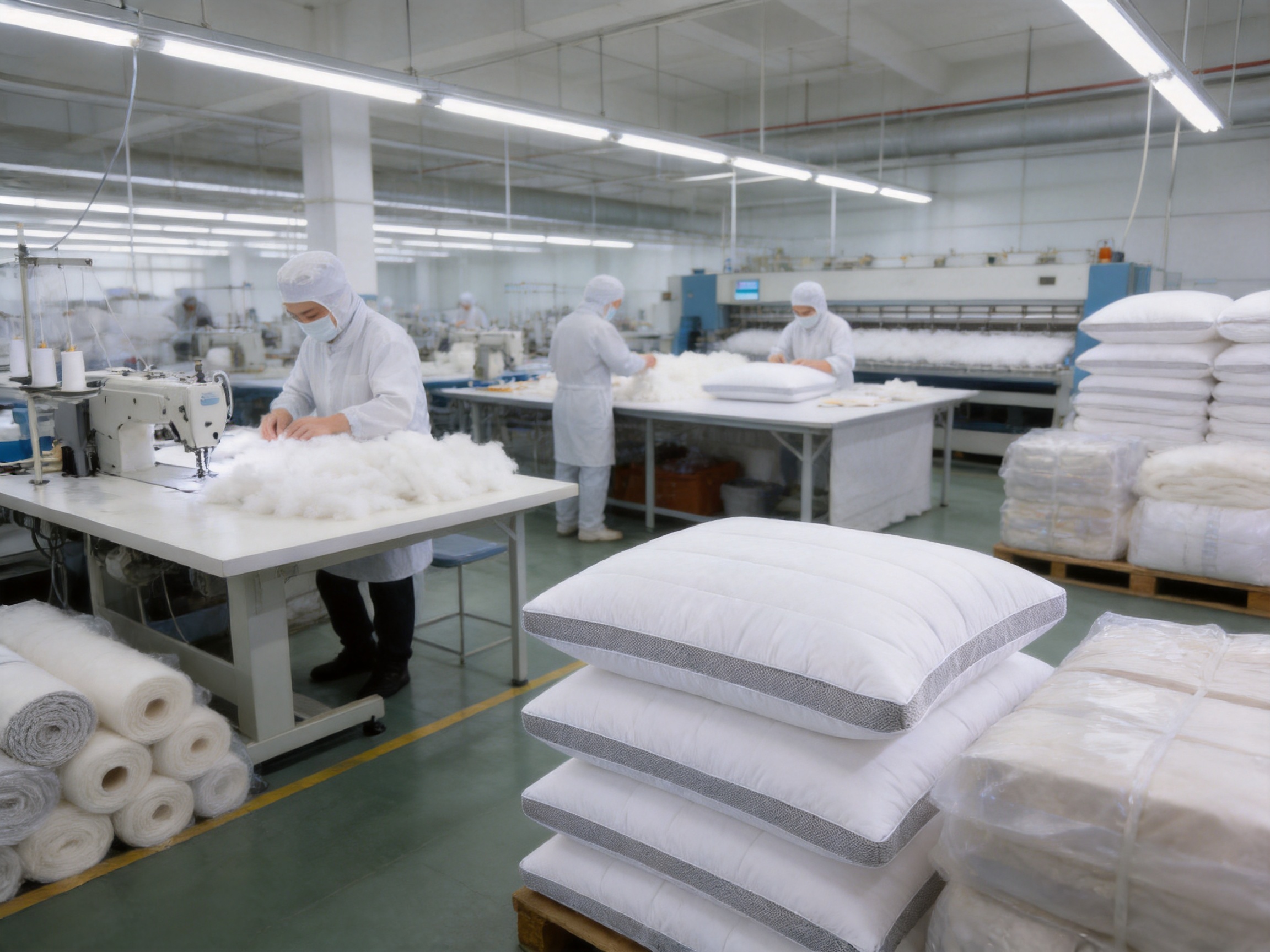
The product is supported by the manufacturing experience of Tongxiang Xinlong Bedding Co., Ltd., which was established in January 2002. Long-term operation in the home textile sector provides practical knowledge of fabric sourcing, cutting, sewing, filling, finishing, inspection, packaging, and order coordination.
The company is located in Longxiang Industrial Park, Wuzhen Town, Tongxiang, Zhejiang Province. The supplied company information states that the facility covers approximately 21,000 square meters, with a construction area of approximately 18,000 square meters. It employs more than 320 people and is equipped with various advanced production machines.
This scale is relevant to pillow manufacturing because bedding production requires more than a single sewing line. A complete operation may include incoming material inspection, fabric spreading, cutting, panel preparation, mesh attachment, filling preparation, filling insertion, seam closing, shaping, quality inspection, needle detection where required, packaging, and finished-goods storage.
Professional technical personnel can help translate a product concept into stable production specifications. For a pillow such as this one, details including finished dimensions, panel alignment, mesh tension, filling weight, edge appearance, seam security, compression behavior, and packaging recovery all need attention. Small variations in any of these areas can affect the customer’s perception of quality.
An experienced manufacturer can also support product development across multiple home textile categories. Knowledge gained from quilts, cushions, mattress protectors, blankets, and bedspreads can be applied to pillow construction. For example, experience with fiber distribution, quilting, edge finishing, moisture-conscious materials, and large-scale inspection can improve the efficiency of related products.
10.1 Material Preparation
Manufacturing begins with the correct preparation of cotton fabric, mesh, and polyester filling. Materials should be checked for color consistency, width, surface defects, contamination, strength, and compatibility with the intended construction. The filling should be evaluated for fiber appearance, cleanliness, loft, and consistency.
Accurate material preparation helps minimize variation later in the process. If fabric panels are cut from inconsistent sections or mesh tension varies significantly, the finished pillow may show differences in shape or side-wall appearance. Controlled preparation is therefore an important foundation for repeatable quality.
10.2 Cutting and Panel Accuracy
The 50 x 70 centimeter finished size requires careful allowance for seams, edge construction, and filling expansion. Cutting equipment and production operators must account for fabric grain, material behavior, and the final dimensional target. Accurate cutting helps keep the upper and lower panels aligned and supports a consistent perimeter.
For repeat orders, stable cutting patterns are particularly important. Wholesale and private-label customers expect products from different batches to maintain similar dimensions and visual proportions. A structured production system can help reduce unnecessary variation and improve packing efficiency.
10.3 Mesh Attachment and Sewing
The sandwich mesh wall must be joined securely to the cotton panels. Operators need to control the relationship between the more stable cotton fabric and the potentially more flexible mesh. Correct seam handling can help prevent puckering, twisting, uneven edges, and weak points.
Stitch density, thread selection, seam allowance, and machine settings influence the finished result. The seams should be strong enough for normal use and handling while remaining visually neat. Since the mesh wall is part of the product’s identity, its alignment and uniformity are important both functionally and aesthetically.
10.4 Filling and Shaping
After the shell is prepared, the 3D and 0.9D polyester filling must be introduced in the specified proportion and distributed evenly. Uneven filling may create thin areas, lumps, or an inconsistent sleeping surface. Controlled filling procedures help support the intended softness and volume.
The pillow may require shaping and recovery time after filling and compression. Professional handling can improve the final appearance and help the product reach its intended dimensions before inspection and packaging. The product’s ability to recover after transportation should also be considered when selecting packaging methods.
10.5 Final Inspection
Final inspection should consider dimensions, fabric appearance, mesh attachment, seam quality, filling distribution, cleanliness, labeling, and packaging. A systematic inspection process helps identify defects before products reach the customer.
For international and commercial orders, inspection may be performed according to an agreed specification, approved sample, or buyer quality standard. Clear communication between the manufacturer and customer is essential. Specifications should define tolerances, testing expectations, packaging requirements, and acceptance criteria before mass production begins.
11. Quality Management and Certifications
The company states that it has passed international certifications and assessment systems including ISO 9001, ISO 14001, OEKO-TEX Standard 100, OEKO-TEX STeP, GRS, and BSCI. These systems and certifications represent different areas of manufacturing, environmental management, material safety, recycled-content management, and social responsibility.
ISO 9001 is associated with quality management systems. A quality management approach can help a manufacturer document processes, manage corrective actions, monitor production performance, and improve consistency. For a pillow manufacturer, this may support better control over materials, production records, inspection procedures, and customer requirements.
ISO 14001 relates to environmental management systems. Home textile production involves fabric cutting, fiber handling, energy use, packaging, wastewater considerations, and waste management. An environmental management framework can help a factory identify and manage these impacts more systematically.
OEKO-TEX Standard 100 is widely associated with testing textiles and components for certain harmful substances. Its relevance to bedding is clear because pillows remain close to the user for extended periods. Buyers should verify the current certificate scope, product class, validity, and applicable model details when using certification information in commercial communications.
OEKO-TEX STeP focuses on sustainable textile and leather production facilities. GRS, or the Global Recycled Standard, is associated with recycled materials and related chain-of-custody requirements. BSCI is a social compliance initiative used by many international buyers to evaluate working conditions and responsible business practices. These credentials can strengthen the company’s ability to work with customers requiring documented sourcing and production standards.
Certification should not be treated as a substitute for product-specific inspection. A responsible purchasing process may combine certification review, material testing, pre-production samples, factory communication, and finished-goods inspection. This layered approach gives buyers a clearer understanding of the product and the manufacturing system behind it.
12. Sustainability Considerations
The product’s down-alternative polyester filling provides a non-animal option for customers who wish to avoid natural down. This can simplify sourcing for brands that prefer synthetic material programs. The company’s stated GRS capability may also be relevant to buyers interested in recycled-content versions or other products developed under recycled-material requirements, subject to confirmation for the specific pillow and filling.
Cotton and polyester each have different environmental considerations. Cotton production involves land, water, and agricultural inputs, while polyester is derived from synthetic polymers and requires energy during production. A responsible sustainability assessment should consider the complete product life cycle, including fiber origin, fabric processing, manufacturing waste, packaging, transportation, use, laundering, and disposal.
Manufacturing efficiency can reduce avoidable waste. Accurate cutting may improve fabric utilization, while controlled filling can minimize fiber loss. Reusable or reduced packaging may lower material consumption, depending on the customer’s distribution needs. Durable construction can also support a longer useful life, which may reduce the frequency of replacement.
For commercial buyers, sustainability goals should be translated into measurable specifications. These may include recycled content percentage, packaging material requirements, restricted-substance testing, factory environmental documentation, social compliance audits, and product durability targets. The manufacturer’s broad certification portfolio can provide a starting point for these discussions.
13. Applications in Retail and Hospitality
In retail, the pillow can be presented as a breathable cotton pillow with soft down-alternative filling. Its benefits are easy to communicate: natural-feeling cotton contact, ventilated mesh construction, a soft synthetic filling, and a versatile rectangular size. Retail packaging can focus on comfort, material transparency, and simple elegance.
For hotels and guest accommodations, consistency is a major requirement. A standardized pillow specification can help purchasing teams manage inventories across rooms and properties. The down-alternative filling may appeal to hospitality groups seeking a broadly acceptable option for guests with different preferences concerning feathers and down.
The pillow can also be used in serviced apartments, dormitories, healthcare-related accommodation where approved, vacation rentals, and furnished housing. Each setting may have its own requirements for laundering, packaging, fire performance, labeling, and hygiene. The final application should therefore be matched with appropriate testing and care instructions.
Private-label brands can use the base design as part of a broader bedding program. Possible development discussions may include custom labels, packaging, color options, size adjustments, fabric alternatives, filling specifications, and coordinated products. The manufacturer’s experience across multiple home textile categories can simplify communication when a customer wants to source several related items from one production partner.
14. Product Care and Service Life
Care instructions should be confirmed before sale because the appropriate method depends on the final construction, seam design, filling weight, labeling, and customer requirements. In general, a fiber-filled pillow should be protected with a suitable pillowcase and kept in a dry, well-ventilated environment.
Regular airing can help maintain freshness. The pillow should not be stored for long periods in a damp or tightly compressed condition unless the packaging and storage method are specifically designed for that purpose. After unpacking, allowing the pillow to recover in a clean, ventilated area can help restore its loft and shape.
Cleaning should follow the manufacturer’s approved instructions. If machine washing is permitted, the washing temperature, cycle, detergent, spin setting, and drying method should be observed carefully. Inadequate drying may leave moisture inside the filling, while excessive heat may damage fibers or fabric. If washing is not recommended, professional cleaning or replacement of the protective cover may be more appropriate.
Consumers should periodically inspect the pillow for seam damage, filling leakage, odor, moisture retention, or loss of support. Product service life depends on usage frequency, body weight, sleeping position, climate, care, and protection. Proper care can help preserve the cotton surface, mesh wall, and polyester filling for longer.
15. Purchasing Guidance for Importers and Distributors
Importers should begin by confirming the exact product specification. The stated dimensions are 50 x 70 x 4 centimeters, but buyers should clarify whether these measurements refer to the finished product before or after compression, and what tolerances apply. Filling weight, fabric composition, color standards, label placement, packaging dimensions, and carton quantities should also be documented.
A pre-production sample is recommended before mass production. The sample allows the customer to evaluate the cotton hand feel, mesh appearance, filling softness, edge quality, dimensions, and overall presentation. Any changes should be approved in writing so that the production team has a clear reference.
Buyers should also discuss testing requirements. Depending on the destination market, products may require testing for restricted substances, flammability, fiber composition, colorfastness, dimensional stability, or other regulatory criteria. Certification claims should be verified for the relevant facility, material, and product scope.
Packaging is another important consideration. Pillows are often compressed to reduce shipping volume, but compression time and recovery requirements should be agreed in advance. Excessive compression or unsuitable packaging can affect the product’s appearance after opening. Retail packaging should also protect the cotton surface from dust and moisture during transportation and storage.
For repeat purchasing, buyers can benefit from a documented quality standard. This may include approved fabric swatches, color references, finished measurements, filling weight tolerances, seam requirements, appearance standards, inspection levels, and packaging specifications. A stable reference system supports better continuity between production batches.
16. Why Manufacturing Strength Matters to Product Quality
A pillow’s visible simplicity can conceal a considerable number of manufacturing decisions. The final result depends on the relationship between fabric weight, mesh flexibility, filling behavior, stitch quality, dimensional control, and packaging. A factory with experience in multiple home textile products is better positioned to manage these relationships than a facility that only performs basic assembly.
Production scale can also support specialization. Dedicated teams may handle cutting, sewing, filling, inspection, and packaging, allowing each stage to be monitored more closely. Advanced equipment can improve speed and repeatability, while trained operators can identify material behavior that automated systems may not detect by themselves.
More than 320 employees and a substantial production facility provide a foundation for handling different order sizes and product categories. Capacity alone does not guarantee quality, but capacity combined with documented procedures, technical personnel, inspection systems, and customer communication can create a stronger supply partnership.
The company’s continued development and innovation are also relevant to customers seeking product differentiation. Home textile markets change continuously, with increasing demand for breathable construction, alternative fillings, sensitive-skin positioning, recycled materials, and coordinated bedding collections. A manufacturer capable of adapting materials and processes can help customers respond to these trends.
17. Product Positioning
The Elegant Cotton Fabric Pillow can be positioned as a practical premium pillow rather than an extreme luxury product. Its appeal comes from combining several useful improvements without relying on complicated technology. Cotton provides the familiar surface, mesh supports ventilation, and mixed polyester fibers create a soft down-alternative filling.
This positioning may be attractive to customers who want more than a basic pillow but do not require memory foam, natural down, or highly specialized ergonomic shaping. It can serve consumers who prioritize softness, breathability, animal-free filling, simple design, and dependable manufacturing.
For retailers, the product offers a clear material story. For hospitality buyers, it offers a standardized and broadly acceptable filling option. For private-label brands, it offers a flexible platform for packaging and collection development. For distributors, it provides a versatile item that can fit into several bedding categories.
The product’s advantages should be communicated accurately. Claims such as skin-friendly, breathable, moisture-wicking, and non-allergenic should be supported by suitable testing and local regulatory review when used on packaging or in advertising. Clear communication builds trust and protects both the buyer and the manufacturer.
18. Q&A
Q1: What is the size of the Elegant Cotton Fabric Pillow?
The stated size is 50 x 70 x 4 centimeters. Buyers should confirm dimensional tolerances and whether the measurement is taken before or after packaging compression.
Q2: What fabric is used on the pillow?
The outer face fabric is 233-thread-count cotton. This provides a natural-feeling, soft, and comfortable surface suitable for everyday bedding applications.
Q3: What is the grey sandwich mesh used for?
The grey sandwich mesh forms the pillow’s side wall. Its open structure is intended to support airflow and ventilation while giving the pillow a defined, modern edge.
Q4: What type of filling does the pillow use?
The filling combines 3D and 0.9D down-alternative polyester. The blend is designed to balance softness, lightness, loft, and resilience without using natural down or feathers.
Q5: Is the pillow suitable for people who prefer a down alternative?
Yes. The product uses down-alternative polyester rather than natural down. This makes it relevant to consumers who prefer synthetic filling or wish to avoid feathers and animal-derived down.
Q6: Is the product suitable for sensitive users?
The product description identifies it as non-allergenic and suitable for sensitive people and infants. Buyers should verify any formal allergy-related claims through current test documentation and should follow age-appropriate safe-sleep guidance for infants.
Q7: Is the pillow breathable?
The cotton face, sandwich mesh wall, and fiber filling are designed to support breathability. Actual performance will also depend on room conditions, pillowcase material, user habits, and care practices.
Q8: How does this pillow compare with a basic polyester pillow?
It offers a more developed construction, including a cotton face, ventilated mesh wall, and a blended 3D and 0.9D filling. These features can provide a more refined hand feel, better visual presentation, and improved airflow compared with a basic single-material design.
Q9: How does it compare with memory foam?
The pillow is lighter, softer, and more flexible than many memory foam designs. It is intended for users who prefer a traditional fiber-filled feel rather than a fixed contour or dense support structure.
Q10: Can the product be customized?
Customization should be discussed directly with the manufacturer. Potential topics may include size, fabric, color, filling ratio, labels, packaging, and coordinated bedding products. Final options depend on order quantity, technical feasibility, and agreed specifications.
Q11: What types of customers can purchase this product?
The pillow is suitable for retailers, wholesalers, hospitality groups, distributors, private-label brands, furnished accommodation providers, and other buyers of home textile products.
Q12: What manufacturing certifications does the company state that it has?
The company states that it has passed or obtained systems and certifications including ISO 9001, ISO 14001, OEKO-TEX Standard 100, OEKO-TEX STeP, GRS, and BSCI. Buyers should request current certificates and confirm their scope before using them in commercial claims.
Q13: Where is the manufacturer located?
Tongxiang Xinlong Bedding Co., Ltd. is located at No. 268 Xingfa Road, Wuzhen, Tongxiang City, Jiaxing, Zhejiang Province, China.
Q14: What other products does the manufacturer produce?
The company produces various home textile products, including quilts, pillows, cushions, mattress protectors, blankets, bedspreads, travel quilts, quilt covers, pillowcases, shower curtains, and curtains.
Q15: What should buyers confirm before placing a bulk order?
Buyers should confirm the approved sample, finished measurements, tolerances, fabric composition, filling weight, color, labeling, packaging, testing requirements, inspection standards, shipping configuration, and care instructions.
19. Conclusion
The Elegant Cotton Fabric Pillow is a thoughtfully constructed bedding product that combines a 233-thread-count cotton surface, a grey sandwich mesh wall, and a 3D plus 0.9D down-alternative polyester filling. Its principal advantages are comfort, breathability, softness, a dry hand feel, animal-free filling, and a simple appearance that can fit many bedding collections.
Compared with basic polyester pillows, the product offers more deliberate material selection and construction. Compared with feather and down pillows, it provides a consistent synthetic alternative without natural feathers. Compared with memory foam, it offers a lighter and more flexible sleeping experience. The sandwich mesh wall further distinguishes it from fully enclosed pillow designs by supporting ventilation around the sides.
The manufacturing foundation is equally important. Established home textile experience, a substantial facility, more than 320 employees, technical personnel, advanced production equipment, broad category knowledge, and stated international certifications support the company’s ability to develop and produce bedding for different customers.
For consumers, the pillow provides a gentle and breathable option for everyday use. For retailers and distributors, it offers a clear and marketable product story. For hotels and private-label brands, it provides a standardized foundation that can be incorporated into broader bedding programs. As with any textile product, buyers should confirm specifications, testing, certifications, care instructions, and customization terms before final production.
References
1. Product specification information supplied for the Elegant Cotton Fabric Pillow, including size, fabric, side wall, filling, and product description.
2. International Organization for Standardization. Quality Management Systems: ISO 9001 principles and implementation guidance.
3. International Organization for Standardization. Environmental Management Systems: ISO 14001 framework and general requirements.
4. OEKO-TEX Association. Standard 100 principles for testing textiles for harmful substances.
5. OEKO-TEX Association. STeP framework for sustainable textile and leather production facilities.
6. Textile Exchange. Global Recycled Standard principles and chain-of-custody considerations.
7. Business Social Compliance Initiative. General principles for responsible supply-chain and workplace assessment.
8. General textile manufacturing references concerning cotton fabric construction, polyester fiber filling, seam quality, moisture management, and bedding product inspection.



 +86-573-88798028