



 Français
 Español
 Deutsch
Content
Walk through the sample room of a pillow factory and the first thing you notice is the range of footprints. A standard pillow looks modest beside a king, a body pillow dwarfs both, and a small travel cushion sits off to one side like a footnote. After more than two decades of cutting, filling and sewing pillows for brands and importers, we have learned that different size pillows are not just a styling question. Size decides how a pillow rests on a mattress, how much fill it needs, how it packs and ships, and whether a customer comes back for a second one. What follows is a practical walk through the sizes that matter, how they are measured, and what to check before you commit to a specification.
The Sizes You Will Actually Meet
These are the different size pillows we produce most often, with the mattress each one usually suits. Dimensions are measured flat before filling, so a finished pillow will sit a little fuller but should never grow beyond its seam allowance.
| Size name | Inches | Centimetres | Typically pairs with |
|---|---|---|---|
| Standard | 20 x 26 | 51 x 66 | Twin and full beds |
| Super standard | 20 x 28 | 51 x 71 | Full and queen beds |
| Queen | 20 x 30 | 51 x 76 | Queen beds |
| King | 20 x 36 | 51 x 91 | King and California king |
| Body | 20 x 54 | 51 x 137 | Any bed, side sleepers |
| Travel | 12 x 16 | 30 x 41 | Travel and neck support |
| Lumbar or throw | 12 x 20 | 30 x 51 | Sofas and layered styling |
One caution about names. Retailers often sell a single standard and queen combination pillow, and it usually lands somewhere between the two widths. That is fine for a shelf label but less helpful on a specification sheet. When you order in bulk, write the measurement rather than the label — it is the only description that survives translation between markets.
Standard, Queen and King in Plain Terms
A standard pillow at 20 by 26 inches is the workhorse of the category. It suits twin and full beds, feels familiar to almost every sleeper, and is economical to fill and ship. The super standard adds two inches of width, which is why so many hotel programmes settle there: it covers a queen mattress neatly without looking oversized on a full.
Queen pillows at 20 by 30 inches are the natural fit for a 60-inch mattress. Two of them fill the bed edge to edge, which is the picture most customers have in mind when they imagine a made bed. King pillows stretch to 36 inches so a pair can span a 76-inch mattress with a little overlap in the middle. California king beds are narrower but longer, so the width of the pair matters less than how it is arranged — we went into that in more detail in our note on California king pillow sizing.
A simple rule we share with buyers: measure the mattress width, divide by two, then add two to four inches. The result gives a pillow that looks generous without crowding the nightstand.
Body, Travel, Lumbar and Square Sizes
Beyond the bed-length family, the sizes that sell hardest are the ones tied to a specific habit.
- Body pillows, around 20 by 54 inches, give side sleepers something to wrap around and are often sold as pregnancy or recovery pillows.
- Travel pillows shrink to roughly 12 by 16 inches, small enough for a cabin bag and firm enough to support the neck in a seat.
- Lumbar and throw pillows sit between 12 by 20 inches and 14 by 22 inches; they are the decorative layer rather than the sleeping layer.
- European squares, commonly 26 by 26 inches or 65 by 65 centimetres, are the standard decorative shams in continental Europe and read as a deliberate styling choice elsewhere.
For decorative covers, size the insert one to two inches larger than the cover in both directions. A 20-inch cover with a 22-inch insert looks plump; the same cover with a 20-inch insert looks flat within a week.
Why the Same Size Can Feel Completely Different
Two pillows can share a tape measure and still behave nothing alike, because loft and fill do most of the work. A 20 by 26 shell filled to four inches of loft feels like a different product from the same shell at seven inches, and that difference is what customers actually notice.
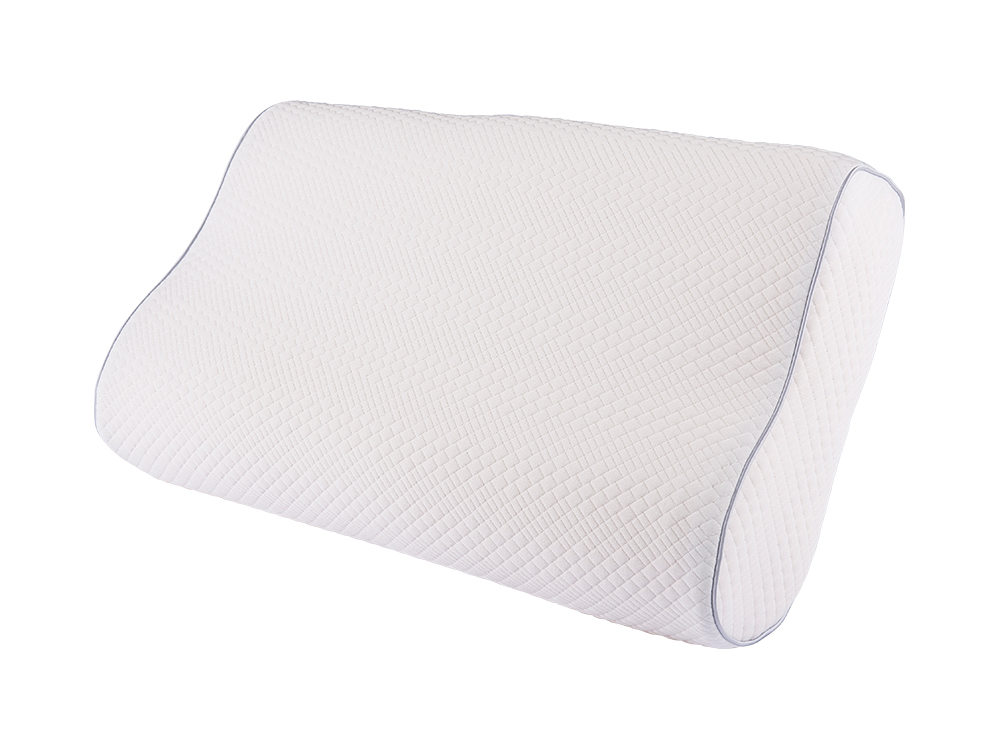
Memory foam shapes hold their height precisely, which makes them predictable in a specification and popular with sleepers who want steady support. The catch is packaging: foam needs compression and time to recover, and the cover fabric has to stretch with it without going slack.
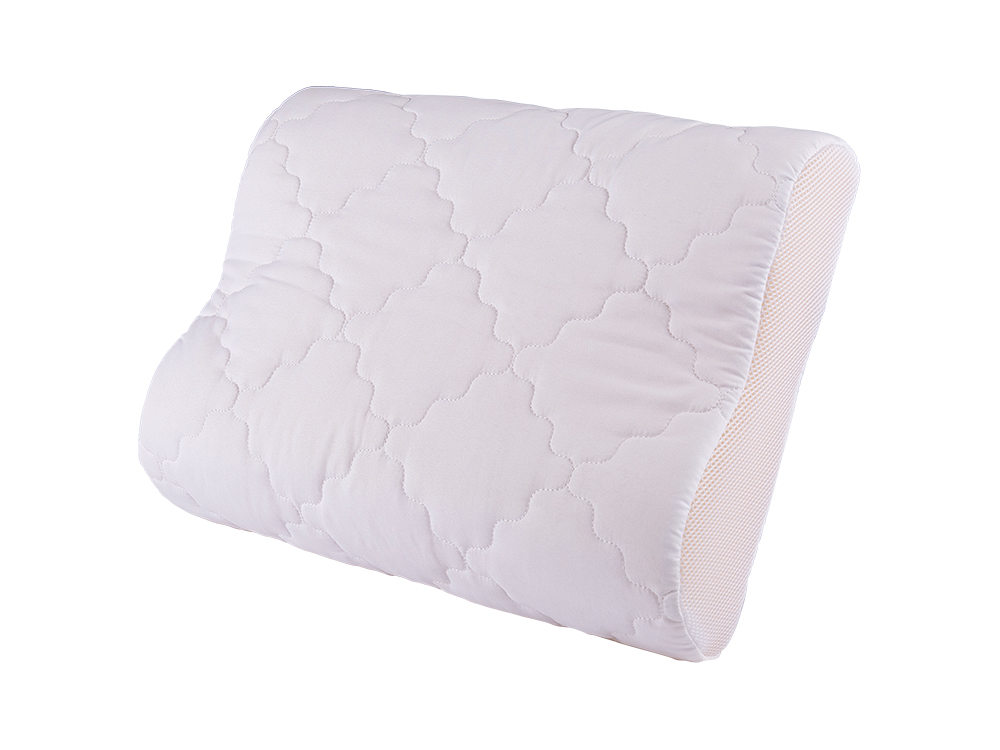 Customizable Memory Foam Pillow with Slow-Rebound CoreCustomizable memory foam pillow with a slow-rebound core and 3D knitted fabric options, available in standard or custom sizes for steady, contouring support.View Product →
Cooling pillows work from the other direction. Rather than changing shape, they change how heat leaves the head, using conductive or highly breathable face fabrics over a supportive core. In warm markets this single feature often justifies a whole size upgrade.
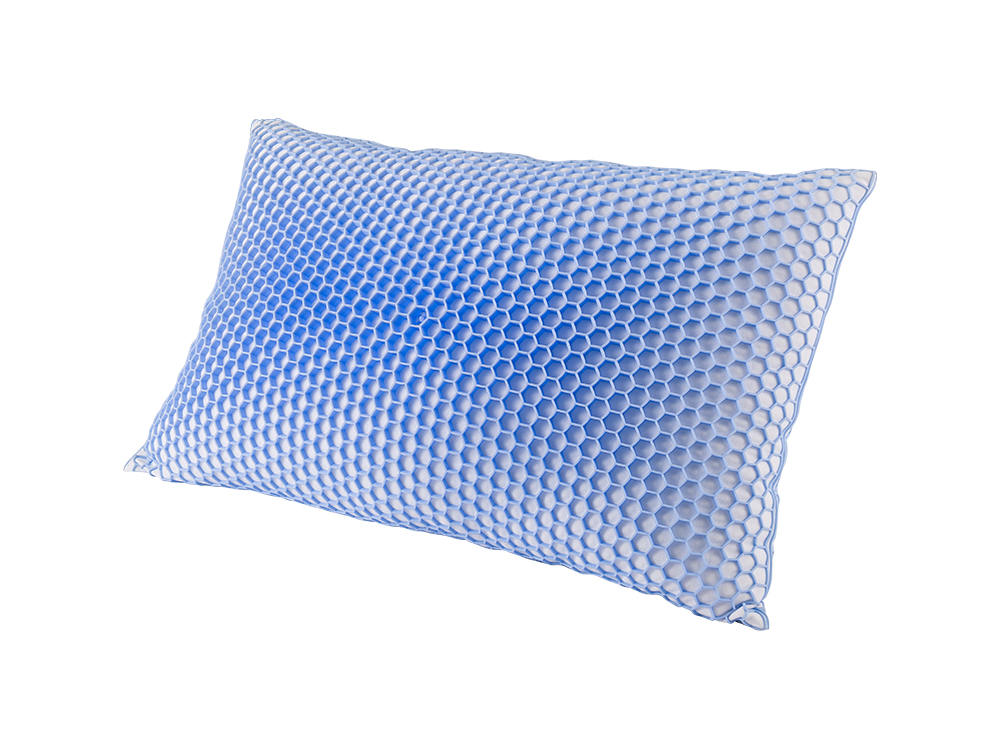 Custom Summer Cooling Pillow with 3D Knitted FabricCustom summer cooling pillow with synthetic fiber fill and 3D cooling knitted fabric options, offered in 50x70 cm or custom sizes for hot-weather comfort.View Product →
Then there are the shapes that ignore the rectangle entirely. A contoured or neck pillow uses a curve rather than a loft number to hold the cervical spine, and it is usually described by the height of that curve rather than by its footprint.
U-Shaped Slow-Rebound Neck Support PillowU-shaped neck pillow with a slow-rebound core and knitted fabric options, designed for neck support and casual use with customizable OEM/ODM production.View Product →
Our advice is to fix the footprint first and decide the fill and loft afterwards. Doing it the other way round usually ends with a pillow that is the right height on the wrong bed.
Regional Differences That Catch Buyers Out
Sizes travel badly. A US standard pillow at 20 by 26 inches has no exact equivalent in the UK, where 50 by 75 centimetres is the norm, or in continental Europe, where 80 by 80 centimetres is common and the pillow is expected to span the whole bed. Japanese and wider Asian markets often use 48 by 74 centimetres, sized to fit a single futon or a compact mattress.
If you sell into more than one region, resist the temptation to average everything into one universal product. Buyers notice, and a pillow that is slightly wrong on every bed is far harder to explain than two sizes that are right.
What We Check Before a Bulk Order Ships
The details that decide whether a pillow programme runs smoothly are rarely glamorous, but they matter to our team every single day.
- Seam allowance and cut tolerance, because a quarter of an inch either way changes how a stack looks on a retail shelf.
- Wash shrinkage, since a shell that shrinks two percent is fine while one that shrinks five percent falls out of specification after the first wash.
- Fill weight consistency, because the same shell with uneven fill reads as two different sizes side by side.
- Compression packing, since vacuum packing saves freight but recovery time has to be tested for each fill type.
- Label accuracy, so that whatever the size is called on the packaging matches the measurement on the spec sheet.
Pillow sizing looks simple from the outside and rarely is. Every size exists for a reason, belongs to a particular bed, and behaves best with a particular fill. Get those three aligned and the rest — the styling, the shelf appeal, the repeat order — tends to follow on its own. If you are mapping out a size range for an upcoming programme, we are always glad to talk through measurements, tolerances and what has worked for other buyers.


 +86-573-88798028